
SPAD Single-Photon InGaAs/InP Avalanche Photodiodes APD


REQUEST PRICING AND AVAILABILITY
- Get your individual quote.
- Technical compatibility review included.
- Volume discounts available.
No obligation. Direct access to our engineering team.
Product information "SPAD Single-Photon InGaAs/InP Avalanche Photodiodes APD"
1100-1600 nm; Responsivity 0.8 A/W; Capacitance 0.25 pF; Dark Current 0.1 nA; Package 3-pin TO 46, 6-pin TO-8, 10-pin Mini-Flat
Wooriro’s SPAD series (Single Photon Avalanche Diode) comprises InGaAs/InP APD devices specially designed and fabricated for the use of single photon avalanche detection (SPAD) with internal or external cooling systems.
SPAD avalanche photodiodes (APDs) can be operated at the voltage above breakdown for short periods, this mode of operation is called “Geiger mode” or “Gated mode” operation. Ultra-low noise operation is possible at a case temperature of -40 °C. The devices can be used for quantum key distribution (QKD) receivers.
SPAD devices are available without an integrated thermoelectric cooling device (TEC) in a 3-pin TO-46 package or with integrated TEC in a 6-pin TO-8 package as well as in a butterfly-style 10-pin Mini-Flat package.
Key Features:
- Low Capacitance: <0.3 pF
- High Speed
- Optical Wavelength Range: 1100 nm to 1600 nm
- Coaxial Type Pigtail
- Low Noise
- Breakdown Voltage VBR: 50 V to 90 V (ID = 100 µA)
- Total Dark Current: 0.1 nA Typ.
- Capacitance: 0.25 pF Typ.
- Quantum Efficiency: 70% Typ.
- Responsivity: 0.8 A/W Typ. (1550 nm, M=1)
- Cooling System: External or Built-in 3-stage TEC
- Temperature Coefficient of VBR: 0.11 V/°C Typ.
- Max. AfterPulse Probability: 10%
- Dark Count Rate: 2.0 kHz (Standard), 0.5 kHz (Premium Grade) (10 MHz Gate Frequency, 2 ns Gate Pulse, 20% PDE)
- Detection Efficiency (PDE): 20% Typ. (10 MHz Gate Frequency, 2 ns Gate Pulse)
- Package: 3-pin TO 46, 6-pin TO-8, 10-pin Butterfly-Type Mini-Flat
Applications: Special Applications Requiring Single Photon Counting such as QKD , OTDR, etc.
Customers also viewed
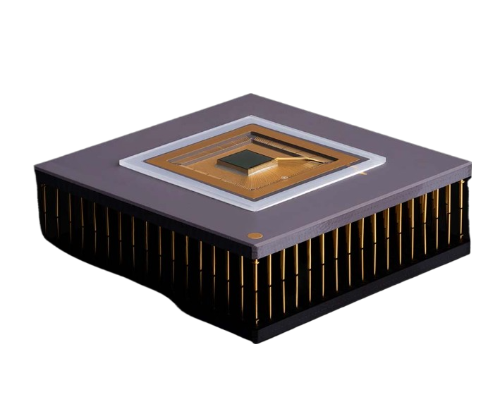
The Andarta sensor by Singular Photonics represents a breakthrough in SPAD (Single Photon Avalanche Diode) imaging technology, designed to meet the demanding requirements of modern research and industrial applications. Developed with a focus on flexibility, precision, and scalability, Andarta integrates advanced photon processing capabilities directly into a compact 5mm x 5mm form factor. This sensor is engineered to perform a wide range of imaging tasks, from ultra-high-speed imaging to correlation spectroscopy, making it a versatile tool for scientists and engineers working at the forefront of photonics.Leveraging noiseless performance and highly accurate photon timing, Andarta enables users to extract rich spatial and temporal data from light, even under low-light conditions. Its reprogrammable architecture and support for multiple operational modes allow for tailored imaging workflows, enhancing productivity and enabling new experimental possibilities.Key FeaturesNoiseless Performance: Andarta’s SPAD architecture ensures ultra-low noise levels, enabling precise photon detection even in challenging environments.High Sensitivity in Compact Form: Measuring just 5mm x 5mm, Andarta delivers exceptional sensitivity in a miniature package, ideal for integration into portable and wearable devices.Advanced Photon Processing: Features such as in-pixel histograms and on-chip preprocessing allow for real-time data analysis and reduced post-processing overhead.Multi-Mode Operation: Supports autocorrelation measurements, gated mode, and ultra-high-speed imaging, offering flexibility across diverse imaging scenarios.Reprogrammable Architecture: Users can adapt the sensor’s functionality to specific tasks, enhancing experimental control and scalability.Ideal for Correlation Spectroscopy: Optimized for time-resolved measurements, Andarta is particularly suited for applications requiring precise temporal resolution.Technical SpecificationsFeature SpecificationSensor Type SPAD (Single Photon Avalanche Diode)Form Factor 5mm x 5mmOperational Modes Autocorrelation, Gated Mode, Ultra High-Speed ImagingData Processing In-pixel histograms, On-chip preprocessingReprogrammability YesApplication Focus Correlation Spectroscopy, Wearables, Health ImagingApplicationsAndarta is engineered for use in a wide range of scientific and industrial domains:Biomedical Imaging: High sensitivity and compact size make it ideal for wearable health monitoring and diagnostic devices.Spectroscopy: Time-resolved and autocorrelation capabilities support advanced spectroscopic analysis.Photonics Research: Enables precise photon timing and spatial-temporal imaging for quantum optics and photonics experiments.Industrial Inspection: Suitable for high-speed imaging in automated quality control systems.What's Next?Singular Photonics continues to innovate in SPAD sensor technology, with future developments aimed at expanding pixel arrays, enhancing multispectral capabilities, and integrating AI-driven photon analysis. Researchers and developers are encouraged to explore Andarta’s capabilities and collaborate with Singular Photonics to push the boundaries of what’s possible in photon-based sensing.
REQUEST PRICING AND AVAILABILITY
- Get your individual quote.
- Technical compatibility review included.
- Volume discounts available.
No obligation. Direct access to our engineering team.
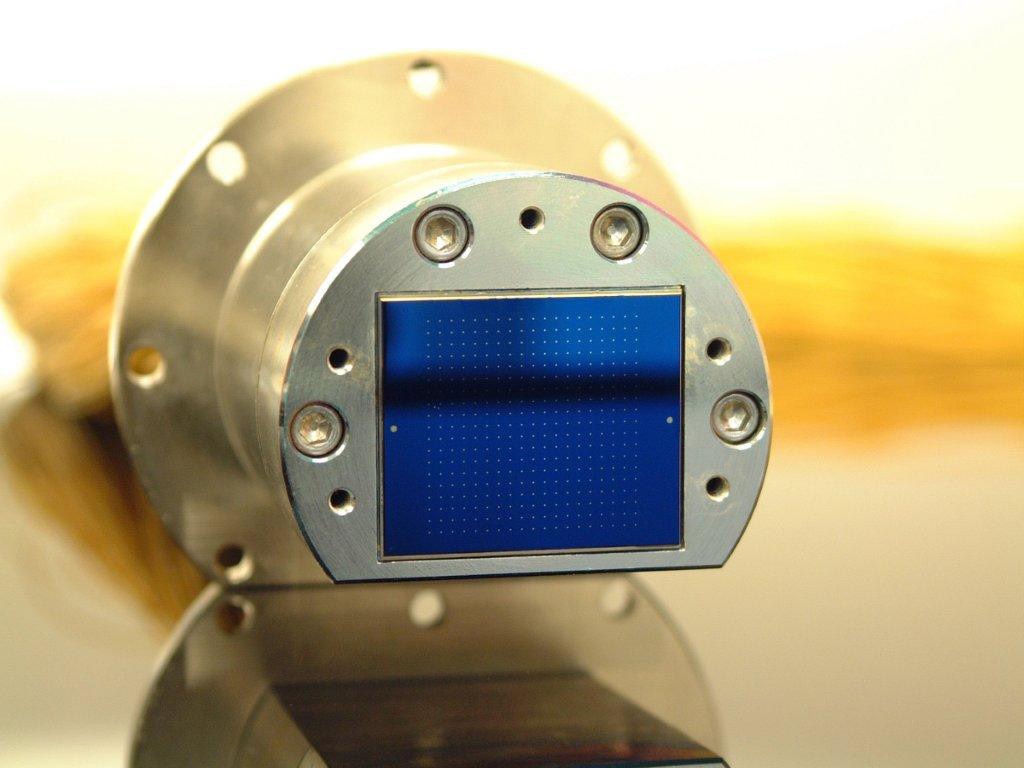
Fiber Type Single Mode, Multi Mode, Polarization Maintaining (PM/PZ); Number of Fibers ≤128 (V-Grooves), ≤4096 (2D Arrays); Fiber Cladding Outer Ø 125 µm (V-Grooves), 125 to 220 µm (2D Arrays); Connector Options SMA, FC, ST, SC, LC, MTP, etc.Fiberguide produces extremely tight tolerance one-dimensional (V-Grooves) and two-dimensional arrays using the supplier’s patented manufacturing techniques. These arrays range from a few fibers to thousands of fibers depending on the application. Optical Arrays are used in optical switching and in sensing applications where spatial optical data is necessary, such as DNA sequencing, astronomy and nuclear research. For high temperature applications, some fiber types can be aluminium or gold coated on request. Additionally, all fiber types can be equipped on demand with Fiberguide’s patented RARe Motheye anti-reflective technology that enhances fiber transmission performance and significantly increases the damage threshold for your application over a large wavelength range. Key Features: Fiber Type: Single Mode, Multi Mode Array End: Precision Machined Housings, Silica V-Grooves or Custom Silicon Wafers Connector Options: SMA, FC, ST, SC, LC, MTP, etc. Packaging: Design and Production of Custom Array Housings and Sheathing Arrangements Available to Protect the Fiber Depending on the Application Standard Temperature Range: -40 to + 100 °C Applications: Fiber Optic Switch; Signal Processing; Astronomical Analysis; Military Mapping; DNA Micro-array Technology; Optical Tomography
REQUEST PRICING AND AVAILABILITY
- Get your individual quote.
- Technical compatibility review included.
- Volume discounts available.
No obligation. Direct access to our engineering team.

1250-1650 nm; Responsivity 25 A/W; Breakdown Voltage 40-70 V; Dark Current 1 nA; Package 3-pin TO 46 Wooriro’s APD module for OTDR applications is based on an InGaAs/InP avalanche photodiode (APD) in TO-46 package. This module’s APD is pigtailed, and the module can be ordered either without connector or with a SC, LC or FC type optical connector in UPC or APC version. Designed for an optical wavelength range of 1250 nm to 1650 nm, the APD module for OTDR features a very low dark current of 1 nA typical at 98% breakdown voltage. Typical responsivity is 25 A/W at 1550 nm wavelength and 10 nW optical input power. Key Features: InGaAs/InP Avalanche Photodiode APD Low Dark Current: 1 nA (Typical, @0.98 x Breakdown Voltage) High Reliability Optical Wavelength Range: 1250 nm to 1650 nm Responsivity: 25 A/W Typ. (VAPD = 0.98 VBR, λ = 1550 nm, Pin = 10 nW) Breakdown Voltage VBR: 40 V to 70 V (Id = 10 µA) Temperature Coefficient of VBR: 90 mV/°C (-40 °C to +85 °C) Dimensions: Ø 6 mm x Length 20.2 mm Applications: OTDR; Optical Sensor; Optical Test Instruments
REQUEST PRICING AND AVAILABILITY
- Get your individual quote.
- Technical compatibility review included.
- Volume discounts available.
No obligation. Direct access to our engineering team.
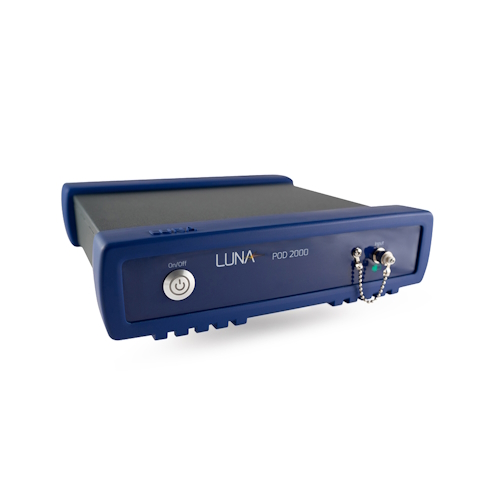
Wavelenght Range (C-band version) 1500 – 1600 nm, 1550 nm typical; Wavelength Range (O-band version) 1260 – 1360 nm; 1310 nm typical; Dynamic Range -45 – 5 dB; SOP Uncertainty @ Calibration Wavelength 1.5°, Azimuth 1°, Ellipticity 1°; DOP uncertainty @ Calibration Wavelength -1.5% - 1.5%; Measurement Update Rate 100KHz; Measurement SOP Entire Poincaré Sphere Luna’s POD 2000 is a DSP-powered polarimeter designed for high-speed polarization characterization, analysis, and monitoring. It utilizes four channels to simultaneously capture the four Stokes parameters, allowing it to measure an input light beam’s instantaneous state of polarization (SOP) and degree of polarization (DOP). With a USB 2.0 interface, data can be directly transferred to a computer, enabling the polarimeter to monitor and analyze rapid polarization changes at a sampling rate of up to 100 KS/s. Additionally, it supports standard 100BASE-TX Ethernet for measurement and control. The POD 2000 features a user interface that provides real-time graphical displays of the polarization state. This can be viewed on a Poincaré Sphere window for SOP traces or on an oscilloscope window for tracking polarization changes over time. Key features: High speed, SOP/DOP measurement with 100Khz date update rate High accuracy Dynamic range -45 to 5 dBm None Stop or Continuous measurement as high as 100KHz update rate. USB 2.0, Ethernet 100BASE-TX SCIP command, C/C++ API, PC GUI Trigger in/out Applications: SOP/DOP monitoring, Polarization analysis, Scrambler DOP characterization, SOP statistics, PM fiber alignment to light sources, Polarization extinction ratio Analysis
REQUEST PRICING AND AVAILABILITY
- Get your individual quote.
- Technical compatibility review included.
- Volume discounts available.
No obligation. Direct access to our engineering team.

Wavelength 600-2300 nm; Bandwidth 0.05-1.2 nm; Reflectivity 5-99%; SLSR >8 dB; Fiber Type SM, PM, Double Clad, LMA, Custom; Fiber Pigtail Length ≥0.5, CustomGreitlex Photonics’ GTL-FBG-TB-890 tunable fiber Bragg gratings (FBGs) are a good solution for many applications – including those requiring a corrected central Bragg wavelength. An FBG’s central wavelength strongly depends on applied stress, with the mechanically induced strain linearly shifting the FBG’s central wavelength.The tunable fiber Bragg grating wavelength’s relative strain sensitivity is 0.78 * 10-6 µstrain-1. GTL-FBG-TB-890 tunable fiber Bragg gratings are boxed and operated manually. Athermal performance with an adjustment range of 2 nm is also possible. The gratings are available as bare fibers or with a variety of optical connectors. These FBGs replace similar products from the former FORC Photonics. The following configurations can be changed at the customer's request, please contact AMS Technologies to discuss a customized tunable fiber Bragg grating solution tailored to your project’s requirements.Key Features:Wavelength Range: 600 nm to 2300 nmWavelengths to Quick Order [nm]: 633, 780, 794, 797, 799, 801, 809, 830, 852, 895, 940, 976, 1030, 1057, 1060, 1064, 1080, 1125, 1150, 1178, 1240, 1270, 1310, 1484,1510 - 1580, 1650, 1900, 1908, 1952, 2300Fiber Type: Single Mode (SM), Polarization Maintaining (PM), Double Clad, LMA, CustomThermal Wavelength Stability (0°C to +60°C): <0.18 nmReflectivity: 5% to 99%Bandwidth (WFHM): 0.05 nm to 1.2 nmFBG Length: 1 mm to 20 mmAdjustment Range: 2 nmSLSR: >8 dBFBG Pigtail Length: ≥0.5 mFBG Recoating: On Customer Request Tensile Strength: >100 kpsiOptical Connector: Bare Fiber, FC/APC, LC/APC, CustomPackage Dimensions: 66 x 18 x 16 mmApplications: Where Corrected Central Bragg Wavelength is Necessary
REQUEST PRICING AND AVAILABILITY
- Get your individual quote.
- Technical compatibility review included.
- Volume discounts available.
No obligation. Direct access to our engineering team.

760-1083 nm; Typ. Linewidth 0.6 MHz; Output Power 6-150 mW CW; Threshold Current ≤70 mA; Slope Efficiency 0.7 W/A; Side Mode Suppression Ratio ≥30 dBToptica eagleyard’s DFB series of distributed feedback (DFB) laser diodes features a built-in wavelength-selective grating stabilizing the wavelength. The DFB series’ entire resonator consists of a periodic structure. Thus, the devices operate on a single resonator mode emitting quasi-monochromatic radiation with a very small line width and low phase noise. The lasers can have very low-intensity noise because of the lack of mode partition noise. Due to the Gaussian mode the output is diffraction-limited.The choice of a distributed feedback design instead of a similar distributed Bragg grating (DBR) structure enables even a broader smooth tuning range around the operational point without the risk of experiencing spectral issues known as mode-hops, as these are given by design of a DBR diode, making the latter less suitable for the needs of atom spectroscopy.Special variants are available – two versions are intended to be used as seed lasers for pulsed fiber lasers, while other variants aim at oxygen detection as the emission wavelength of these laser diodes match with the strong absorption lines of oxygen at 760 nm and 764 nm while wavelength tuning around one of these absorption lines is possible.Further variants are especially suitable for spectroscopy with mode‐hop free operation and small linewidth guaranteed at the specified target wavelength for spectroscopic applications – these laser diodes are reaching the target wavelength by temperature tuning and allow wavelength tuning around this target wavelength.External backreflections may disturb the spectrum of these laser diodes, so the use of butterfly (BFW01) or TOC03 packages and effective optical isolation is recommended for spectroscopic applications requiring absolutely mode‐hop‐free tuning. Finally, special tunable variants with integrated optical isolators are available, enabling a wide mode‐hop free tuning range given by the specified operating temperature range and the specified power range.Key Features:Single Frequency ModeHigh Side Mode Suppression > 50 dBNarrow Linewidth <1 MHzPulse Width 1 to 50 nsPeak Power up to 500 mWRepetition Rate up to 1 MHzSMSR >35 dBProductWavelengthOutput PowerSpecificsDFB-0760-00012-1500-BFY12-0005760 nm12 mWoxygen detection, spectroscopy, metrologyDFB-0760-00040-1500-BFW01-0005760 nm40 mWoxygen detection with collimatorDFB-0760-00040-1500-TOV01-0005760 nm40 mWoxygen detection VCSEL replacementDFB-0760-00040-1500-TOC03-0005760 nm40 mWoxygen detectionDFB-0780-00020-1500-BFY12-0005780 nm20 mWoxygen detection,spectroscopy: Rb D2DFB-0780-00040-1500-BFY02-0000780 nm40 mWbasic variant with PM fiberDFB-0780-00040-1500-BFY02-0002780 nm40 mWtunable with PM fiberDFB-0780-00040-1500-BFW11-0005780 nm40 mWspectroscopy: Rb D2 with isolator and collimatorDFB-0780-00080-1500-TOV01-0005780 nm80 mWspectroscopy: Rb D2DFB-0780-00080-1500-BFW01-0002780 nm80 mWtunable with collimatorDFB-0780-00080-1500-BFW01-0005780 nm80 mWspectroscopy: Rb D2 with collimatorDFB-0780-00080-1500-TOC03-0000780 nm80 mWbasic variantDFB-0780-00080-1500-TOC03-0002780 nm80 mWtunableDFB-0780-00080-1500-TOC03-0005780 nm80 mWspectroscopy: Rb D2DFB-0785-00040-1500-BFY02-0000785 nm40 mWbasic variant with PM fiberDFB-0785-00040-1500-BFY02-0002785 nm40 mWtunable with PM fiberDFB-0785-00100-1500-TOV01-0000785 nm100 mWbasic variantDFB-0795-00015-1500-BFY12-0005795 nm15 mWspectroscopy: Rb D1 lineDFB-0795-00040-1500-BFW11-0005795 nm40 mWspectroscopy: Rb D1 with isolator and collimatorDFB-0795-00080-1500-BFW01-0005795 nm80 mWspectroscopy: Rb D1 with collimatorDFB-0852-00015-1500-BFY12-0005852 nm15 mWspectroscopy: Cs D2 DFB-0852-00050-1500-BFY02-0000852 nm50 mWbasic variant with PM fiberDFB-0852-00050-1500-BFY02-0002852 nm50 mWtunable with PM fiberDFB-0852-00100-1500-BFW01-0002852 nm100 mWtunable with collimatorDFB-0852-00100-1500-BFW01-0005852 nm100 mWspectroscopy: CS D2 with collimatorDFB-0852-00150-1500-TOC03-0000852 nm150 mWbasic variantDFB-0852-00150-1500-TOC03-0002852 nm150 mWtunableDFB-0852-00150-1500-TOC03-0005852 nm150 mWspectroscopy: Cs D2DFB-0895-00050-1500-TOV01-0005895 nm50 mWspectroscopy: Cs D1DFB-0935-00080-1500-TOC03-0004935 nm80 mWspectroscopy: YbDFB-1030-00500-1500-BFY02-00101030 nm500 mWseed laser (pulsed mode) with PM fiberDFB-1064-00025-1500-BFY12-00021064 nm25 mWtunable with isolator and PM fiberDFB-1064-00040-1500-BFY02-00001064 nm40 mWbasic variant with PM fiberDFB-1064-00040-1500-BFY02-00021064 nm40 mWtunable with PM fiberDFB-1064-00080-1500-TOC03-00001064 nm80 mWbasic variantDFB-1064-00080-1500-TOC03-00021064 nm80 mWtunableDFB-1064-00500-1500-BFY02-00101064 nm500 mWseed laser (pulsed mode) with PM fiberDFB-1083-00025-1500-BFY12-00021083 nm25 mWtunable with isolator and PM fiberDFB-1083-00080-1500-TOC03-00021083 nm80 mW Applications: Interferometry, Laser Doppler Velocimetry and Vibrometry; Cold Atoms; Optically Pumped Atom Clocks; Quantum Optics; THz Generation, Raman Spectroscopy; Cs- ,Rb- , K- Spectroscopy; Seed Laser for LIDAR SystemsPlease note that TOPTICA eagleyard products are not availble from us in Denmark, Finland, Iceland, Norway, and Sweden.
REQUEST PRICING AND AVAILABILITY
- Get your individual quote.
- Technical compatibility review included.
- Volume discounts available.
No obligation. Direct access to our engineering team.