
LightMachinery

Beamsplitters are optical components splitting an incident light beam into two parts. Beam splitters take on many forms: cubes, plates, hexagons, pentagons, polarizing, non-polarizing (usually somewhere in between), narrowband, broadband, dielectric, air-spaced, metal, cemented, optically contacted (epoxy-free bonding), a.s.o. If you are looking for a customized beamsplitter that exactly meets your specific performance and cost requirements, please get in touch with the AMS Technologies beamsplitter experts. Our supplier LightMachinery is extremely experienced with specifying, designing and manufacturing custom beamsplitters using the company’s patented fluid jet polishing (FJP) technology that allows the adjustment of the beamsplitter’s shape and flatness to within a few nanometers. We are looking forward to discussing your customized beamsplitter solution! Together with our supplier LightMachinery, it is our job at AMS Technologies to help you sort out the specifications of your customized beamsplitter. Some of the key parameters to think about are wavelength range, polarization and physical size requirements. For instance, P polarization is much more inclined to transmit at large angles (in the 45° range). The challenge for coating designers is to adjust the transmission of the two polarizations to meet the specific requirements of your custom beamsplitter. Also, if the beamsplitter will be used inside an interferometer, you may need to consider path length and phase matching requirements. It is always good if you can explain how you will be using your beamsplitter, it can really help us to define out your requirements. Due to multiple requests for a very accurate beamsplitter, AMS Technologies is offering two standard LightMachinery precision cube beam splitters with angles good down to 1 arcmin and surfaces flat to λ/10. While the OP-5119 beamsplitter is suitable for the 400 to 900 nm wavelength range in the visible (VIS) spectrum, the OP-5120 beamsplitter is optimized for infrared (IR) wavelengths from 800 to 1750 nm. However, do not hesitate to contact AMS Technologies to discuss and specify your custom beamsplitter in detail!
REQUEST PRICING AND AVAILABILITY
- Get your individual quote.
- Technical compatibility review included.
- Volume discounts available.
No obligation. Direct access to our engineering team.
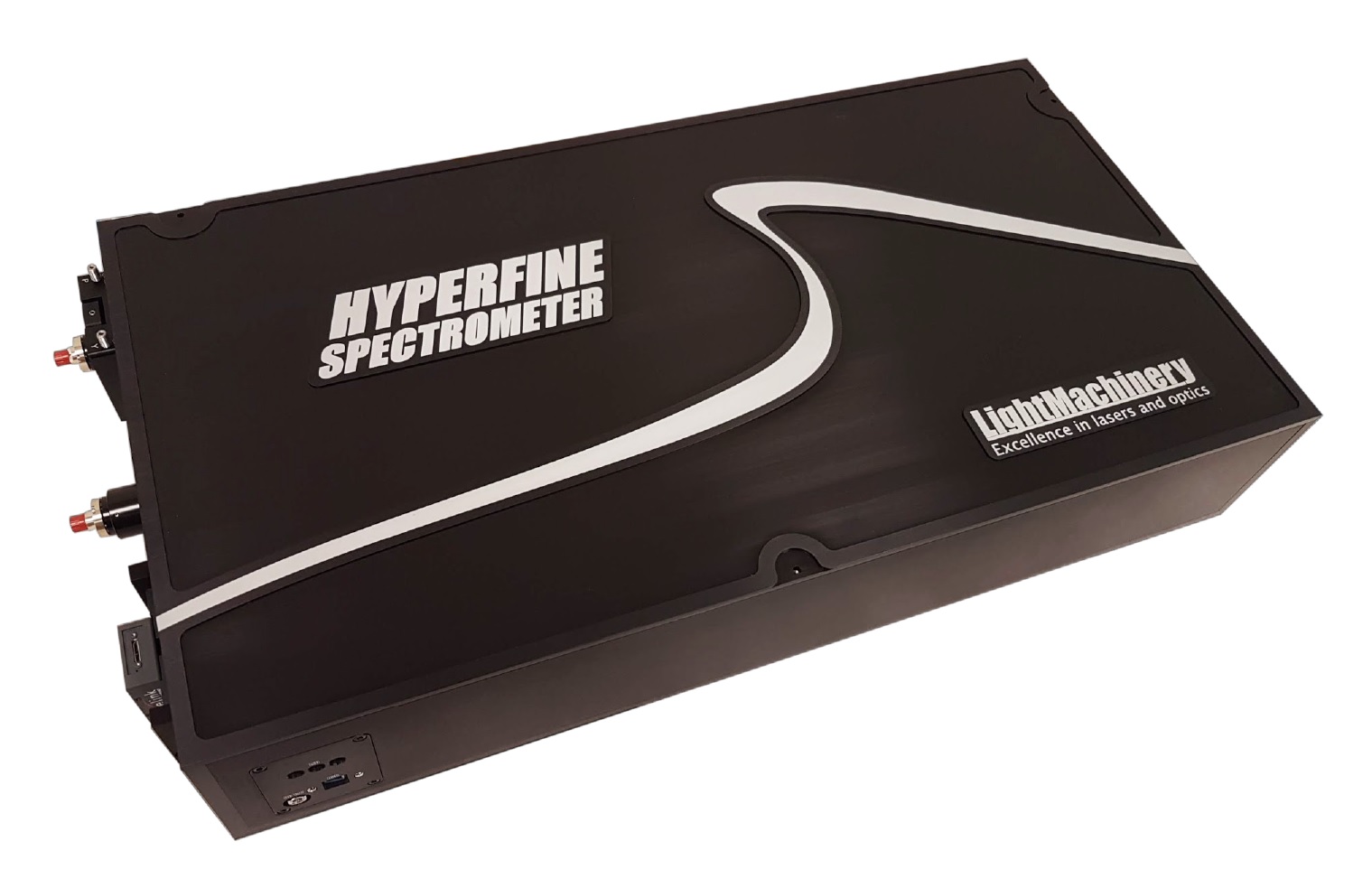
VIS; 531-782 nm; Resolution 1, 1.5 pm; Dynamic Range (@6 kHz From Pump) 100 dB; Interface USB 3.1; 711x371x124 mm The great challenge with Brillouin spectroscopy is that the scattered signal from the un-shifted wavelength of the laser can overwhelm the small Brillouin shifted return signal. So, for the HF-8999-xxx-AUTO Brillouin HyperFine series of spectrometers, Light Machinery has combined their leading-edge HyperFine spectrometer with a very narrow band tunable filter to suppress the bright un-shifted laser frequency. The Brillouin HyperFine series’ tunable filter is easily adjusted to suppress the main laser peak, and exposure gating is used to drastically increase the full dynamic range of the instrument. The combination of these two devices achieves a dynamic ratio of 65 dB with Light Machinery’s standard CMOS camera and is designated – the “Green Killer” (for the 532 nm model HF-8999-532-AUTO). The tunable filter is comprised of a double passed air spaced etalon. The etalon tuning and alignment are both computer-controlled. LightMachinery’s proprietary fluid jet polishing process is utilized to create both the tunable etalon filter and the main VIPA etalon in the Brillouin HyperFine spectrometer. The result of the combination of the high-finesse elements is unparalleled sensitivity and relatively compact size, perfect for Brillouin scattering. Designed for measuring hyperfine spectra and subtle spectral shifts, the Brillouin HyperFine series are compact spectrometers capable of 1 pm resolution. Light enters the spectrometer though a fiber. A VIPA etalon, manufactured using LightMachinery's proprietary fluid jet polishing technology, is used to produce very high dispersion in the vertical axis with sub-picometer resolution. This is followed by a conventional grating to disperse overlapping orders in the horizontal direction and produce a 2D spectrum of the input light. Simple PC-based LightMachinery software unwraps the spectrum to produce an ultra-high resolution wavelength spectrum of the input light and allows the user to review spectra in real time and save or export measured data for further analysis. LabView drivers enable the HyperFine spectrometers to be integrated into automated experimental setups. A secondary camera provides a wide wavelength range, lower resolution view of the spectrum. Sometimes you need something special - if you are looking for a customized spectrometer with specifications or functionalities that exactly meet your specific requirements, please get in touch with the AMS Technologies spectrometer experts. Our supplier LightMachinery is extremely experienced with specifying, designing and manufacturing custom spectrometers. We are looking forward to discussing your customized spectrometer solution! Key Features: Computer-controlled Alignment and Adjustment High Throughput Enabling Fast Acquisition 80 dB Contrast and High Pump Suppression High Resolution (1, 1.5 pm) and High Precision Fast, No Moving Parts Large Spectral Range Covered in a Single Shot Easy to Use, Ready to Use out of the Box Simple Integration Compact Size: 711 x 371 x 124 mm Spectral Range: Visible (VIS) – 532, 660, 780 nm Total Wavelength Range: 531 to 782 nm Dynamic Range (@6 GHz From Pump, Contrast): 100 dB Pump Wavelength Filter Suppression: >30 dB Pump Suppression Filter Tunability: ±1 nm Pump Suppression Filter Width: 0.5 pm Fiber Optic Input – SMF Only Simple USB 3.1 Interface Weight: 25 kg Applications: Brillouin Scattering Spectroscopy With High Resolution and High Dynamic Range
REQUEST PRICING AND AVAILABILITY
- Get your individual quote.
- Technical compatibility review included.
- Volume discounts available.
No obligation. Direct access to our engineering team.
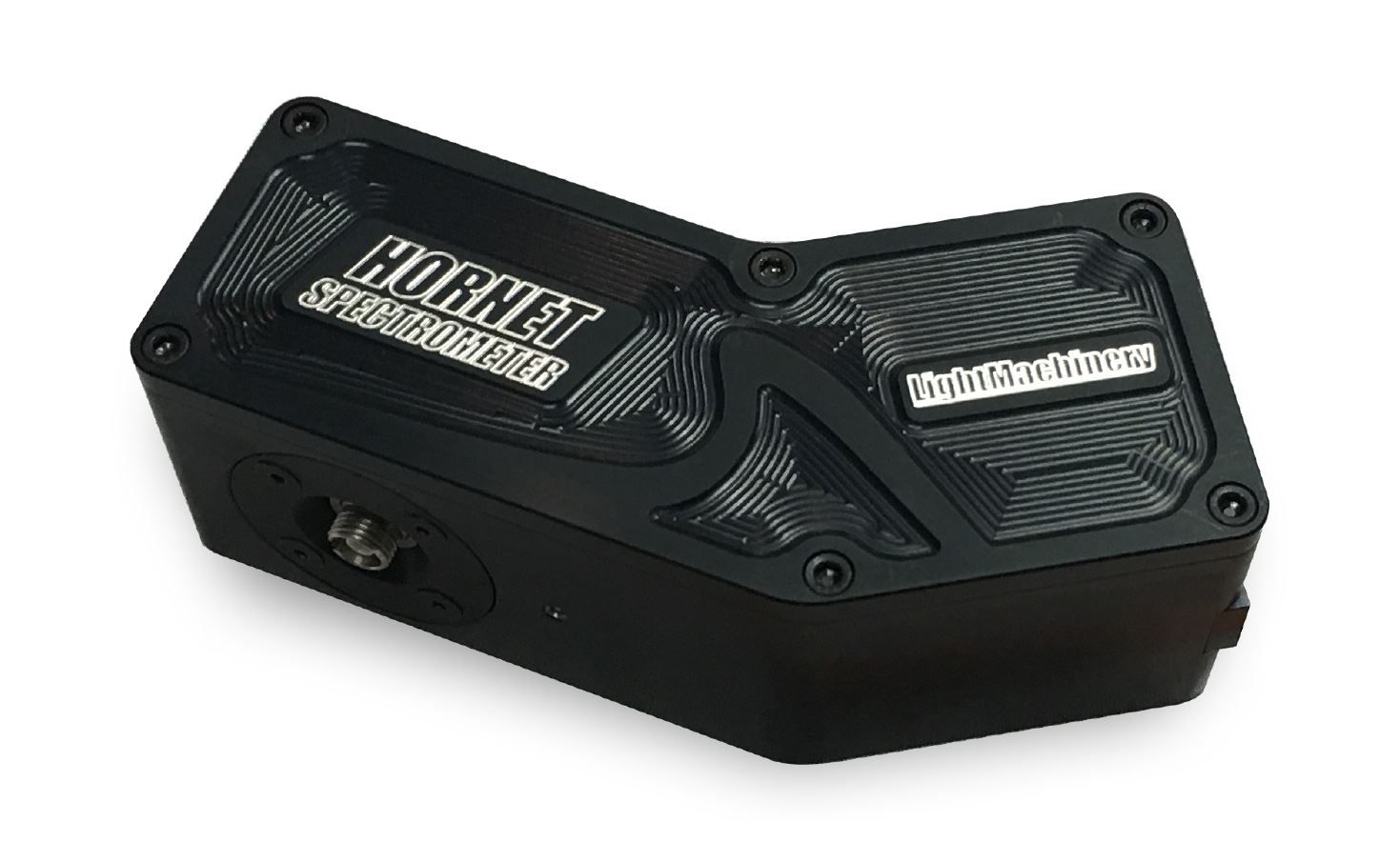
VIS-NIR; 260-1080 nm; Resolution 1.0-<30 pm; Simultaneous Range 15-350 nm; Interface USB; 156x114x54, 185x185x92 mm LightMachinery’s Hornet series of compact spectrometers provide resolutions better than 30 pm in the visible (VIS) and near infrared (NIR) range. Hornet series spectrometers are based on LightMachinery's patented Fluid Jet Polishing technology. Designed for characterizing laser spectra, the Hornet spectrometers achieve the resolution of large gratings spectrometers while covering a larger wavelength range. Simple PC-based software allows the user to review spectra in real time and save or export for more analysis. Labview drivers enable the Hornet spectrometers to be integrated into automated experimental setups. Sometimes you need something special - if you are looking for a customized spectrometer with specifications or functionalities that exactly meet your specific requirements, please get in touch with the AMS Technologies spectrometer experts. Our supplier LightMachinery is extremely experienced with specifying, designing and manufacturing custom spectrometers. We are looking forward to discussing your customized spectrometer solution! Key Features: Simple to use Can Measure Spectra From CW and Pulsed Sources High Resolution: 1.0 to <30 pm, sub 20 pm @532 nm (Resolving Power >25,000), 0.02/cm to 1.7/cm Simultaneous Range/Resolution Ratio: >10,000 @532 nm Accuracy: <200 pm Following Calibration (External Calibration Source Required) Dynamic Range: 100:1 to 500:1 (Single-shot Measurement, up to 50 dB With Exposure Bracketing) Wavelength Range: 260 to 1080 nm, Visible (VIS) to Near Infrared (NIR) Fast Real-time Measurements - Acquisition and Processing Speed >10 Hz Fiber Optic Input Quick Data Acquisition and Export Simple USB Interface LabView Drivers No Moving Parts (Single-shot Laser Spectrum Analysis) Ultra-compact Ultra-reliable Dimensions: 156 x 114 x 54 mm, 185 x 185 x 92 mm (HN-935x) Applications: Light Sources Characterization (Lasers, Diode Lasers, Super-luminescent Diodes); Monitoring Laser Modes in Real Time; Passive Components (Filters, Etalons, Fiber Bragg Gratings) Characterization to the 25 pm Level; Checking the Spectral / Mode Purity of Lasers; Classic Undergraduate and Graduate Experiments
REQUEST PRICING AND AVAILABILITY
- Get your individual quote.
- Technical compatibility review included.
- Volume discounts available.
No obligation. Direct access to our engineering team.
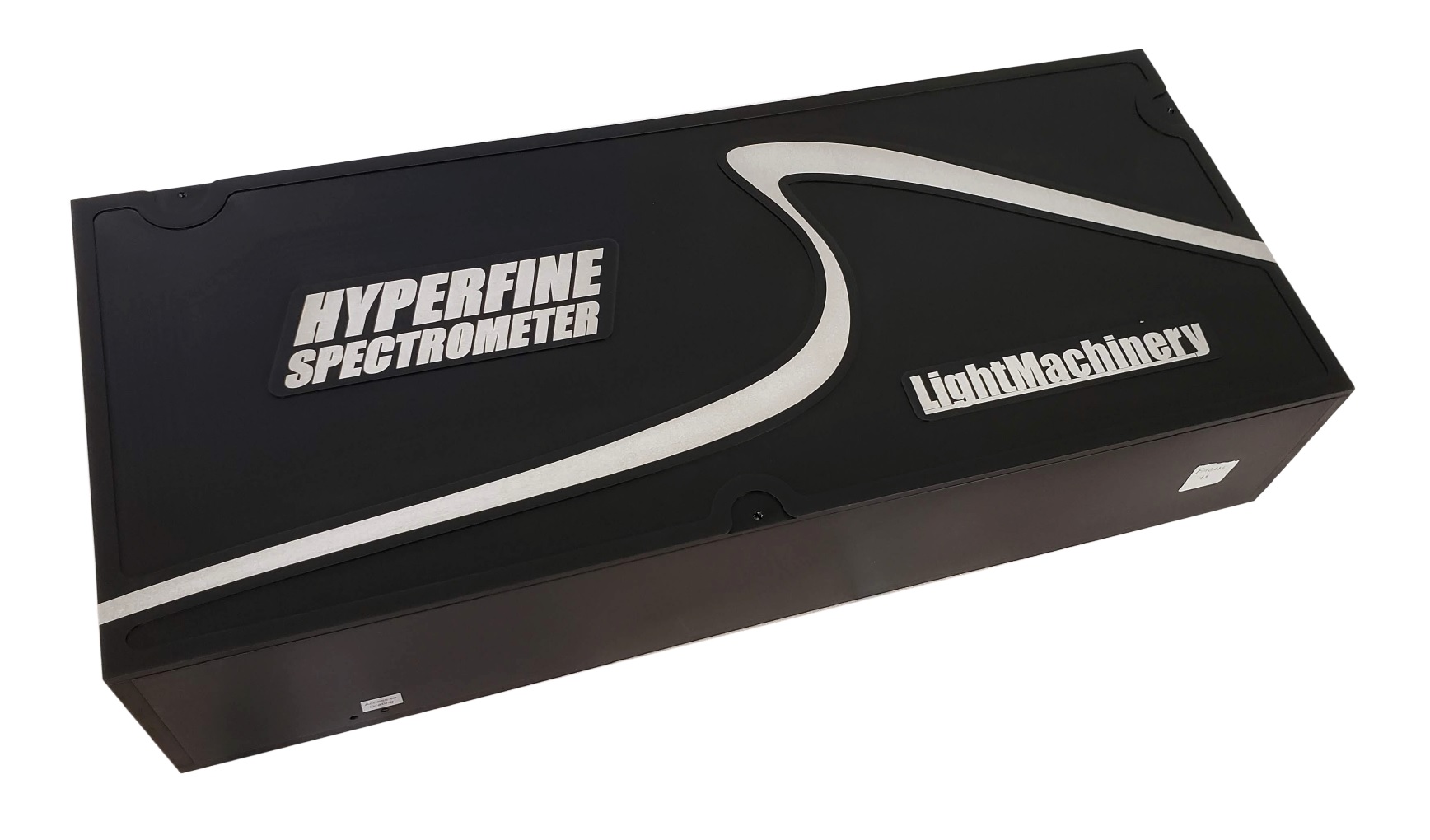
UV-NIR; 250-1100 nm; Resolution 0.5-<30 pm; Simultaneous Range 6-350 nm; Interface USB; 610x254x129 mm LightMachinery’s compact HyperFine spectrometer series with sub-picometer resolution are based on LightMachinery's patented fluid jet polishing technology. Designed for measuring hyperfine spectra and subtle spectral shifts, the HyperFine series are compact spectrometers capable of 1 pm resolution. Light enters the HyperFine spectrometer though a fiber. A VIPA etalon, manufactured using LightMachinery's proprietary fluid jet polishing technology, is used to produce very high dispersion in the vertical axis with sub-picometer resolution. This is followed by a conventional grating to disperse overlapping orders in the horizontal direction and produce a 2D spectrum of the input light. LightMachinery software unwraps the spectrum to produce an ultra-high resolution wavelength spectrum of the input light. A secondary camera provides a wide wavelength range, lower resolution view of the spectrum. HyperFine spectrometers are ideal for measuring fine features in plasmas, pulsed laser characterization and for measuring the small spectral shifts from Brillouin or Raman scattering. Simple PC-based software allows the user to review spectra in real time and save or export measured data for further analysis. LabView drivers enable the HyperFine spectrometers to be integrated into automated experimental setups. Sometimes you need something special - if you are looking for a customized spectrometer with specifications or functionalities that exactly meet your specific requirements, please get in touch with the AMS Technologies spectrometer experts. Our supplier LightMachinery is extremely experienced with specifying, designing and manufacturing custom spectrometers. We are looking forward to discussing your customized spectrometer solution! Key Features: Fast, no Moving Parts (Single-shot Laser Spectrum Analysis) Compact Ultra-reliable Sub-picometer Resolution - Can Resolve Hyper-fine Spectra Below 1 Picometer Spectral Range: Ultraviolet (UV), Visible (VIS), Near Infrared (NIR) Total Wavelength Range (With Manual Grating Rotation): 250 to 1100 nm Simultaneous Wavelength Range (Without Grating Rotation): 6 to 350 nm Resolution: 0.5 to <30 pm, 0.01/cm to 1.7/cm Fiber Optic Input Quick Data Acquisition and Export Simple USB Interface LabView Drivers Dimensions: 610 x 254 x 129 mm Applications: Light Sources Characterization (Lasers of All Types, Single-shot Pulsed Laser Spectrum, Super-luminescent Diodes, Gas Discharge Lamps, etc.); Spectroscopy (Plasma, High-precision Gas Brillouin or Raman, Femtosecond Comb Fingerprinting, Spectral-domain Optical Coherence, Solar, Astronomical, Ultra- low Frequency Raman, Undergraduate Physics and Chemistry Laboratories, etc.); Passive Components Characterization (Notch Filters, Etalons; Fiber Bragg Gratings, etc.)
REQUEST PRICING AND AVAILABILITY
- Get your individual quote.
- Technical compatibility review included.
- Volume discounts available.
No obligation. Direct access to our engineering team.

9.3, 10.6 µm; Energy 0.15-5 J; Max. Rep-rate 12-500 Hz; Max. Average Power 60, 75 W; Beam Size 8x9-25x25 mm LightMachinery’s IMPACT-2000 series of pulsed CO2 lasers are optimized for 24/7 precision processing and drilling of non-metallic materials. The material interaction of the short, high-power pulses from TEA (Transversely Excited Atmospheric) CO2 lasers is quite different from that of long pulse and continuous CO2 lasers. High-definition processing with excellent edge quality can be obtained. Plastic materials can be selectively removed from a metal backing, leaving the metal layer untouched. For many applications, IMPACT-2000 lasers offer a lower cost alternative to excimer lasers. The IMPACT-2000 series of lasers all incorporate high reliability SSM (solid state modulator) switch technology as well gas filtering systems to ensure very high uptimes and low maintenance even at continuous 75 W power delivery 24/7. Impact-2000 series lasers are ideally suited for the selective removal or machining of non-metallic layers deposited on a metallic under-layer. Unlike conventional CO2 lasers, the short pulses and high peak powers of TEA CO2 lasers enable the surface layer to be removed (“ablated”) with little or no effect on the underlying metal substrate, and with minimal thermal damage (“heat-affected zone” or “HAZ”) to the surrounding polymer material. Key Features: Pulse Energy: 0.15 to 5 J Maximum Average Power: 60, 75 W Maximum Repetition Rate: 12 to 500 Hz Beam Size (Horizontal x Vertical) at Laser: 8x9 to 25x25 mm Megawatt Peak Powers Give Excellent Edge Definition in Non-metallic Materials Greatly Reduced Heat-affected Zone (HAZ) Compared to Conventional CO2 Lasers High-reliability SSM (Solid State Modulator) Switch Technology Internal Real-time Gas Filtering Systems High Up-times and Low Maintenance Even at Continuous 75 W Power Delivery 24/7 Operation at 10.6 or 9.3 µm Variety of Pulse Energy and Repetition Rate Models Cost-effective Alternative to Excimer Lasers in Many Processes Simple to Operate Low Cost of Ownership Applications: Drilling, Patterning and Ablation of Non-metallic Materials; Selective Removal of Polymer Materials Fom a Metal Substrate With no Damage to the Metallic Backing; Wire Stripping; Medical Device Components; Drilling of Controlled-release and Rapid-release Pharmaceutical Tablets and Capsules; Microvia-hole Drilling in Printed Circuits; Flex-circuit Processing; Laser Ultrasound Non-destructive Testing
REQUEST PRICING AND AVAILABILITY
- Get your individual quote.
- Technical compatibility review included.
- Volume discounts available.
No obligation. Direct access to our engineering team.

9.0-11 µm; Energy 0.25-3.0 J; Max. Rep-rate 100-400 Hz; Max. Average Power 100-300 W; Beam Size 11x11, 19x19 mm LightMachinery’s IMPACT-3000 series of pulsed CO2 lasers are optimized for 24/7 precision processing and drilling of non-metallic materials. The material interaction of the short, high-power pulses from TEA (Transversely Excited Atmospheric) CO2 lasers is quite different from that of long pulse and continuous CO2 lasers. High-definition processing with excellent edge quality can be obtained. Plastic materials can be selectively removed from a metal backing, leaving the metal layer untouched. For many applications, IMPACT-3000 lasers offer a lower cost alternative to excimer lasers. The IMPACT-3000 series lasers are high-power (up to 300 W) short-pulse TEA CO2 lasers for surface layer removal and cleaning, non-destructive testing, photochemistry and scientific research. The highest repetition rate model (3400) is intended primarily as a source for laser ultrasound testing. For materials processing, their combination of high peak power and short pulses permits the removal of surface layers such as polymer coatings, paint or contamination from metal or composite backings with no damage to the underlying material and minimal heat-affected zone (HAZ). Their high average power offers fast throughput. In non-destructive testing, the high pulse repetition rate, short pulse durations and optimised mode structure of IMPACT-3000 lasers make them an ideal generation source for laser ultrasound (Laser UT) testing of composite matrix materials. For photochemistry and advanced scientific research, the high repetition rate and high average power can be utilised in applications as diverse as isotope separation and remote sensing / LIDAR. Key Features: Pulse Energy: 0.25 to 3.0 J Maximum Average Power: 100 to 300 W Maximum Repetition Rate: 100 to 400 Hz Beam Size (Horizontal x Vertical) at Laser: 11x11, 19x19 mm Beam Divergence, Half Angle: ~2.0, ~6.0 mrad Megawatt Peak Powers Give Excellent Edge Definition in Non-metallic Materials Greatly Reduced Heat-affected Zone (HAZ) Compared to Conventional CO2 Lasers High Up-times and Low Maintenance Even at Continuous >200 W Power Delivery 24/7 Operation at 9.0 to 11 µm Variety of Pulse Energy and Repetition Rate Models Cost-effective Alternative to Excimer Lasers in Many Processes Simple to Operate Low Cost of Ownership Applications: Surface Layer Removal and Cleaning; Polymer Coatings; Brake Lines; Paint Stripping; Mold Cleaning; Non-Destructive Testing; Laser Ultrasound Generation; Photochemistry and Spectroscopy; Isotope Separation; LIDAR and Remote Sensing
REQUEST PRICING AND AVAILABILITY
- Get your individual quote.
- Technical compatibility review included.
- Volume discounts available.
No obligation. Direct access to our engineering team.

9.2-10.8 µm; Energy 0.25-5.0 J; Max. Rep-rate 12-150 Hz; Max. Average Power 60 W; Peak Power 1.0-12 MW; Beam Size 14x11, 25x25 mm LightMachinery’s IMPACT-4000 series of pulsed CO2 lasers are optimized for 24/7 precision processing and drilling of non-metallic materials. The material interaction of the short, high-power pulses from TEA (Transversely Excited Atmospheric) CO2 lasers is quite different from that of long pulse and continuous CO2 lasers. High-definition processing with excellent edge quality can be obtained. Plastic materials can be selectively removed from a metal backing, leaving the metal layer untouched. For many applications, IMPACT-4000 lasers offer a lower cost alternative to excimer lasers. The fully configurable IMPACT-4000 series lasers are designed for scientific and specialized applications. The short pulse of the thyratron-switched IMPACT-4000 series is ideal for ultrasound applications as well as applications in infrared chemistry. IMPACT-4000 lasers can be configured with a tunable option and set up in a master oscillator / power amplifier (MOPA) configuration with additional amplifiers to achieve the right power at the right wavelength for your application. IPACT-4000 series lasers can be supplied in a range of standard multi-module oscillators and MOPA configurations. The beam parameters (divergence, linewidth, mode structure, range of wavelength tuning, etc.) are mainly defined by the master oscillator, and the final energy is mainly defined by the number of power amplifier modules. Key Features: Pulse Energy: 0.25 to 5.0 J Maximum Average Power: 60 W Peak Power: 1.0 to 12 MW Gain Spike Duration: 100 ns Maximum Repetition Rate: 12 to 150 Hz Beam Size (Horizontal x Vertical) at Laser: 14x11, 25x25 mm Ultra-short Pulse Tunable TEA CO2 Lasers for Advanced Applications in Science and Industry Thyratron-switched for Low Jitter, Ultra-short Pulse (~100 ns) Operation Multi-module Oscillators and Oscillator-amplifier Systems Available Fully Configurable as Master Oscillator and Multiple Power Amplifier (MOPA) Stages Line-tunable (9.2 to 10.8 µm) or Operation at 9.3 or 10.6 µm as Standard Options Single Mode Operation (TEM00 / SLM) as Standard Option Variety of Pulse Energy and Repetition Rate Models Simple to Operate Low Cost of Ownership Applications: Plasma Diagnostics; Laser Photochemistry; Optical Damage Studies; Non-destructive Testing / Laser Ultrasound; Laser Propulsion and Particle Acceleration; Material Ablation & Surface Removal
REQUEST PRICING AND AVAILABILITY
- Get your individual quote.
- Technical compatibility review included.
- Volume discounts available.
No obligation. Direct access to our engineering team.

193-351 nm; Energy 0.150-0.700 J; Max. Rep-rate 10-100 Hz; Average Power 3-40 W; Pulse Duration 12-20 ns FWHM; Beam Size 12x26, 12x28 mm; Medium Duty Cycle Operation Designed for medium duty cycle operation in industrial and R&D environments, Light Machinery’s IPEX-700 series of excimer lasers deliver high-power ultraviolet laser machining combined with state-of-the-art performance. LightMachinery excimer lasers are used by leading R&D scientists all over the world. The largest single cost of operating an excimer laser is laser gas consumption while running the laser (also known as dynamic gas lifetime). Incorporating LightMachinery’s proprietary ICON™ (Integrated Ceramic on Nickel) and patented exciPure™ technologies, IPEX lasers offer extremely long gas lifetimes, superior optical stability and precise control of laser operating parameters. With exciPure™, LightMachinery has achieved a 10x improvement in gas usage over competing lasers. This technological breakthrough leads to dramatically less cost to run your laser. EasyClean automated valves fitted to the optics ports allow the laser chamber to be sealed and the gas fill / passivation to be retained while resonator optics are removed for cleaning and maintenance. Easy to use, simple to service and economical to operate, IPEX-700 lasers combine the benefits of high precision excimer processing with the lowest total cost of ownership and highest uptime in the market today. IPEX-700 lasers are ideal for applications such as pulsed laser deposition (PLD) and can be operated from any computer using Windows 7 or 8 – a Microsoft® Surface Pro 3 is included for your convenience. Key Features: Medium Duty Cycle Operation Wavelengths: 193 nm (ArF), 248 nm (KrF), 308 nm (XeCl), 351 nm (XeF) Maximum Pulse Energy: 230 to 700 mJ Stabilized Pulse Energy: 150 to 600 mJ Stabilized Average Power: 3 to 40 W Maximum Repetition Rate: 10 to 100 Hz Pulse Duration: 12 to 20 ns FWHM exciPure™ Technology for 10x Gas Lifetimes and Lowest Cost of Operation No Expensive Cryogenic Gas Purifier Required EasyClean Automated Optics Seals to Retain Gas Fill and Reduce Downtime During Optics Maintenance Optional High-Brightness Optics for Applications Requiring Low Beam Divergence or Extended Coherence Length High-stability Optics Mounts for Ultimate Beam Pointing Accuracy Simple Integration into Industrial Processing Systems Microsoft® Surface Pro 4 Remote Control for Simple Operation Simplified Optical Maintenance, Retained Gas Fill and Passivation No Realignment Required After Cleaning or Replacing Optics Fast, Precise Energy Stabilization (<1.0%, KrF Gas) in Internal, Burst and External Trigger Modes Removes Particulates and Maintains Optics Cleanliness Pointing Stability: 200 rad Beam Size: 12x26, 12x28 mm Beam Divergence (Vertical x Horizontal): 1x3 mrad, Can be Reduced to 0.25 mrad With High-brightness Unstable Resonator Optics Cooling Requirements: Optional Air Cooling up to 25 Hz Operation, Water Cooling at Higher Repetition Rates Laser Gas: Premix or Individual Cylinders Applications: Pulsed Laser Deposition; Precision Manufacturing; Material Processing; Drilling; Wire Stripping; Scientific Research; LIDAR; Laser Induced Breakdown Spectroscopy
REQUEST PRICING AND AVAILABILITY
- Get your individual quote.
- Technical compatibility review included.
- Volume discounts available.
No obligation. Direct access to our engineering team.

193-351 nm; Energy 0.150-0.700 J; Max. Rep-rate 10-200 Hz; Average Power 3-80 W; Pulse Duration 12-20 ns FWHM; Beam Size 12x26, 12x28 mm; High Duty Cycle Operation Designed for high duty cycle operation in a manufacturing environment, Light Machinery’s IPEX-800 series of excimer lasers deliver high power ultraviolet laser machining combined with state-of-the-art performance. The largest single cost of operating an excimer laser is laser gas consumption while running the laser (also known as dynamic gas lifetime). Incorporating LightMachinery’s proprietary ICON™ (Integrated Ceramic on Nickel) and patented exciPure™ technologies, IPEX lasers offer extremely long gas lifetimes, superior optical stability and precise control of laser operating parameters. With exciPure™, LightMachinery has achieved a 10x improvement in gas usage over competing lasers. This technological breakthrough leads to dramatically less cost to run your laser. EasyClean automated valves fitted to the optics ports allow the laser chamber to be sealed and the gas fill/passivation to be retained while resonator optics are removed for cleaning and maintenance. Easy to use, simple to service and economical to operate, IPEX-800 lasers combine the benefits of high precision excimer processing with the lowest total cost of ownership and highest uptime in the market today. Marking of ceramics is one of many applications for these versatile industrial tools. Key Features: High Duty Cycle Operation Wavelengths: 193 nm (ArF), 248 nm (KrF), 308 nm (XeCl), 351 nm (XeF) Maximum Pulse Energy: 230 to 700 mJ Stabilized Pulse Energy: 150 to 600 mJ Stabilized Average Power: 3 to 80 W Maximum Repetition Rate: 10 to 200 Hz Pulse Duration: 12 to 20 ns FWHM exciPure™ Technology for 10x Gas Lifetimes, Long Replacement Intervals and Lowest Cost of Operation No Expensive Cryogenic Gas Purifier Required EasyClean Automated Optics Seals to Retain Gas Fill and Reduce Downtime During Optics Maintenance Optional High-Brightness Optics for Applications Requiring Low Beam Divergence or Extended Coherence Length High-stability Optics Mounts for Ultimate Beam Pointing Accuracy Simple Integration into Industrial Processing Systems Simplified Optical Maintenance, Retained Gas Fill and Passivation No Realignment Required After Cleaning or Replacing Optics Fast, Precise Energy Stabilization (<1.0%, KrF Gas) in Internal, Burst and External Trigger Modes Removes Particulates and Maintains Optics Cleanliness Pointing Stability: 200 µrad Beam Size: 12x26, 12x28 mm Beam Divergence (Vertical x Horizontal): 1x3 mrad, Can be Reduced to 0.25 mrad With High-brightness Unstable Resonator Optics Cooling Requirements: Optional Air Cooling up to 25 Hz Operation, Water Cooling at Higher Repetition Rates Laser Gas: Premix or Individual Cylinders Applications: 24/ 7 Pulsed Laser Deposition; Precision Manufacturing; Material Processing; Drilling; Wire Stripping; Scientific Research; LIDAR; Laser Induced Breakdown Spectroscopy
REQUEST PRICING AND AVAILABILITY
- Get your individual quote.
- Technical compatibility review included.
- Volume discounts available.
No obligation. Direct access to our engineering team.

9.3, 10.6 µm; Energy 0.5-5.7 J; Max. Rep-rate 12-150 Hz; Marks/h 43,200-540,000; Beam Size 14x11-25x25 mm LightMachinery's' LaserMark 950 and 960 series of pulsed CO2 lasers provide a fast, reliable means of applying high-quality permanent marks such as date and batch codes to a broad spectrum of products ranging from consumer product packages like beer labels, gelatin capsules or hair color tubes to miniature electronic components. LaserMark series lasers are designed for on-line marking and coding, creating perfect, crisp images on your products 24 / 7. These pulsed CO2 lasers complete the entire marking process in less than 1 µs so large-area, multi-character marking can be done "on the fly" without mark smearing or degradation that can occur in other types of laser marking. LightMachinery and AMS Technologies have the experience required to design, install and support your ultra-high reliability marking system. LaserMark lasers can mark on a wide variety of materials including inked paper and cards, foils, painted or anodized metal, glass and many types of plastic. The LaserMark series provides ease of operation, extreme reliability and high uptime in production environments. Solid state SSM high-voltage modulators and ultra-low gas flow ensure minimal consumable and maintenance costs. The LaserMark 960SSM series is sealed to NEMA 12 standards for general purpose applications. For more demanding operation, the LaserMark 950SSM series is NEMA 4 rated for direct high pressure hose down. Key Features: Super Fast "On the Fly"-Marking of Moving Parts (Mark Completed in 1 Millionth of a Second!) Eliminates Inks and Other High-cost/Environmentally-unfriendly Consumables Permanent, Multi-character Marks Applied Instantaneously in a Single Pulse Reliable, Proven Fourth-generation Product With Solid-state Technology for Low Cost of Ownership Wide Range of Beam Delivery Modules Available - Pulse Energy: 0.5 to 5.7 J Maximum Repetition Rate: 12 to 150 Marks per Second Marks per Hour: 43,200 to 540,000 Beam Size (Horizontal x Vertical): 14x11 to 25x25 mm Sealing Standard: IEC 529 (IP66), NEMA 4 or NEMA 12 High Voltage Switch: SSM (Solid State Modulator) Electrical Standards: IEC 204:EN 60204 Laser Gas Mix: LaserMark 5 Commercial Laser Premix Internal Gas Option for LaserMark 950 Series Water Cooling: 90 l/h at +10-+25°C RS-485 Interface Applications: Applying High-quality Permanent Marks Such as Date and Batch Codes to a Broad Spectrum of Products, Ranging From Consumer Product Packages Like Beer Labels, Gelatin Capsules or Hair Color Tubes to Miniature Electronic Component
REQUEST PRICING AND AVAILABILITY
- Get your individual quote.
- Technical compatibility review included.
- Volume discounts available.
No obligation. Direct access to our engineering team.

Germanium; 2.5-14 µm; Finesse Dependent on Wavelength; FSR Dependent on Wavelength; Thickness 25.4-50.8 mm; Uncoated; Dia 25.4 mm; Clear Aperture Dia. 12.7 mm LightMachinery’s OP-5483 series of solid Germanium (Ge) etalons are high-index components for longer IR wavelengths. OP-5483 series etalons are manufactured using the company’s patented fluid jet polishing (FJP) technology – allowing the adjustment of the etalon’s shape and flatness to within a few nanometers. This series of thick Germanium etalons is available with a diameter of 25.4 mm and lengths of 25.4, 38 and 50.8 mm. Germanium etalons have a high index (~4.0 depending on wavelength) that creates a reasonably high finesse without any coatings. They also remain transmissive farther out into the infrared than silicon etalons and will still provide a decent signal at a wavelength of 14 µm. The high temperature sensitivity of Germanium is similar to Silicon and can also be useful (or problematic). These etalons are often used to monitor the wavelengths of tunable lasers (like lead salt or quantum cascade lasers) in the mid-infrared. A portion of the output from your tunable laser is directed at the Germanium etalon. As the laser is tuned, the transmission through the etalon is modulated with a spacing between transmission peaks equal to the etalon’s FSR. As Germanium is very temperature sensitive, OP-5483 series etalons are not very useful for determining the absolute wavelength, but by tracking the number of peaks from a reference, the relative wavelength can be determined quite accurately. Etalons are optically transparent, flat components with very precisely parallel reflecting surfaces. For high performance (i.e. resolution), these components require very high-quality, flat and level surfaces with low roughness and extreme parallelism. Solid Germanium etalons are comparatively simple, robust, yet very parallel optical components with a wide variety of applications in lasers and spectroscopy. Although solid etalons are generally coated to increase the finesse of the etalon, uncoated solid etalons like the OP-5483 series – using only the 4% fresnel reflection to provide the etalon effect –are often used inside laser cavities since only low finesse is required to filter out unwanted laser wavelengths, and uncoated etalons are very damage resistant. One major issue with solid etalons is their instability to temperature changes (both the index and the physical thickness of the etalon material change with temperature), which can be unacceptable in certain applications. In those cases, please refer to air spaced etalons that reduce this problem of temperature dependence by using air as the etalon medium. In certain applications though, the temperature dependence can also be a useful method for tuning the transmission peak position since it effectively changes the thickness of the etalon. Sometimes you need something special – if you are looking for a customized solid Germanium etalon that exactly meets your specific requirements, please get in touch with the AMS Technologies etalon experts. Our supplier LightMachinery is extremely experienced with specifying, designing and manufacturing custom etalons using the company’s patented fluid jet polishing (FJP) technology. We are looking forward to discussing your customized etalon solution! Fluid jet polishing (FJP) systems use a fine stream of slurry to accurately remove nanometers of material from an optical surface. Many years of refining this computer controlled polishing technology have enabled LightMachinery to use FJP for the adjustment of the shape and flatness of optical components such as etalon mirrors to within a few nanometers as well as the production of very thin components such as wafers and thin etalons that are impossible to accurately polish using conventional technology. Key Features: Etalon Material: Germanium Wavelength Range: 2.5 to 14 µm (Infrared, IR) Finesse: Dependent on Wavelength Free Spectral Range, FSR: Dependent on Wavelength Uncoated Diameter: 25.4 mm (1”) Length: 25.4, 38, 50.8 mm Clear Aperture: Diameter 12.7 mm Surface Figure: λ/10 Surface Quality: 80/50 or Better Wedge: <0.5 arcsec – If Coating is Required, Wedge Can Be Reduced and Finesse Can Be Increased Applications: Spectroscopy; Lasers; Interferometers; Wavelength Measurement; Fine-structural Investigation of Spectral Lines
REQUEST PRICING AND AVAILABILITY
- Get your individual quote.
- Technical compatibility review included.
- Volume discounts available.
No obligation. Direct access to our engineering team.

Fused Silica, CaF2; 415-1700 nm, Customer Specified; Finesse 56-~100, Customer Specified; FSR 15-60 GHz, 0.5-2/cm, Customer Specified; Thickness 1.68-6.74 mm, Customer Specified; AR and HR Coating; 22.0x24.0, Customer Specified; Clear Aperture 18x18 mm, Customer Specified LightMachinery’s OP-6721/OP-7553 series of VIPA (Virtually Imaged Phase Array) etalons are manufactured from Fused Silica (OP-6721) or Calcium Fluoride (OP-7553), allowing operation further into the infrared, IR) using the company’s patented fluid jet polishing (FJP) technology – allowing the adjustment of the etalon’s shape and flatness to within a few nanometers. Catalog series OP-6721 VIPA etalons are available with dimensions of 22.0 x 24.0 mm and 18 x 18 mm aperture. Free spectral range (FSR) values are 15 GHz (0.5/cm), 30 GHz (1/cm) and 60 GHz (2/cm), each available with nine different finesse values from 56 to 100, resulting in nine different wavelength ranges from 415 to 1700 nm. Wavelength range, thickness, finesse, FSR and other design details of OP-6721 and OP-7553 series VIPAs are also available based on customer requirements. For the OP-6271 series, a dedicated protective aluminium mount is available that enables mounting the VIPA in a standard 50.8 mm (2”) diameter optic holder – its price includes cementing of the VIPA to the mount at the supplier. A VIPA (Virtually Imaged Phase Array) is a special type of Fabry-Perot etalon with a built-in transmission window so the beam can sneak in past the first reflector and effectively commence the multiple reflections and constructive and destructive interference from inside the etalon. By changing the first reflector to a full 100% high reflector, the beam can only exit in transmission, this effectively creates an etalon with ~100% transmission. VIPAs are made with three distinct coatings, carefully selected to match the wavelength range of interest: One surface of a VIPA has an anti-reflection coated section adjacent to a high reflector. The opposite surface is coated with a partially transmitting mirror. Light is introduced into the VIPA at a small angle on the AR coated area. The VIPA is tilted so that the portion reflected from the partial reflector is fully incident on the high reflectance zone of the input surface. A single input beam is converted to a series of parallel output beams of gradually decreasing intensity. These beams will constructively interfere at an angle that depends on the wavelength. Placing a lens between the VIPA and an array detector (CCD or similar) allows recording of a spectrum of the input light. Each subsequent beam has a precise increase in phase and fixed lateral displacement, hence “phase array”. LightMachinery is the world leader in high-accuracy VIPA fabrication, and VIPAs are at the core of many of LightMachinery’s spectrometers. Several parameters define the performance of a VIPA. The first is its optical thickness (OPD) – the free spectral range (FSR) is approximately c/OPD. Analogous to a regular etalon, the angular dispersion of the VIPA output will repeat every time the input frequency (or wavelength) increases by 1 FSR. The second important parameter is the reflectance of the output mirror. In principle, a higher reflectance mirror will increase the resolving power of the VIPA. Light Machinery has optimized the partial reflectivity for each wavelength range to maximize finesse; finesse greater than 100 has been achieved for VIS/NIR applications. In other words, it will be possible to distinguish wavelengths separated by 1/100th of the FSR. The third important parameter is the internal angle of the light traveling through the VIPA. Smaller angles increase the angular dispersion, and a narrower transition between the antireflection coating and the high reflector enables a smaller angle. LightMachinery’s VIPAs have a transition width of only 2 to 3 µm, which enables operation of the VIPA at a very small angle. This reduction in angle improves resolution and contrast compared to what was previously possible. Sometimes you need something special – if you are looking for a customized VIPA etalon that exactly meets your specific requirements (e.g. different substrate materials like Silicon, etc.), please get in touch with the AMS Technologies etalon experts. Our supplier LightMachinery is extremely experienced with specifying, designing and manufacturing custom etalons using the company’s patented fluid jet polishing (FJP) technology. We are looking forward to discussing your customized etalon solution! Fluid jet polishing (FJP) systems use a fine stream of slurry to accurately remove nanometers of material from an optical surface. Many years of refining this computer controlled polishing technology have enabled LightMachinery to use FJP for the adjustment of the shape and flatness of optical components such as etalon mirrors to within a few nanometers as well as the production of very thin components such as wafers and thin etalons that are impossible to accurately polish using conventional technology. Key Features: VIPA (Virtually Imaged Phase Array) Etalons Etalon Material: Fused Silica (OP-6721) or Calcium Fluoride (OP-7553) Anti-reflective (AR) and High-reflection (HR) Coating Wavelength Range: 415 to 1700 nm or Customer Specified Finesse: 56 to ~100 or Customer Specified Free Spectral Range, FSR: 15, 30, 60 GHz (2/cm, 1/cm, 0.5/cm) or Customer Specified Dimensions: 22.0 x 24.0 mm Including a 3 mm Input Window or Customer Specified Thickness: 1.68 to 8.74 mm or Customer Specified Clear Aperture: 18 x 18 mm or 90% of Outside Dimensions Matched Surface Figure: λ/200 rms Surface Quality: 10/5 or Better Substrate Wedge: <0.05 arcsec Applications: Spectroscopy; Interferometers; Wavelength Measurement; Lasers; Fine-structural Investigation of Spectral Lines
REQUEST PRICING AND AVAILABILITY
- Get your individual quote.
- Technical compatibility review included.
- Volume discounts available.
No obligation. Direct access to our engineering team.

Fused Silica, Zerodur; Wavelength Range Customer Specified; Finesse Customer Specified; FSR Customer Specified; AR-coated; Dia. 25.4-203.2 mm; Clear Aperture 5-150 mm LightMachinery’s OP-740x series of air spaced etalons is manufactured using the company’s patented fluid jet polishing (FJP) technology – allowing the adjustment of the etalon’s shape and flatness to within a few nanometers. OP-740x air spaced etalons are available in eight sizes with diameters from 25.4 (1”) to 203.2 mm (8”) and apertures from 5 to 150 mm. Wavelength range, finesse, free spectral range (FSR) and design details can be realized based on customer requirements. Etalons are optically transparent, flat components with very precisely parallel reflecting surfaces. While solid etalons consist of solid plates of optical material, air spaced etalons are formed by two mirrors with an air gap between them. One major issue with solid etalons is their instability to temperature changes, which can be unacceptable in certain applications. Air spaced etalons reduce this problem of temperature dependence by using air as the etalon medium to greatly reduce the change in refractive index with temperature. The mirror spacing is now determined by spacers that may still be made from Fused Silica or from even more stable materials such as ULE or Zerodur. Due to their construction, air spaced etalons are significantly more complex since there are now three components involved (two end mirrors and the spacer). The outside surfaces of the end mirrors also need to be wedged and AR-coated to avoid reflections from these surfaces causing additional unwanted etalon effects. Sometimes you need something special – if you are looking for a customized air spaced etalon that exactly meets your specific requirements, please get in touch with the AMS Technologies etalon experts. Our supplier LightMachinery is extremely experienced with specifying, designing and manufacturing custom etalons using the company’s patented fluid jet polishing (FJP) technology. We are looking forward to discussing your customized etalon solution! Fluid jet polishing (FJP) systems use a fine stream of slurry to accurately remove nanometers of material from an optical surface. Many years of refining this computer controlled polishing technology have enabled LightMachinery to use FJP for the adjustment of the shape and flatness of optical components such as etalon mirrors to within a few nanometers as well as the production of very thin components such as wafers and thin etalons that are impossible to accurately polish using conventional technology. Key Features: Etalon Material: Standard Material is Fused Silica, However Zerodur May Be Specified Wavelength Range: Customer Specified Finesse: Customer Specified Free Spectral Range, FSR: Customer Specified AR-coated: Less Than 0.5% Reflection Diameter: 25.4 to 203.2 mm Clear Aperture: 5 to 150 mm Resonator Surface Figure Matching: λ/100 or Better Front Surface Figure: λ/20 or Better Surface Quality: 10/5 or Better Wedge: 30 arcmin (To Avoid Reflections) Applications: Spectroscopy; Interferometers; Wavelength Measurement; Fine-structural Investigation of Spectral Lines
REQUEST PRICING AND AVAILABILITY
- Get your individual quote.
- Technical compatibility review included.
- Volume discounts available.
No obligation. Direct access to our engineering team.

Zinc Selenide; 0.6-20 µm; Finesse ~1.6, Dependent on Wavelength; FSR Dependent on Wavelength; Thickness 0.5, 1.0, 2.0 mm; Uncoated; Dia. 12.7 mm; Clear Aperture Dia. 8 mm LightMachinery’s OP-7894 series of solid Zinc Selenide (ZnSe) etalons are very wide wavelength range, low-finesse etalons components with a reasonably high index (~2.5 depending on wavelength) that creates a reasonably high finesse without any coatings. Zinc Selenide etalons also remain transmissive over a very broad wavelength range from 600 nm to 20 µm. Thermal tuning is high but not as rapid as Silicon or Germanium. Unfortunately Zinc Selenide is one of the few optical materials that cannot be fluid jet polished (due to the grain structure), so LightMachinery cannot make the parallelism super uniform and coat the ZnSe devices to create high-finesse etalons. But for low-finesse (~1.6) etalons that work over a massive wavelength range, the OP-7894 devices – available with a diameter of 12.7 mm and 0.5, 1.0 or 2.0 mm thickness – are pretty handy. Etalons are optically transparent, flat components with very precisely parallel reflecting surfaces. For high performance (i.e. resolution), these components require very high-quality, flat and level surfaces with low roughness and extreme parallelism. Solid Zinc Selenide etalons are comparatively simple, robust, yet very parallel optical components with a wide variety of applications in lasers and spectroscopy. Although solid etalons are generally coated to increase the finesse of the etalon, uncoated solid etalons like this series – using only the 4% fresnel reflection to provide the etalon effect – are often used inside laser cavities since only low finesse is required to filter out unwanted laser wavelengths, and uncoated etalons are very damage resistant. One major issue with solid etalons is their instability to temperature changes (both the index and the physical thickness of the etalon material change with temperature), which can be unacceptable in certain applications. In those cases, please refer to air spaced etalons that reduce this problem of temperature dependence by using air as the etalon medium. In certain applications though, the temperature dependence can also be a useful method for tuning the transmission peak position since it effectively changes the thickness of the etalon. Sometimes you need something special – if you are looking for a customized solid ZnSe etalon that exactly meets your specific requirements, please get in touch with the AMS Technologies etalon experts. Our supplier LightMachinery is extremely experienced with specifying, designing and manufacturing custom etalons. We are looking forward to discussing your customized etalon solution! Key Features: Etalon Material: Zinc Selenide (ZnSe) Wavelength Range: 0.6 to 20 µm (Red to LR) Finesse: ~1.6, Dependent on Wavelength Free Spectral Range, FSR: Dependent on Wavelength Uncoated Diameter: 12.7 mm (1/2") Thickness: 0.5, 1.0, 2.0 mm Clear Aperture: Diameter 8 mm Surface Figure: λ/50 Transmitted Wavefront Error: λ/8 Surface Quality: 40/20 or Better Wedge: <2.5 arcsec Applications: Lasers; Spectroscopy; Interferometers; Wavelength Measurement; Fine-structural Investigation of Spectral Lines
REQUEST PRICING AND AVAILABILITY
- Get your individual quote.
- Technical compatibility review included.
- Volume discounts available.
No obligation. Direct access to our engineering team.
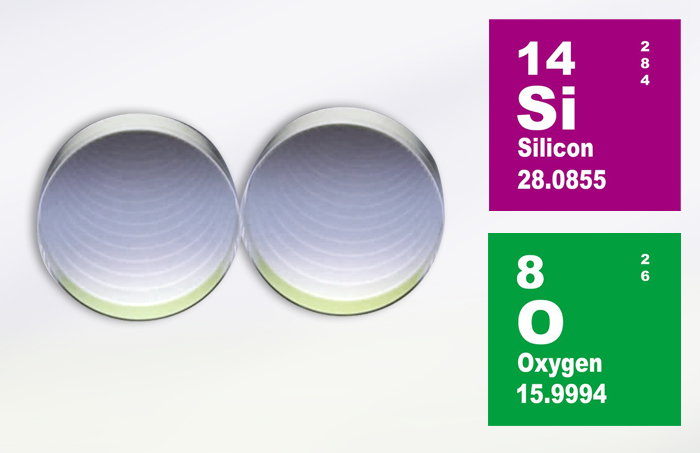
Fused Silica; 350-900 nm; Finesse ~2.5, Dependent on Wavelength; FSR 0.5-2/cm; Thickness 1.686-6.743 mm; Broadband Metallic Coating; Dia. 25.4 mm; Clear Aperture Dia. 20.0 mm LightMachinery’s OP-8565 series of solid Fused Silica etalons with broadband metallic coatings (Metalons) are manufactured using the company’s patented fluid jet polishing (FJP) technology – allowing the adjustment of the etalon’s shape and flatness to within a few nanometers. These very broadband (350 to 900 nm), low-finesse metalons are available with a diameter of 25.4 mm and 1.686, 3.371 or 6.743 mm thickness. Corresponding free spectral range (FSR) values are 2/cm, 1/cm and 0.5/cm respectively. It is very difficult to create very broadband dielectric coatings, however metal coatings are naturally effective over a wide range of wavelengths. Sadly, they also absorb a significant amount of energy and as the reflectivity is pushed higher, the absorption also increases. LightMachinery’s metal coated etalons, or Metalons, are a compromise that achieves a reasonable finesse of about 2.5 using coatings that are about between 30% and 40% reflective from 350 to 900 nm. The result is a peak transmission of about 40%, so if you need really high transmission and no loss then this is not your etalon. But the modulation is about 75%, so if your application calls for wavelength monitoring, OP-8656 metalons might just work great and will almost certainly work for your wavelength range. Etalons are optically transparent, flat components with very precisely parallel reflecting surfaces. For high performance (i.e. resolution), these components require very high-quality, flat and level surfaces with low roughness and extreme parallelism. Metal-coated Solid Fused Silica etalons are comparatively simple, robust, yet very parallel optical components with a wide variety of applications in lasers and spectroscopy. One major issue with solid etalons is their instability to temperature changes (both the index and the physical thickness of the etalon material change with temperature), which can be unacceptable in certain applications. In those cases, please refer to air spaced etalons that reduce this problem of temperature dependence by using air as the etalon medium. In certain applications though, the temperature dependence can also be a useful method for tuning the transmission peak position since it effectively changes the thickness of the etalon. Sometimes you need something special – if you are looking for a customized metal-coated solid Fused Silica etalon that exactly meets your specific requirements, please get in touch with the AMS Technologies etalon experts. Our supplier LightMachinery is extremely experienced with specifying, designing and manufacturing custom etalons using the company’s patented fluid jet polishing (FJP) technology. We are looking forward to discussing your customized etalon solution! Fluid jet polishing (FJP) systems use a fine stream of slurry to accurately remove nanometers of material from an optical surface. Many years of refining this computer controlled polishing technology have enabled LightMachinery to use FJP for the adjustment of the shape and flatness of optical components such as etalon mirrors to within a few nanometers as well as the production of very thin components such as wafers and thin etalons that are impossible to accurately polish using conventional technology. Key Features: Etalon Material: Fused Silica, 7980 OA Grade Broadband Metallic Coating Wavelength Range: 350 to 900 nm Finesse: ~2.5, Dependent on Wavelength Free Spectral Range, FSR: 2/cm, 1/cm, 0.5/cm Diameter: 25.4 mm (1") Thickness: 1.686, 3.371, 6.743 mm Clear Aperture: Diameter 20.0 mm Surface Figure: λ/10 Surface Quality: 80/50 or Better Thickness Uniformity (Wedge) <2 nm rms Over the Clear Aperture Applications: Wavelength Monitoring; Lasers; Spectroscopy; Interferometers; Wavelength Measurement; Fine-structural Investigation of Spectral Lines
REQUEST PRICING AND AVAILABILITY
- Get your individual quote.
- Technical compatibility review included.
- Volume discounts available.
No obligation. Direct access to our engineering team.

Fused Silica; 450-1700 nm; Finesse 0.6, 6, >30; FSR 20-4023 GHz, 0.5-2/cm; Thickness 0.025-6.743 mm; Uncoated or Coated; 2x4, 5x5, Dia. 25.4 mm; Clear Aperture Dia. 20 mm LightMachinery’s broad range of solid Fused Silica (SiO2) etalons is manufactured using the company’s patented fluid jet polishing (FJP) technology – allowing the adjustment of the etalon’s shape and flatness to within a few nanometers. LightMachinery’s Fused Silica etalons are available uncoated in rectangular shapes with dimensions of 2 x 4 or 5 x 5 mm or with dielectric coatings in circular shapes and 25.4 mm diameter. Uncoated 2 x 4 mm solid Fused Silica etalons are very small devices that our customers usually cement on one end to a holder. The small size is preferred for use inside small laser cavities. A dedicated 12.7 mm diameter aluminium mount designed to hold 2 x 4 mm etalons is available – its price includes cementing of the etalon to the mount at the supplier. Uncoated 5 x 5mm solid Fused Silica etalons are slightly larger versions that are easier to manipulate with human hands. Again, a dedicated 25.4 mm diameter mount designed to hold 5 x 5 mm etalons is available – its price including cementing of the etalon to the mount at the supplier. While uncoated, rectangular types feature a finesse of 0.6, circular 25.4 mm (1”) diameter solid Fused Silica etalons with dielectric coatings for higher finesse are available for five different wavelength ranges (450 to 650, 530 to 660, 700 to 850, 850 to 1100, 1450 to 1700 nm) and with finesse values of 6 or >30. Etalons are optically transparent, flat components with very precisely parallel reflecting surfaces. For high performance (i.e. resolution), these components require very high-quality, flat and level surfaces with low roughness and extreme parallelism. Solid Fused Silica etalons are comparatively simple, robust, yet very parallel optical components with a wide variety of applications in spectroscopy and lasers. Although solid etalons are generally coated to increase the finesse of the etalon, uncoated solid etalons – using only the 4% fresnel reflection to provide the etalon effect – are often used inside laser cavities since only low finesse is required to filter out unwanted laser wavelengths, and uncoated etalons are very damage resistant. One major issue with solid etalons is their instability to temperature changes (both the index and the physical thickness of the etalon material change with temperature), which can be unacceptable in certain applications. In those cases, please refer to air spaced etalons that reduce this problem of temperature dependence by using air as the etalon medium. In certain applications though, the temperature dependence can also be a useful method for tuning the transmission peak position since it effectively changes the thickness of the etalon. Sometimes you need something special – if you are looking for a customized solid Fused Silica etalon that exactly meets your specific requirements, please get in touch with the AMS Technologies etalon experts. Our supplier LightMachinery is extremely experienced with specifying, designing and manufacturing custom etalons using the company’s patented fluid jet polishing (FJP) technology. We are looking forward to discussing your customized etalon solution! Fluid jet polishing (FJP) systems use a fine stream of slurry to accurately remove nanometers of material from an optical surface. Many years of refining this computer controlled polishing technology have enabled LightMachinery to use FJP for the adjustment of the shape and flatness of optical components such as etalon mirrors to within a few nanometers as well as the production of very thin components such as wafers and thin etalons that are impossible to accurately polish using conventional technology. Key Features: Etalon Material: Fused Silica Wavelength Range: 450 to 1700 nm Finesse: 0.6, 6, >30 Free Spectral Range, FSR: 20 to 4023 GHz, 0.5/cm to 2/cm Coating: Uncoated or Dielectric Coating Rectangular Types: 2 x 4, 5 x 5 mm Dedicated 12.7 or 25.4 mm Diameter Aluminium Mounts Available for Rectangular Types – Price Includes Cementing of the Etalon to the Mount at the Supplier Circular Types: Diameter 25.4 mm (1”) Clear Aperture: 85% of Outside Dimension (Diameter 20 mm for Circular Types) Matched Surface Figure: λ/100 Surface Quality: 10/5 or Better Wedge: 0.1 arcsec Typical Applications: Spectroscopy; Lasers; Interferometers; Wavelength Measurement; Fine-structural Investigation of Spectral Lines
REQUEST PRICING AND AVAILABILITY
- Get your individual quote.
- Technical compatibility review included.
- Volume discounts available.
No obligation. Direct access to our engineering team.

Silicon; 1.2-6.3 µm; Finesse ~2.5, Dependent on Wavelength; FSR ~0.5-10 GHz; Thickness 0.025-83.110 mm; Uncoated; 8x8, Dia. 25.4 mm; Clear Aperture Dia. 5, 12.7 mm LightMachinery’s series of solid Silicon etalons are high-index components for IR wavelengths, manufactured using the company’s patented fluid jet polishing (FJP) technology – allowing the adjustment of the etalon’s shape and flatness to within a few nanometers. These etalons are available in two standard sizes: 8 x 8 mm thin solid Silicon etalons with thicknesses of 0.025 to 0.831 mm and 25.4 mm (1”) diameter thick solid Silicon etalons with lengths of 4.155 to 83.110. A dedicated 25.4 mm diameter aluminium mount designed to hold 8 x 8 mm etalons is available – its price includes cementing of the etalon to the mount at the supplier. Solid Silicon etalons are interesting because the high index of Silicon (3.4 depending on wavelength) creates a reasonably high finesse without any coatings. The temperature sensitivity of Silicon can also be useful (or problematic). These etalons are often used to monitor the wavelengths of long-wavelength lasers. Etalons are optically transparent, flat components with very precisely parallel reflecting surfaces. For high performance (i.e. resolution), these components require very high-quality, flat and level surfaces with low roughness and extreme parallelism. Solid Silicon etalons are comparatively simple, robust, yet very parallel optical components with a wide variety of applications in lasers and spectroscopy. Although solid etalons are generally coated to increase the finesse of the etalon, uncoated solid etalons like this series – using only the 4% fresnel reflection to provide the etalon effect – are often used inside laser cavities since only low finesse is required to filter out unwanted laser wavelengths, and uncoated etalons are very damage resistant. One major issue with solid etalons is their instability to temperature changes (both the index and the physical thickness of the etalon material change with temperature), which can be unacceptable in certain applications. In those cases, please refer to air spaced etalons that reduce this problem of temperature dependence by using air as the etalon medium. In certain applications though, the temperature dependence can also be a useful method for tuning the transmission peak position since it effectively changes the thickness of the etalon. Sometimes you need something special – if you are looking for a customized solid Silicon etalon that exactly meets your specific requirements, please get in touch with the AMS Technologies etalon experts. Our supplier LightMachinery is extremely experienced with specifying, designing and manufacturing custom etalons using the company’s patented fluid jet polishing (FJP) technology. We are looking forward to discussing your customized etalon solution! Fluid jet polishing (FJP) systems use a fine stream of slurry to accurately remove nanometers of material from an optical surface. Many years of refining this computer controlled polishing technology have enabled LightMachinery to use FJP for the adjustment of the shape and flatness of optical components such as etalon mirrors to within a few nanometers as well as the production of very thin components such as wafers and thin etalons that are impossible to accurately polish using conventional technology. Key Features: Etalon Material: Silicon Wavelength Range: 1.2 to 6.3 µm (Infrared, IR) Finesse: ~2.5, Dependent on Wavelength Free Spectral Range, FSR: ~0.5 to 10 GHz Uncoated Two Standard Sizes: 8 x 8 mm, Diameter 25.4 mm (1") Thickness: 0.025 to 83.110 mm Dedicated 25.4 mm (1”) Diameter Aluminium Mount Available for 8 x 8 mm Types – Price Includes Cementing of the Etalon to the Mount at the Supplier Clear Aperture: Diameter 5, 12.7 mm Surface Figure: λ/20 Surface Quality: 40/20 or Better Wedge: <0.5 arcsec – If Coating is Required, Wedge Can Be Reduced and Finesse Can Be Increased Applications: Wavelength Monitoring of Long-wavelength Lasers; Spectroscopy; Interferometers; Wavelength Measurement; Fine-structural Investigation of Spectral Lines
REQUEST PRICING AND AVAILABILITY
- Get your individual quote.
- Technical compatibility review included.
- Volume discounts available.
No obligation. Direct access to our engineering team.

Undoped YAG; 250-4000 nm; Finesse ~1, Dependent on Wavelength; FSR ~0.8-3300 GHz, Dependent on Wavelength; Thickness 0.025-98.0 mm; Uncoated; Dia. 5, 12.7 mm; Clear Aperture Dia. 3, 10 mm LightMachinery’s series of solid YAG etalons are high-index components manufactured using the company’s patented fluid jet polishing (FJP) technology – allowing the adjustment of the etalon’s shape and flatness to within a few nanometers. Solid YAG etalons are handy because the high index of YAG material (about 1.8 depending on wavelength) creates a reasonably high finesse without any coating; this makes "yagalons" excellent for mode selection in high-power solid state lasers. The additional advantage of YAG is excellent transmission in a wide range of wavelengths (250 nm to 4 µm). These etalons are available in two standard sizes with diameters of 5 and 12.7 mm respectively. Thicknesses range from 25 µ to 1 mm for the smaller and from 0.05 to 98.0 mm for the larger size. Dedicated 12.7 or 25.4 mm diameter aluminium mounts designed to hold the 5 mm diameter etalons are available as well as dedicated 25.4 mm diameter aluminium mounts designed to hold the 12.7 mm diameter etalons – prices for these mounts include cementing of the etalon to the mount at the supplier. Etalons are optically transparent, flat components with very precisely parallel reflecting surfaces. For high performance (i.e. resolution), these components require very high-quality, flat and level surfaces with low roughness and extreme parallelism. Solid YAG etalons are comparatively simple, robust, yet very parallel optical components with a wide variety of applications in lasers and spectroscopy. Although solid etalons are generally coated to increase the finesse of the etalon, uncoated solid etalons like this series – using only the 4% fresnel reflection to provide the etalon effect – are often used inside laser cavities since only low finesse is required to filter out unwanted laser wavelengths, and uncoated etalons are very damage resistant. One major issue with solid etalons is their instability to temperature changes (both the index and the physical thickness of the etalon material change with temperature), which can be unacceptable in certain applications. In those cases, please refer to air spaced etalons that reduce this problem of temperature dependence by using air as the etalon medium. In certain applications though, the temperature dependence can also be a useful method for tuning the transmission peak position since it effectively changes the thickness of the etalon. Sometimes you need something special – if you are looking for a customized solid YAG etalon that exactly meets your specific requirements, please get in touch with the AMS Technologies etalon experts. Our supplier LightMachinery is extremely experienced with specifying, designing and manufacturing custom etalons using the company’s patented fluid jet polishing (FJP) technology. We are looking forward to discussing your customized etalon solution! Fluid jet polishing (FJP) systems use a fine stream of slurry to accurately remove nanometers of material from an optical surface. Many years of refining this computer controlled polishing technology have enabled LightMachinery to use FJP for the adjustment of the shape and flatness of optical components such as etalon mirrors to within a few nanometers as well as the production of very thin components such as wafers and thin etalons that are impossible to accurately polish using conventional technology. Key Features: Etalon Material: Undoped YAG Wavelength Range: 250 to 4000 nm Finesse: ~1, Dependent on Wavelength Free Spectral Range, FSR: ~0.8 to 3300 GHz (Based on Index 1.82), Dependent on Wavelength Uncoated Diameter: 5.0, 12.7 mm (1/2") Thickness: 0.025 to 98.0 mm Dedicated 12.7 or 25.4 mm Diameter Aluminium Mounts Available – Price Includes Cementing of the Etalon to the Mount at the Supplier Clear Aperture: Diameter 3, 10 mm (85% of Outside Dimension) Surface Figure: λ/50 Surface Quality: 10/5 or Better Wedge: <1 arcsec Typical Applications: Mode Selection in High-power Solid State Lasers; Spectroscopy; Interferometers; Wavelength Measurement; Fine-structural Investigation of Spectral Lines
REQUEST PRICING AND AVAILABILITY
- Get your individual quote.
- Technical compatibility review included.
- Volume discounts available.
No obligation. Direct access to our engineering team.

Fused Silica; Wavelength Range Customer Specified; Finesse Customer Specified; FSR Customer Specified; AR-coated; Dia. 14-203.2 mm; Clear Aperture 4-150 mm LightMachinery’s series of tunable air spaced etalons is manufactured from Fused Silica using the company’s patented fluid jet polishing (FJP) technology – allowing the adjustment of the etalon’s shape and flatness to within a few nanometers. These tunable air spaced etalons are available as 14 mm diameter, 4 mm aperture, single piezo tube (OP-1986) or larger 3-piezo tunable etalons (OP-740xT) with diameters of 50.8 to 203.2 mm and 30 to 150 mm aperture. Wavelength range, finesse, free spectral range (FSR) and design details can be realized based on customer requirements. For the OP-1986 single piezo tube tunable etalon, a dedicated driver and mount Kit (OP-7934) is available that includes everything required to drive the single-tube piezo including power supply, driver with computer interface, cables, connectors and a mount that adapts the single tube piezo etalon to a standard 25.4 mm (1") diameter optical mount – made from Delrin and aluminium. There are a number of ways to tune etalons including tilting the entire etalon, moving the mirrors and changing the index of the medium (pressure, temperature, electrostatic). Tilt tuning is a simple tuning technique. As the etalon is tilted, the FSR changes with the cosine of the angle. Piezo-electric tuning of an air spaced etalon is usually what is meant by the phrase "tunable etalon". This technique can tune the etalon quickly by changing the size of the air gap. By changing the length of the air gap by half the wavelength of the light, the transmission peak moves one full FSR. So, if an etalon is used at 532 nm then only 266 nm of motion is required to tune the etalon. Small piezo elements (like the OP-1986 single piezo tube tunable etalon) can easily move through 10 µm. Larger OP-740xT piezo tunable etalons are made using three piezo elements. Although these etalons are more complex to control, they have the big advantage that the piezo elements can be subtly tuned to eliminate any residual tilt error between the two mirrors and improve the finesse. Etalons are optically transparent, flat components with very precisely parallel reflecting surfaces. While solid etalons consist of solid plates of optical material, air spaced etalons are formed by two mirrors with an air gap between them, reducing the problem of temperature dependence. Due to their construction, air spaced etalons are significantly more complex. The outside surfaces of the end mirrors also need to be wedged and AR-coated to avoid reflections from these surfaces causing additional unwanted etalon effects. Sometimes you need something special – if you are looking for a customized tunable air spaced etalon that exactly meets your specific requirements, please get in touch with the AMS Technologies etalon experts. Our supplier LightMachinery is extremely experienced with specifying, designing and manufacturing custom etalons using the company’s patented fluid jet polishing (FJP) technology. We are looking forward to discussing your customized etalon solution! Fluid jet polishing (FJP) systems use a fine stream of slurry to accurately remove nanometers of material from an optical surface. Many years of refining this computer controlled polishing technology have enabled LightMachinery to use FJP for the adjustment of the shape and flatness of optical components such as etalon mirrors to within a few nanometers as well as the production of very thin components such as wafers and thin etalons that are impossible to accurately polish using conventional technology. Key Features: Piezo Tunable Etalons Etalon Material: Fused Silica (Optical) Gap: Customer Specified 5 µm to >200 mm Gap Adjustment: Tunable From -4 to +12 µm (-30 to 150 V) Maximum Tuning Speed: ~1 KHz For Large Moves, ~10 KHz For Small Moves (One FSR) Wavelength Range: Customer Specified Finesse: Customer Specified Free Spectral Range, FSR: Customer Specified AR-coated: Less Than 0.5% Reflection Diameter: 14 mm (OP-1986), 50.8 to 203.2 mm (2” to 8”, OP-740xT) Clear Aperture: 4 mm (OP-1986), 30 to 150 mm (OP-740xT) Applications: Spectroscopy; Interferometers; Wavelength Measurement; Fine-structural Investigation of Spectral Lines
REQUEST PRICING AND AVAILABILITY
- Get your individual quote.
- Technical compatibility review included.
- Volume discounts available.
No obligation. Direct access to our engineering team.

VIS-NIR; 1260-1675 nm; Resolution 4-50 pm; Interface USB; 483x425x177 mm The Optical Spectrum Analyzer has been a work horse for the telecommunications industry for decades. LigthMachinery thought it was time to revolutionize the performance of the OSA and re-think the design of the instrument. LightMachinery’s Ultra OSA series of spectrometers solves the biggest drawback of the technology (speed) while retaining the resolution and sensitivity. With its high-sensitivity InGaAs camera and no moving parts, Ultra OSA spectrometers can measure continuous spectra from cw and pulsed sources at 40 Hz. With exposure bracketing on 10 nm within a system’s total wavelength range (35 to 125 nm, depending on model), the spectrometers provide high resolution of 4 pm. Simple PC-based software allows the user to review spectra in real time and save or export for more analysis. Labview drivers enable the Ultra OSA spectrometers to be integrated into automated experimental setups. Sometimes you need something special - if you are looking for a customized spectrometer with specifications or functionalities that exactly meet your specific requirements, please get in touch with the AMS Technologies spectrometer experts. Our supplier LightMachinery is extremely experienced with specifying, designing and manufacturing custom spectrometers. We are looking forward to discussing your customized spectrometer solution! Key Features: Simple to use High-sensitivity InGaAs Camera Can Measure Spectra From CW and Pulsed Sources Continuous Spectra at 40 Hz High Resolution:4 to 50 pm, sub 50 pm at 1550 nm (Resolving Power > 30,000 to >300,000) Accuracy: Based on an External Calibration Source (Required) Dynamic Range: 100:1 to 500:1 in a Single-shot Measurement, up to 50 dB With Exposure Bracketing Wavelength Range: 1260 to 1675 nm, Near Infrared (NIR) Fast Real-time Measurements – Acquisition and Processing Time: <25 ms for the Complete Spectrum Simultaneous Range / Resolution: >2000 at 1550 nm Fiber Optic Input Fast Data Acquisition and Export >40 Hz Simple USB Interface LabView Drivers No Moving Parts (Single-shot Laser Spectrum Analysis) Ultra-reliable Dimensions: 483 x 425 x177 mm Applications: Like a Regular OSA, But Fast!
REQUEST PRICING AND AVAILABILITY
- Get your individual quote.
- Technical compatibility review included.
- Volume discounts available.
No obligation. Direct access to our engineering team.

UV-NIR; 220-1000 nm; Resolution 0.1-0.5 nm; Interface USB; 196x69x65 mm Need more light? Don't have enough light for your measurement using a conventional spectrometer? Your spectrometer would work great if you had 100x the light? Problem solved – introducing LightMachinery’s UltraBright spectrometers. No slit, just a giant aperture and a huge field of view. Boom – Spectrum – Done! UltraBright spectrometers are ideal when you are looking at an extended or distant source (not a 10 µm spot). Now you can collect a lot of light and don’t have to worry about trying to convince it to pass through a tiny slit. In the datasheet available for download here, LightMachinery has listed a few of the wavelength range and resolution models, but many variations with more or less range and resolution are simple for LightMachinery to make – so please get in touch with the AMS Technologies spectrometer experts. Our supplier LightMachinery is extremely experienced with specifying, designing and manufacturing custom spectrometers. We are looking forward to discussing your customized spectrometer solution! Key Features: Good Resolution and Really High Light Throughput Resolution: 0.1 to 0.5 nm, Sub 0.5 nm @532 nm Wavelength Range: 220 to 1000 nm, Ultraviolet (UV) to Visible (VIS) to Near Infrared (NIR) Acquisition and Processing Speed: >10 Hz Field of View (FOV): >1° Typical Simple USB Interface Dimensions: 196 x 69 x 65 mm Applications: Measuring an Extended or Distant Light Source
REQUEST PRICING AND AVAILABILITY
- Get your individual quote.
- Technical compatibility review included.
- Volume discounts available.
No obligation. Direct access to our engineering team.