
Fiber Polarization Controllers
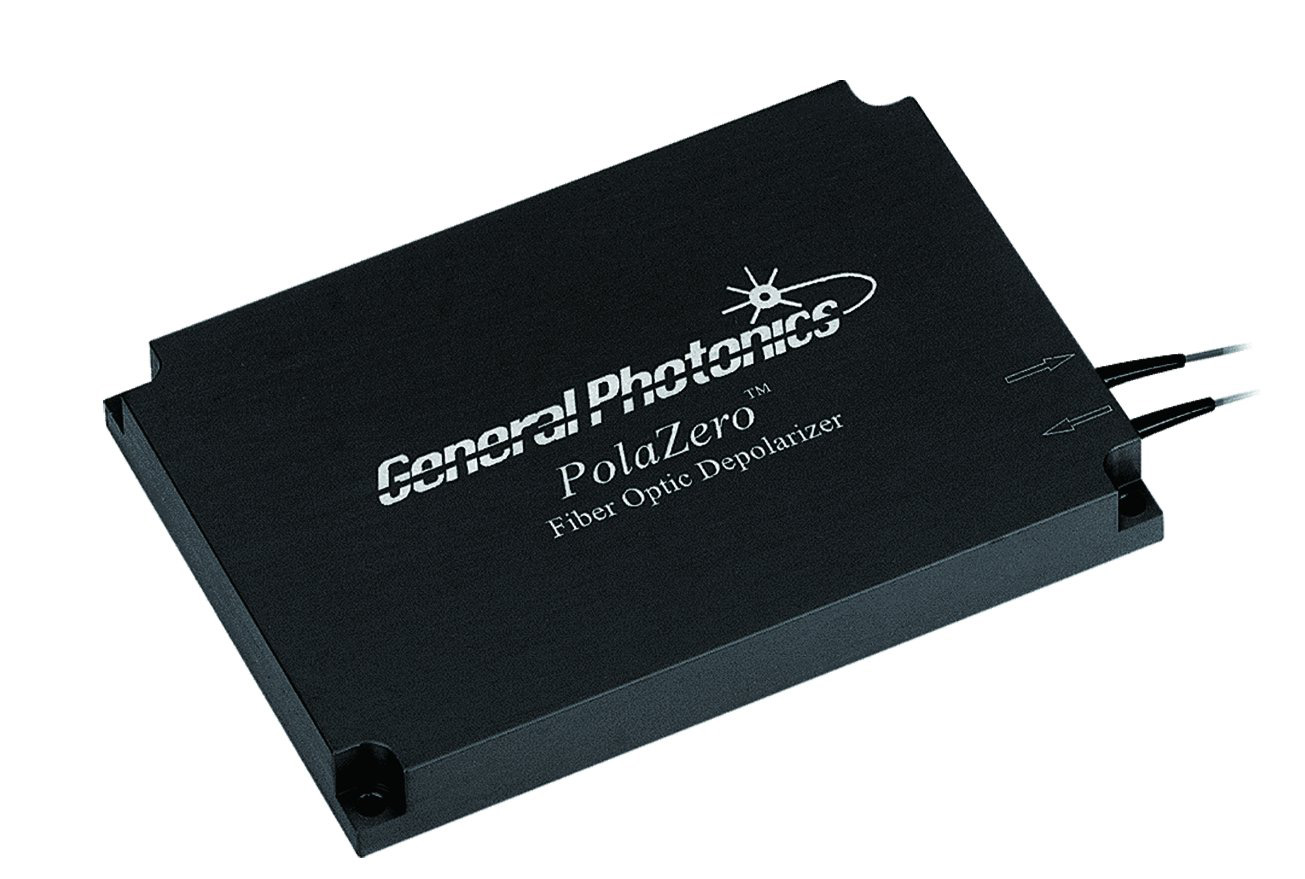
DEP Depolarizer
1310, 1550 nm; IL 1.0 dB; DOP <5%; ER <0.5 dB; RL 55 dB General Photonics’ DEP depolarizer module is a passive device (requiring no external power) that depolarizes laser output. The standard configuration can be used for coherence lengths less than 10 m. Custom units can be specified for coherence lengths of multiple kilometers. The DEP polarizer is ideal for minimizing the polarization sensitivity of fiber optic sensor systems such as systems for quasi-distributed temperature and strain sensing based on fiber Bragg gratings (FBG), systems for distributed temperature and strain sensing based on Brillouin or Raman scattering and systems for distributed acoustic sensing based on Rayleigh scattering. It can also help to eliminate the effects of PDL or polarization sensitivity of optical components and instruments. Equally important, it can be used for depolarizing pump lasers to eliminate the polarization sensitivity of Raman amplifiers. The DEP polarizer is packaged in a small (85 × 60 × 10 mm), rugged aluminium box, providing high performance and superb environmental stability. The internal structure and package size may be different depending on the coherence length or spectral width of the light signal to be depolarized. Contact AMS Technologies for an optimized configuration for your intended applications. Key Features: Customizable for Light Sources With Different Coherence Lengths Low Output Degree of Polarization (DOP): <5% Center Operating Wavelength: 1310, 1550 nm Wide Operating Wavelength Range: ±50 nm Low Insertion Loss: 1.0 dB Typical, 1.4 dB Maximum Compact Size: 85 × 60 × 10, 85 x 85 x 15 mm, Larger Package for Coherence Length >200 m No Power Source Required Coherence Length of Light Source: 10 m Standard, Others Specify Residual Extinction Ratio (ER): <0.5 dB Return Loss: 55 dB Optical Power Handling: ≥300 mW Fiber Type Input: PM Panda Fiber Fiber Type Output: SMF-28 Applications: Minimize Polarization Sensitivity of Fiber Sensors; Depolarize Pump Lasers; Remove Polarization Sensitivity of Raman Amplifiers; Eliminate Polarization Sensitivity of Optical Instruments; Eliminate the Effects of PDL; Can Be Integrated Into Remote Monitors
REQUEST PRICING AND AVAILABILITY
- Get your individual quote.
- Technical compatibility review included.
- Volume discounts available.
No obligation. Direct access to our engineering team.
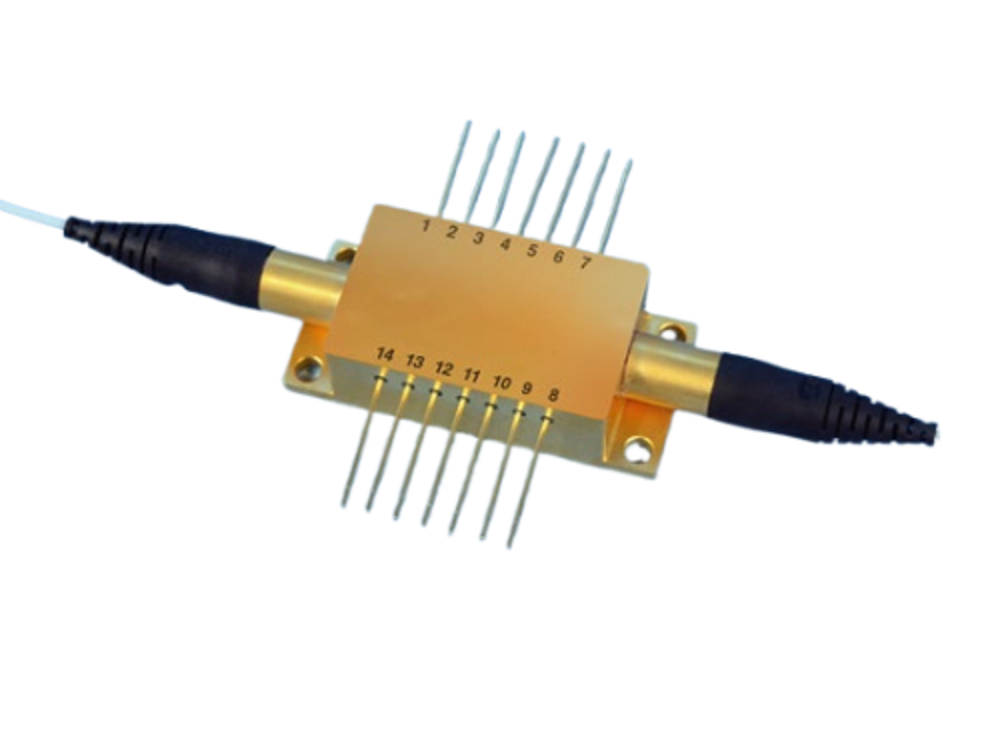
EOPC High-Speed Electro-Optic Polarization Controller/Scrambler
Pigtail Type; 1064, 1550, 2000 nm; 2,3,4 Stages; Fiber Type SM, PM; Max. Insertion Loss 1.1, 1.2 dB, Max. PDL <0.15, <0.20 dB; Min RL 50 dB; Max. PMD 0.5 ps; Optical Power Handling 500 mW OZ Optics' EOPC high-speed electro-optic polarization controller is based on a novel, low-loss, high-speed, free-space electro-optic crystal technology. It provides a simple, efficient means to quickly manipulate the state of polarization by applying an external voltage. High-speed polarization state management is enabled using two to four crystals in a row with remarkably low loss, all housed in a compact and robust butterfly package. The device can be offered with 2, 3 or 4 crystals (depending on the customer’s requirement), and by applying external voltages one can change/manipulate/control the output polarization state. For endless polarization control, a device with 4 crystal elements is required, while a 3-elements device will be sufficient for polarization scrambling mode operation. The compact, motionless, and vibration-free design allows fast linear response with less than 10 μs response time to the control signal. The controller's rapid response speed easily handles changes in polarization, caused by the external environment, and is highly suitable for polarization controlling and scrambling to either average PDL and PDG effects, or for making PMD, PDL or DOP measurements. This makes the EOPC device ideal for precise test and measurement applications. Key Features: Rapid Response Time: < 10 µs Linear Response Solid State Crystals Low Loss Insertion Loss (IL): <1.2 dB (4 Stages), <1.1 dB (3 Stages), <1.0 dB (2 Stages) Polarization Dependent Loss (PDL): <0.20 dB (4 Stages), <0.20 dB (3 Stages), <0.15 dB (2 Stages) Polarization Mode Dispersion (PMD): <0.5 ps Activation Loss: <0.05 dB Per Channel Return Loss (RL): >50 dB Flexible Configuration Compact Size: 70 mm x 41 mm x 9.5 mm Wide Operating Wavelength Range: 1064 nm, 1550 nm, 2000 nm Long Operating Lifetime Optical Power Handling: 500 mW Electrical Response Time (Rise/Fall Time): <10 μs Vπ (@Room Temperature): Vπ <40 V for 1064 nm, Vπ <60 V for 1550 nm Modulation Rate (Sinusoid): DC to 130 kHz Fiber Type: Single Mode (SM), Polarization Maintaining (PM) Operating Temperature: 0°C to +80°C Applications: Polarization Scrambling; Polarization Stabilization and Management; Polarization Mode Dispersion (PMD) Mitigation; Polarization Dependent Loss (PDL) Mitigation; Polarization Dependent Gain (PDG) Mitigation; PDL, DOP, and PMD Measurement Systems; Interferometers and Sensors; Fiber Lasers; Polarization Demultiplexing; Test Instrumentation; OCT Systems
REQUEST PRICING AND AVAILABILITY
- Get your individual quote.
- Technical compatibility review included.
- Volume discounts available.
No obligation. Direct access to our engineering team.
EPC Electrically Driven Fiber Polarization Controllers/Scramblers
3 Stage Scramblers or 4 Stage Controllers Available; 1250 to 1650 nm (Others on Request); Insertion Loss <0.4 dB; Polarization Dependent Loss <0.06 dB; Fiber Type SM OZ Optics' EPC series of electrically driven polarization controllers provides a simple, efficient means to manipulate the state of polarization within a single mode (SM) fiber. Employing a novel mechanical fiber squeezing technique, the device is controlled by either three or four (depending on the model) input voltages that the user can vary over a ±5 V range to provide endless polarization control in a robust, easy to operate package. The EPC controllers’ rapid response speed easily handles changes in polarization caused by the external environment and is highly suitable for polarization scrambling for either averaging PDL effects or for making PMD or PDL measurements. Because the fiber within the device is continuous, all insertion losses, return losses, and PDL effects are limited only by the fiber itself. This makes it ideal for precise test and measurement applications. EPC polarization controllers are available in either a three or four channel configuration. The EPC-300 three-channel system is ideal for polarization scrambling applications such as for polarization averaging or PDL measurements. The added redundancy of the EPC-400 four-channel version opens the way to continuous polarization control, without having to occasionally reset the device when a controller reaches its limit. The unique design of the OZ Optics EPC series of polarization controllers means that they do not require any dedicated driver circuitry. There are no internal voltage multipliers or high voltage signals to worry about. Thus operation is safe and simple. Key Features: Negligible Insertion Losses Negligible Return Losses Negligible Polarization Dependent Losses (PDL) >100 Hz Response Speed Continuous Polarization Control Capability Low Voltage Applications: Polarization Scrambling; Polarization Stabilization; Polarization Mode Dispersion (PMD) Mitigation; Polarization Dependent Loss (PDL) Mitigation; PDL and PMD Measurement Systems; Interferometers and Sensors; OCT Systems
REQUEST PRICING AND AVAILABILITY
- Get your individual quote.
- Technical compatibility review included.
- Volume discounts available.
No obligation. Direct access to our engineering team.
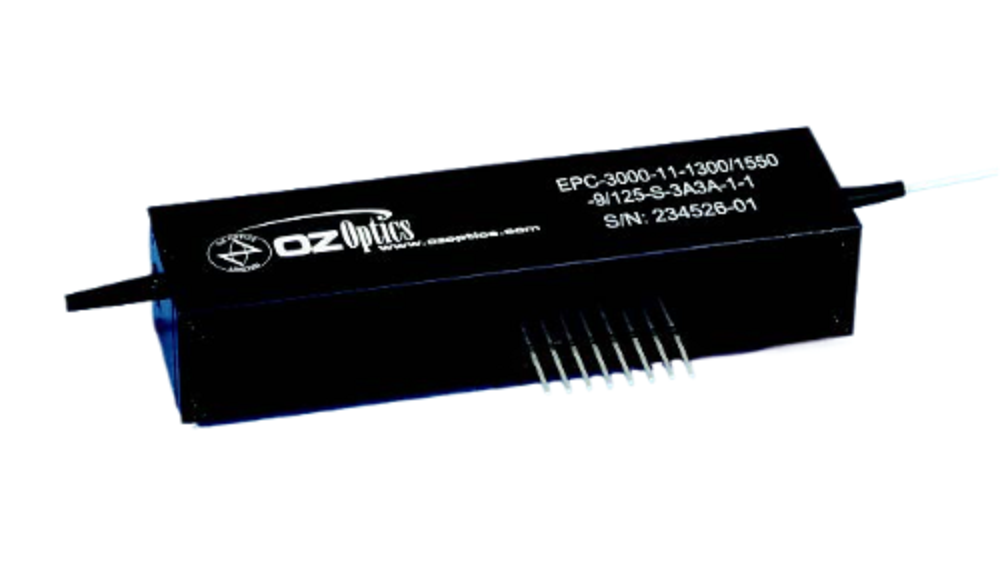
EPC-3000 OEM High-Speed Polarization Controller/Scrambler
3 or 4 Control Channels; 1250-1650 nm, Other; Insertion Loss 0.05 dB; Polarization Dependent Loss <0.06 dB; Fiber Type SM, OtherOZ Optics' EPC-3000 high-speed electrically driven polarization controller provides a simple, efficient means to quickly manipulate the state of polarization within a single mode (SM) fiber. Employing a novel fiber squeezing technique, the device is controlled by either three or four (depending on the model) input voltages to provide endless polarization control and scrambling in a robust, easy to operate package. The EPC-3000 controller's rapid response speed easily handles changes in polarization caused by the external environment and is highly suitable for polarization controlling and scrambling for either averaging PDL, PDG effects, or for making PMD, PDL or DOP measurements. Because the fiber within the device is continuous, all insertion losses, return losses, and PDL effects are limited only by the fiber itself. This makes the EPC-3000 ideal for precise test and measurement applications. The polarization controller is available in either a three or four channel configuration. The three-channel system is ideal for polarization scrambling applications such as for polarization averaging, PDL or PDG measurements. The added redundancy of the four-channel version opens the way to continuous polarization control, without having to occasionally reset the device when a controller reaches its limit. The innovative design of the OZ Optics EPC-3000 high-speed polarization controller provides an integrated module that allows users easily to implement the polarization controller in their systems with both analog and digital inputs. Key Features: Negligible Insertion Loss: 0.05 dB (Excluding Connectors) Negligible Return Loss Negligible Polarization Dependent Loss (PDL) Continuous Polarization Control Capability Compact and PCB Compatible Up to 2 kHz Response Speed and 30 kHz at Resonance Frequency Number of Control Channels: 3, 4 Voltage Range: 0 V to 140 V Typ. Input Capacitance (Each Channel): 0.2 μF -3dB Bandwidth: >30 kHz Electrical Interface: 8-Pin Board Connector Wavelength Range: 1260 nm to 1650 nm Standard, Other Wavelengths Available on Request - Min. Retardation Range: 2π Back Reflection: >60 dB (Excluding connectors) Activation Loss: ±0.05 dB Polarization Dependent Loss (PDL) <0.06 dB Operating Temperature: -10°C to +50°C Fiber Type: Standard 9/125 μm Single Mode Fiber, Other Fiber Types Available on Request Dimensions: 83 mm x 19 mm x 16.5 mm Applications: Polarization Scrambling; Polarization Stabilization; Polarization Mode Dispersion (PMD) Mitigation; Polarization Dependent Loss (PDL) Mitigation; Polarization Dependent Gain (PDG) Mitigation; PDL, DOP, and PMD Measurement Systems; Interferometers and Sensors; Fiber Lasers; Polarization Demultiplexing; Test Instrumentation
REQUEST PRICING AND AVAILABILITY
- Get your individual quote.
- Technical compatibility review included.
- Volume discounts available.
No obligation. Direct access to our engineering team.
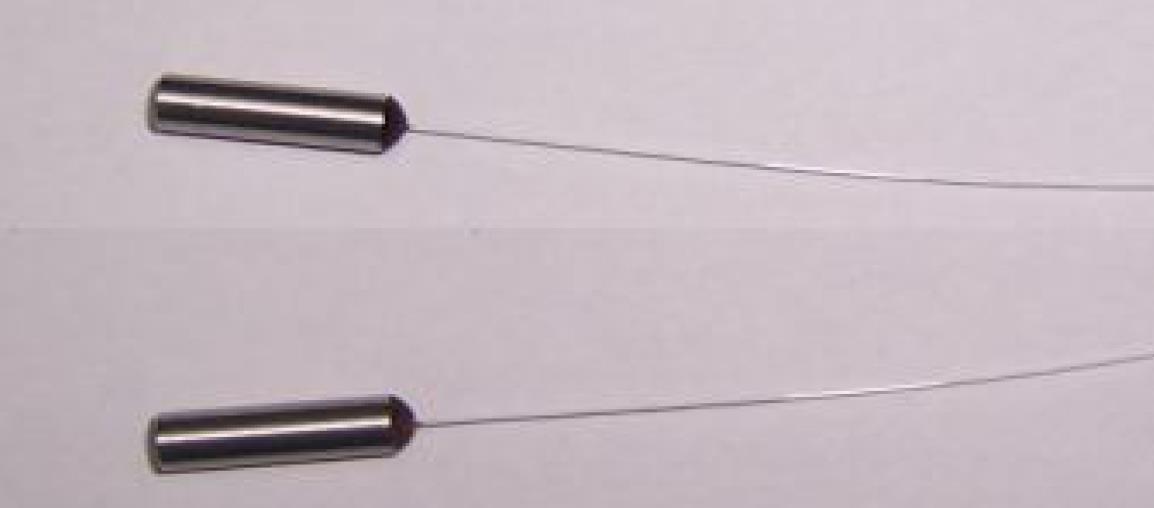
FM Faraday Mirrors
Pigtail Style; 1310 or 1550 nm; Rotation Angle 90°; Insertion Loss ≤0.6 dB; Fiber Type SMF-28e Faraday mirror is a passive device that enables the polarization of the input light rotate 90 degree. It is built by the proven thin-film filter technology and the collimator technology. It has excellent performances such as low insertion loss and high environmental stability. Key Features: Compact size Low insertion loss Applications: EDFA, DWDM System, Fiber Sensors, CATV System
REQUEST PRICING AND AVAILABILITY
- Get your individual quote.
- Technical compatibility review included.
- Volume discounts available.
No obligation. Direct access to our engineering team.

FOP Fiber Optic Polarizers
Center Wavelength 400 to 2050 nm; Insertion Loss Typ. 0.5 to 1.0 dB; Return Loss ≥40 to ≥70 dB; Polarization Extinction Ratio 20, 30; Fiber Type SM, MM, PM OZ Optics’ FOP series of fiber optic polarizers are designed to polarize the output from a light source or fiber and launch it into an output fiber. These polarizers typically consist of input and output collimators with a plate polarizer in between. Broadband polarizers are used, so the power extinction ratio is maintained for up to several hundreds of nanometers. The same polarizer, for example, may be used for 1300 nm to 1600 nm. The power extinction ratio is the ratio between maximum and minimum output power as the input polarization state is changed. This is different from the output polarization extinction ratio, which is a measure of the ratio between the power in the two axes of polarization maintaining fiber – this value is only applicable when the output fiber is polarization maintaining (PM) fiber. The power extinction ratio will always equal or exceed the polarization extinction ratio. OZ Optics offers fiber optic polarizers in four sizes. The original 12.5 mm diameter size is best suited for non-telecom wavelengths and for custom designs. The larger size is also well suited for high power applications. Polarizers capable of transmitting several Watts of power have been made with this technique. The 5.5 mm diameter size is well suited for telecom wavelengths, such as 1310 and/or 1550 nm, while the 4 mm diameter option is best suited for low-cost systems where lower output extinction ratios are acceptable. Finally, OZ Optics offers a version that is only 3 mm in diameter, featuring exceptionally low return losses and superior performance over a very broad temperature range. Key Features: Rugged and Compact Housing Single Mode (SM), Multi Mode (MM), Polarization Maintaining (PM) and Fiber Combinations Available Miniature Sizes Available Wide Range of Available Wavelengths: 400 to 2050 nm High Extinction Ratio up to 40 dB Low Loss Low Back Reflection Applications: Fiber Amplifiers; System Polarization Extinction Ratio Conditioning; Measuring Polarization Extinction Ratio; Sensors; Integrated Optics; Interferometric Sensors; OCT Systems
REQUEST PRICING AND AVAILABILITY
- Get your individual quote.
- Technical compatibility review included.
- Volume discounts available.
No obligation. Direct access to our engineering team.
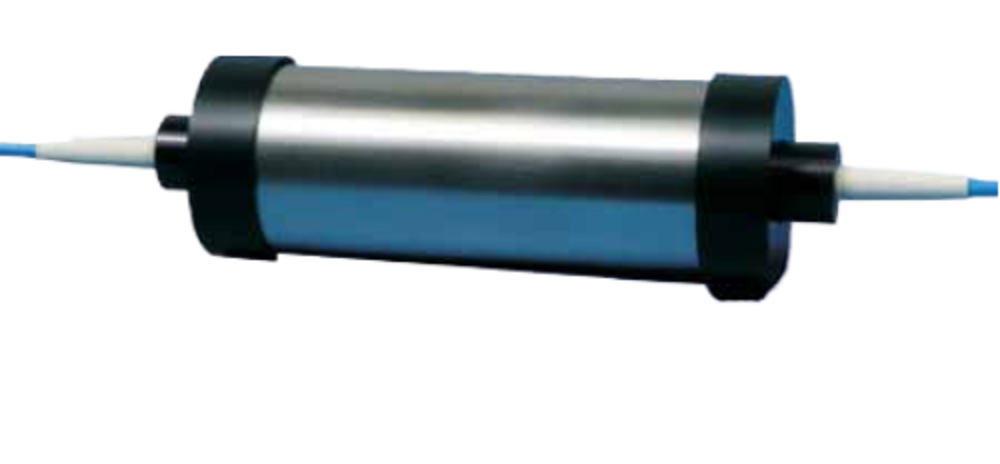
FOR/FOFM Pigtail-Style Faraday Rotators and Mirrors
Center Wavelength 633-1550 nm; Typ. Insertion Loss 0.5-0.8 dB; Return Loss 40, 60 dB; Polarization Extinction Ratio 20-30 dB; Fiber Type SM, MM, PM; Rotation Angle @Center Wavelength 45° OZ Optics’ FOR/FOFM pigtail-style Faraday rotators change the polarization state of light traveling through them. The output polarization state is rotated by 45 degrees with respect to the input polarization. When combined with a mirror, the reflected light is rotated by another 45 degrees, resulting in a 90 degree rotation. In addition, the polarization handedness is reversed by the mirror. This results in a reflected polarization that is orthogonal to the original polarization. This is useful when used in interferometers, because polarization changes through the fiber are cancelled out on the return journey. Different Faraday rotator materials are applicable to different wavelengths. At 1300 nm to 1600 nm, small powerful rotators allow for very compact packages. From 633 nm to 1064 nm, less powerful rotators materials requiring much longer lengths and larger magnets are used. This accounts for the wide range of package sizes for different wavelength regions. Rotation accuracy is very tightly controlled at 1300 nm to 1625 nm (standard ±3 degrees single pass — with ±1 degree available) but less controllable at lower wavelengths (±3 degrees standard). Faraday rotator mirrors are readily available at telecom wavelengths (1300 nm to 1550 nm). For shorter wavelength applications where an Faraday mirror is required, it can be constructed using a Faraday rotator with a polarization maintaining fiber output pigtail and a polarization maintaining fiber pigtailed fixed reflector. Key Features: Single Mode (SM), Multi Mode (MM), and Polarization Maintaining (PM) Versions Available Wide Range of Center Wavelengths: 633 nm to 1550 nm Low Insertion Loss: 0.5 dB to 0.8 dB Typ., 0.75 dB to 1.0 dB Max. Low Back Reflection Return Loss: 40 dB, 60 dB Polarization Extinction Ratio: 20 dB to 30 dB Rotation Angle at Center Wavelength: 45° Rotation Tolerance at Center Wavelength, +25°C: ±3°, ±1° Compact Housing Applications: Fiber Lasers; Interferometers Sensors; Amplifiers; Circulators; OCT Systems
REQUEST PRICING AND AVAILABILITY
- Get your individual quote.
- Technical compatibility review included.
- Volume discounts available.
No obligation. Direct access to our engineering team.
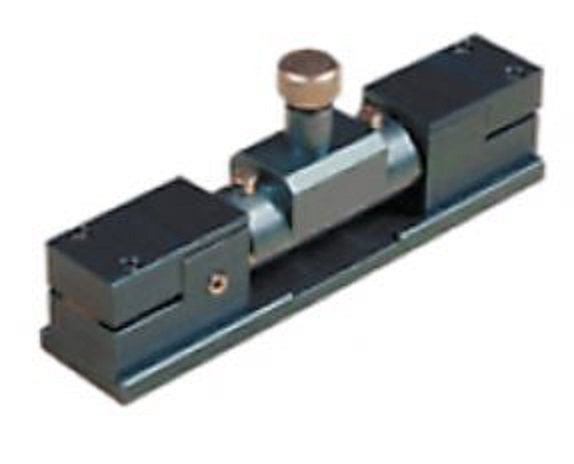
FPC/HFPC/PFPC Fiber Polarization Controllers
400 to 2200 nm; Return Loss ≥40 to ≥60 dB; Available Polarization Extinction Ratio >35; Fiber Type SM, Coating ≤400 µm OZ Optics’ FPC/HFPC/PFPC series of fiber polarization controllers allows to convert any input polarization to any desired output polarization. These devices combine the compact size and ease of use of standard bulk optics systems with low cost, low loss and low back reflection. FPC/HFPC/PFPC controllers work by applying pressure with an adjustable clamp. The pressure on the fiber causes a birefringence within the fiber core, causing the fiber to act as a fractional wave plate. Varying the pressure varies the delay between the fast and slow polarization components. The clamp is rotatable, allowing to change the direction in which the stress is applied. This allows any output polarization to be achieved. The process is simple and quick, output polarizations exceeding 30 dB can be routinely achieved in seconds. FPC/HFPC/PFPC fiber polarization controllers work with single mode (SM) fiber of any wavelength. For multi mode (MM) and polarization maintaining (PM) fiber, AMS Technologies offers OZ Optics’ FPR series of polarization rotators, controllers and analyzers. FPC/HFPC/PFPC fiber polarization controllers are offered in three versions. The FPC in-line polarization controllers can be inserted into a customer’s own single mode fiber. OZ Optics now provides this unit in a miniature size housing for applications where space is critical. FPC controllers can be used with any wavelength single mode fiber and is designed to work with 250 and 400 µm jacketed fibers. With the PFPC devices, pigtailed versions are also offered. PFPC versions are available with any size of cable or fiber and with your choice of connectors. Finally, HFPC connector receptacle style controllers are available, using a short section of fiber terminated with female receptacles. For further information, please contact the AMS Technologies optical fiber experts. Key Features: No Intrinsic Loss No Backreflection Compact Size, Miniature Housing Easy to Use Wavelength Insensitive Wavelength Range 400 to 2200 nm Applications: Single Mode (SM) to Polarization Maintaining (PM) Fiber Launching; Polarization Dependent Loss (PDL) Measurements; Launching into Polarization Sensitive Devices; Fiber Lasers; Fiber Interferometers; OCT Systems
REQUEST PRICING AND AVAILABILITY
- Get your individual quote.
- Technical compatibility review included.
- Volume discounts available.
No obligation. Direct access to our engineering team.

FPR Polarization Rotators, Controllers & Analyzers
Center Wavelength 440 to 1625 nm; Insertion Loss 0.8 to 2.5 dB; Return Loss ≥14 to ≥60 dB; Polarization Extinction Ratio 20, 25, 30; Fiber Type SM, Coating ≤400 µm; Max. Input Power 200 mW OZ Optics’ FPR line of polarization rotators, controllers and analyzers manipulate and control the state of polarization of an input beam of light and couple the adjusted light into an output fiber or detector. These systems typically consist of an input with fiber pigtail or connector receptacle, from one to three polarization optic components and an output coupler with fiber pigtail or connector receptacle. The FPR product line uses bulk waveplates and polarizing glass to accomplish the polarization control. Each polarization optic stage can be removed without loss of coupling. These stages may be replaced or interchanged as the application requires. Separate stages with polarization optics mounted in a rotary platform may be purchased to allow using only one fiber optic assembly for multiple applications. Three types of polarization optics are employed: Plate polarizers, with high extinction ratio and low loss, half wave plates rotating the plane of polarization and quarter wave plates changing the ellipticity of the input light. Consult AMS Technologies for special component performance requirements. For extreme applications, custom achromatic waveplates can be supplied that allow operation over wider bands. These components are much more expensive than simple waveplates and detailed requirements should be supplied to ensure the proper component is supplied. OZ Optics manufactures two standard sizes of FPR devices. The standard size uses 2.5" square rotational stages and is the preferred choice for applications where frequent adjustments must be made or repeatability is important. The miniature stage uses 1" stages to fit into tight spaces and is preferred for use in equipment boxes or where a single state needs to be found and subsequent alignment is minimal. Key Features: User-friendly Lab Package or Compact Package for Inside Systems Single Mode (SM), Multi Mode (MM) and Polarization Maintaining (PM) Fiber Versions Removable/Replaceable Optics (Interchangeable) Wide Range of Available Wavelengths High Polarization Extinction Ratio Convert Any Polarization State to Any Other Polarization State Compatible With Standard Detector Housings Applications: Laser to Fiber Coupling; Polarization Dependent Component or PM Fiber Testing; Fiber Amplifiers; Coherent Communications; Polarization Error Rate Measurements; PM Fiber Axis Conversion
REQUEST PRICING AND AVAILABILITY
- Get your individual quote.
- Technical compatibility review included.
- Volume discounts available.
No obligation. Direct access to our engineering team.

High Resolution Motorized Polarization Controllers
360° Continuous Travel; Bidirectional Repeatability 0.05°; Homing Repeatability 0.1°; Bidirectional Accuracy 0.4°; Backlash 0.013°; Communication via TTL RS232; Speed 9600 baud; Data Protocol ASCII HEX OZ Optics offers convenient and economical motorized rotators, allowing precise management of polarization states in single or multi-stage optical systems with multiple paths. These rotators facilitate controlled and synchronized rotations, either sequentially or concurrently, via a single compact control unit. Integrated into a palm-sized enclosure alongside a processor and touch screen, the control unit governs multiple motors through an intuitive graphical user interface (GUI). Plug-and-play functionality is achieved, accommodating diverse system complexities for demanding applications. The input and output ports of each stage support various configurations, including fiber-connector receptacles, pinholes for free-space applications, or pigtailed with single mode, polarization maintaining, or multimode fibers. Within the rotators, polarization state manipulation is accomplished with precision using rotating waveplates, polarizer plates, polarizer prisms, or polarization beam splitters, achieving sub-degree resolution. The offerings include high-power optics and connectorized fibers catering to a broad spectrum of operating wavelengths. The software and GUI are customizable upon request, and users can access a Python library for additional flexibility. Key features: Precision rotation of half wave plates, quarter wave plates and polarizers to manipulate polarization Built-in encoder for closed loop operation Compact handheld plug-and-play device with touch screen control or with a computer via a USB port User-friendly software with an intuitive GUIs Can be pigtailed with single-mode, polarization maintaining or multimode fibers Customizable software and GUI upon request Interchangeable optics, holders and receptacles Applications: Automation of multi-polarization state analysis, quantum state tomography, polarization calibration, polarization state analyzer and controller, polarized fiber optic source, polarization extinction ratio controller and PM fiber axes conversion, optical Interferometric systems, laser to fiber coupling and coherent detection
REQUEST PRICING AND AVAILABILITY
- Get your individual quote.
- Technical compatibility review included.
- Volume discounts available.
No obligation. Direct access to our engineering team.
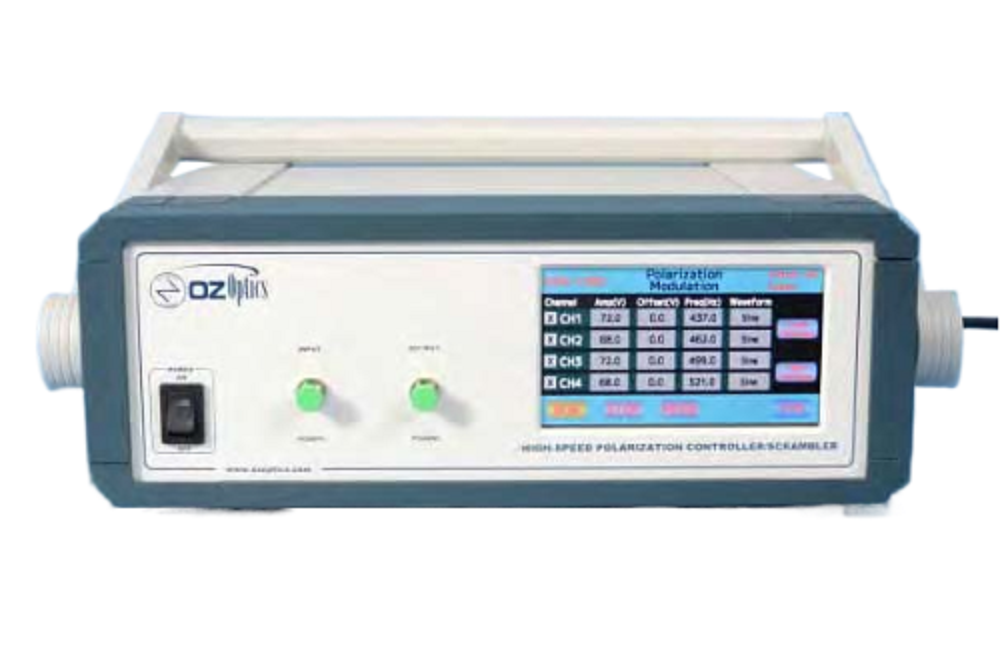
HSPC-1000 High-Speed Benchtop Polarization Controller/Scrambler
Benchtop Type; 1260-1650 nm; 4 Channels; Min. Retardation Range 2π; Fiber Type SM (9/125 µm); Connector Type FC/PC, FC/APC, SC/PC, SC/APC, LC/PC OZ Optics’ HSPC-1000 high-speed benchtop polarization controller/scrambler can control and/or scramble the polarization state of light passing through a fiber optic system. The HSPC-1000 generates four independent waveforms, operating at user-selectable frequencies, to generate different polarization states. It can also provide user-adjustable steady state signals to generate a particular polarization state. The HSPC-1000 contains four optical retardation elements that are used to produce any state of polarization. Each of these elements is controlled by an electrical signal, generated by an internal piezoelectric element in the device driver. The driver produces the appropriate drive signals: four independent signals that can be directly controlled by the HSPC-1000 high-speed benchtop polarization controller/scrambler. Key Features: Wavelength Range: 1260 nm to 1650 nm (Standard, Other Wavelengths Available on Request) Electric Polarization Controller and Driver Combined into One Unit Fixed or Random State Generation User-selectable Frequencies up to 1 kHz User Control of Polarization State Rugged Casing Quick Setup LCD Touch Screen Operation Connector Types: FC/PC, FC/APC, SC/PC, SC/APC, LC/PC Number of Channels: 4 Retardation Range: 2π Minimum Insertion Loss (IL): 0.05 dB (Not Including Connectors) Backreflection: >60 dB (Not Including Connectors) Activation Loss: ±0.05 dB Polarization Dependent Loss (PDL): <0.06 dB Fiber Type: Single Mode (SM) Fiber, 9/125 µm Modes of Operation: Constant Voltage (DC); Sine or Triangle Waves (User-Selectable Frequency & Amplitude) Frequency Range (Sine Wave Output): 0 to 1 kHz @140 V Frequency Resolution: 0.1 Hz Output Voltage Range: 0 V to 140 V Voltage Resolution (AC & DC Modes): 0.633 mV Power Supply: 120/240 VAC, 4 A , 50/60 Hz Operating Temperature Range: -20°C to +35°C at 140 V and 2 kHz, -20°C to +45°C at 140 V and 1 kHz Dimensions: 110 x 280 x 300 mm, Not Including Handle Weight: 5.5 kg Applications: Polarization Scrambling; Measuring Polarization Dependent Loss (PDL); Manufacturing and Quality Control; Studying Effects of Polarization; Controlling Polarization State
REQUEST PRICING AND AVAILABILITY
- Get your individual quote.
- Technical compatibility review included.
- Volume discounts available.
No obligation. Direct access to our engineering team.
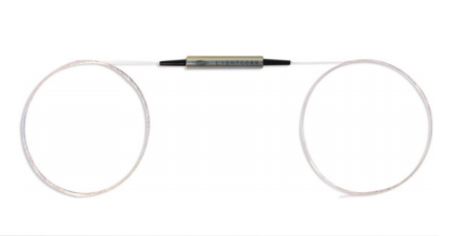
ILF Faraday Rotators
Fiber to Fiber; 1310, 1440, 1550 nm; Rotation Angle 45°; Insertion Loss ≤0.5 dB; Fiber Type PM, SMF-28e LightComm Technology’s ILF Polarization Maintaining Fiber to Fiber Faraday Rotator Series is characterized with low insertion loss, high return loss, high extinction ratio and excellent environmental stability and reliability. The components are ideal for polarization maintaining fiber amplifiers, fiber lasers, high speed communication system and instrumentation applications. Key Features: High Isolation Low Insertion Loss Excellent Stability and Reliability High Power Handling Applications: Fiber Lasers; Interferometers; Sensors; Fiber Amplifiers
REQUEST PRICING AND AVAILABILITY
- Get your individual quote.
- Technical compatibility review included.
- Volume discounts available.
No obligation. Direct access to our engineering team.

ILP In-line Polarizers
Polarization Maintaining; 630 to 1550, 2000 nm; Return Loss ≥50 dB; Power Handling ≤300 to ≤500 mW; Fiber Type PM, SM LightComm Technology’s ILP series of in-line polarizers are micro optics devices that can be used to convert un-polarized light into polarized light with high extinction ratio. It can also be used to enhance the extinction ratio of signals. The ILP series of in-line polarizers offers low insertion loss, high extinction ratio, high return loss and excellent environmental stability and reliability. It is ideal for high-speed communication systems and test instrumentation applications. Key Features: Compact Size Low Insertion Loss High Extinction Ratio Excellent Stability and Reliability Applications: Fiber Lasers; Fiber Amplifiers; Fiber Sensors; Optical Communications
REQUEST PRICING AND AVAILABILITY
- Get your individual quote.
- Technical compatibility review included.
- Volume discounts available.
No obligation. Direct access to our engineering team.
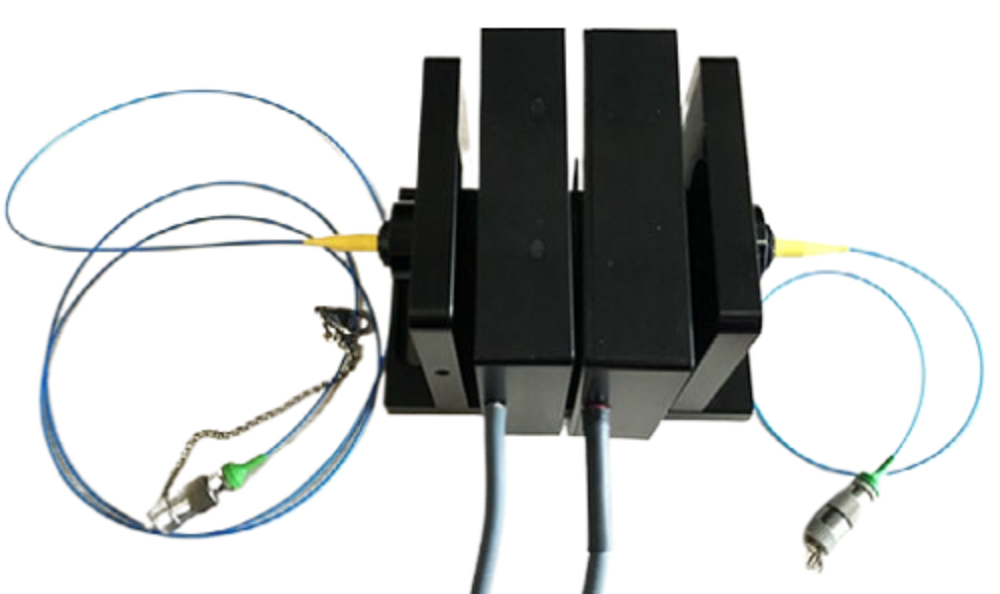
MFPR Precision Motorized Polarization Rotation Stages
Travel 360°; Bidirectional Repeatability 0.05°; Homing Repeatability 0.1°; Bidirectional Accuracy 0.4°; Typ. Encoder Resolution 143,360 counts/360°; Min. Incremental Motion 0.05°; Max. Total Load 50 g OZ Optics’ MFPR series of handy and cost-effective motorized rotators enable precise control of the polarization states of a single optical stage or multi-stage system with multiple optical paths. These rotators can be controlled and synchronized to perform precise rotations sequentially or in parallel using a single compact control unit. The control unit is incorporated along with a processor and touch screen in a palm-sized enclosure to control multiple motors via an intuitive graphical user interface (GUI). Plug-and-play features are realized and enabled via a customizable GUI regardless of the system complexity for demanding applications. The input and output ports of a given stage can be fiber-connector receptacles, pinholes for free-space applications, or pigtailed with single mode, polarization maintaining or multimode fibers. The light beam is then directed through one or more rotators, where the polarization state (the electric field of the propagating wave) is manipulated via rotating waveplates, polarizer plates, polarizer prisms or polarization beam splitters with sub-degree resolution. High-power optics, connectorized fibers for wide ranges of operating wavelengths are available. The software and the associated GUI can be modified upon request. Key Features: Precision Rotation of Half Wave Plates, Quarter Wave Plates, and Polarizers to Manipulate Polarization Built-in Encoder for Closed-Loop Operation Compact, Handheld Plug-and-Play Device Control: Touchscreen (Manual) or With a Computer via USB Port User-friendly Software With an Intuitive GUI Can be Pigtailed With Single Mode (SM), Polarization Maintaining (PM), or Multi Mode (MM) Fibers Customizable Software and GUI Upon Request Interchangeable Optics, Holders and Receptacles Travel: 360° Continuous Bidirectional Repeatability: 0.05° Homing Repeatability: 0.1° Bidirectional Accuracy: 0.4° Backlash: 0.013° Encoder Resolution: 143,360 counts/360° Typ. (0.0025°/Count) Minimum Incremental Motion: 0.05° Axis Wobble: 0.014° Max. Total Load: 50 g Min. Lifetime: >600,000 Revolutions (100 km) Motor Type: Resonant Piezo DC Voltage Input: 4.5 V to 5.5 V Typ. Current Consumption: 800 mA, Typ. Standby Current Consumption 50 mA Communications Bus: TTL, RS232 Operating Temperature Range: +15°C to +40°C Mounting Thread: ¼-20 UNC-2B TAP Dimensions: 7.4 x 8.8 x 2.3 cm Weight: 230 g Applications: Automation of Multi-Polarization State Analysis; Quantum State Tomography; Polarization Calibration; Polarization State Analyzer; Polarized Fiber Optic Source; Polarization Extinction Ratio (PER) Controller; PM Fiber Axes Conversion; Optical Interferometric Systems; Laser to Fiber Coupling and Coherent Detection
REQUEST PRICING AND AVAILABILITY
- Get your individual quote.
- Technical compatibility review included.
- Volume discounts available.
No obligation. Direct access to our engineering team.
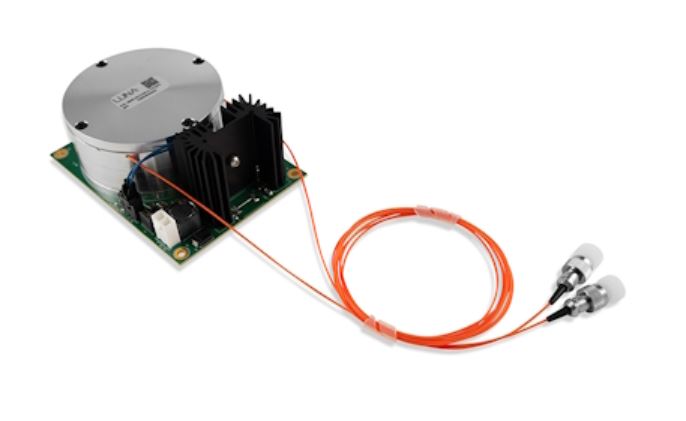
MMS-003 Miniature Multimode Scramblers
600-800 nm; IL ≤1 dB; Scrambling Frequency 725 ±5% kHz; Flatness <20%; Ripple <10%; RL ≤-50 dB The presence of speckle patterns from a multimode fiber can pose challenges in applications that demand consistent and steady light distributions at the fiber output. Addressing this issue, the MMS-003 stands out as a compact multimode scrambler, specifically engineered to introduce randomness to multimode speckle patterns at a rapid frequency exceeding 725 kHz. This device ensures that the light distribution at the output appears both uniform and stable, particularly when observed by cameras or detectors with averaging times exceeding 80 ms. Furthermore, the all-fiber optical path in the scrambler minimizes insertion loss. Key Features: Operation Wavelength: 600-800 nm Insertion Loss: ≤1 dB Scrambling Frequency: 725 ±5% kHz Flatness: <20% Ripple: <10% Return Loss: ≤-50 dB Applications: DNA Sequencing, Multimode Fiber Sensing, Optical Imaging, Test And Measurement Of Multimode Fiber Devices
REQUEST PRICING AND AVAILABILITY
- Get your individual quote.
- Technical compatibility review included.
- Volume discounts available.
No obligation. Direct access to our engineering team.
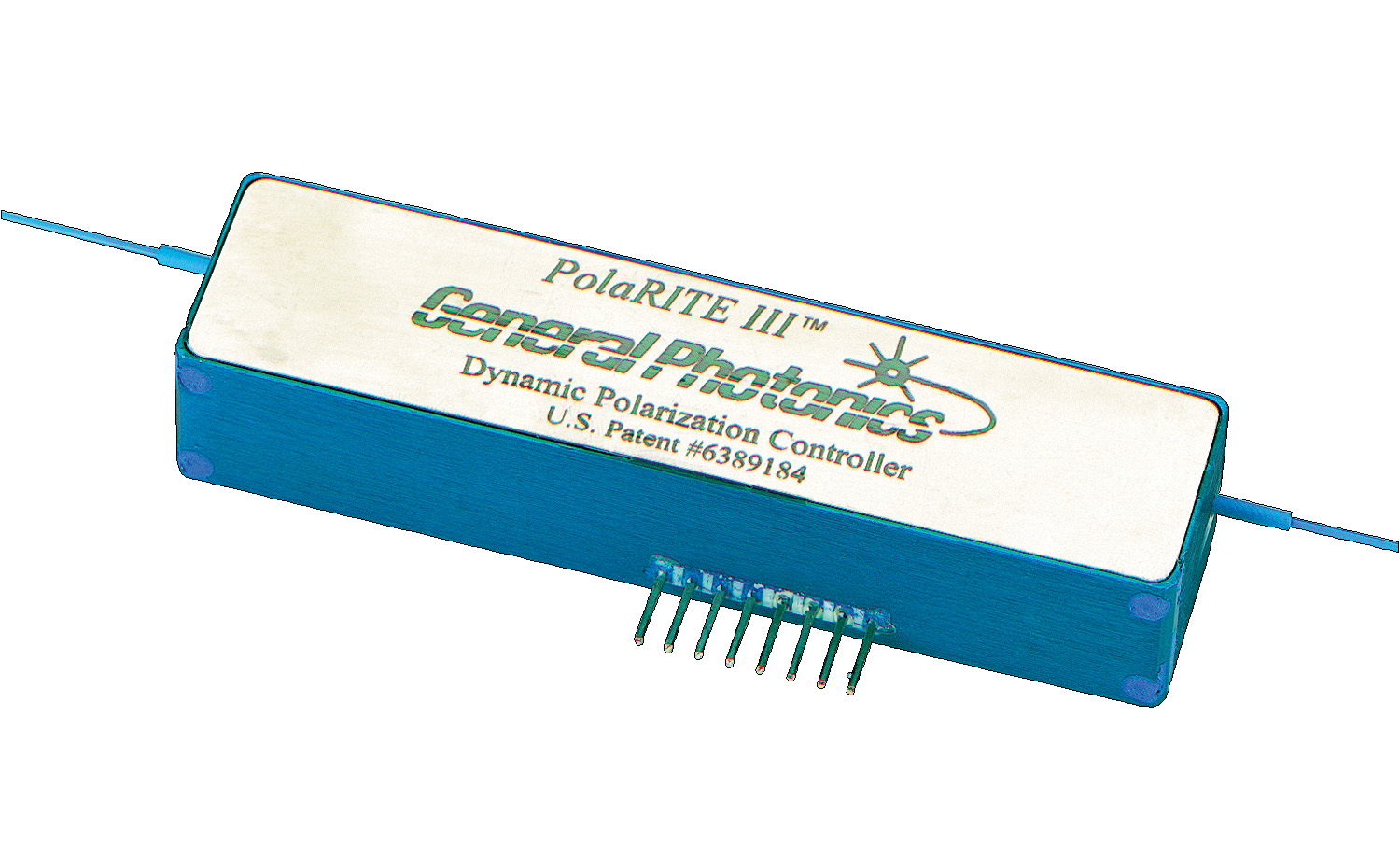
MPC Polarization Controller
1260-1650 nm; IL 0.05 dB; PMD 0.05 ps; AL <0.01, <0.05 dB; RL >65 dB; Max. Rise & Fall Time 30 µsLunas MPC all fiber polarization controller module is packaged in a low-profile, 16 mm high enclosure, suitable for system integration and mounting on a PCB. The module’s low height is especially advantageous for integration in test equipment, fiber sensors, fiber lasers and optical network modules.Available with three (-3x) and four channels (-4x), the MPC polarization controller module features an all-fiber design with inherently low loss, minimal activation loss and minimal back reflection. A special athermal design leads to stable operation over a wide range of temperatures (-25 to +80 °C).Combined with Lunas miniature piezo driver card, it can be controlled either by a digital or analog signal to obtain any desired polarization output from an arbitrary input polarization state.Key Features:OEM PackagingAll-fiber DesignLow Intrinsic Insertion Loss: 0.05 dBLow Back Reflection – Return Loss: >65 dBFast Response – Maximum Rise and Fall Time: 30 µsOperating Wavelength Range: 1260 to 1650 nm Maximum Activation Loss (AL): 0.01, 0.05 dBPolarization Mode Dispersion (PMD): 0.05 psCompact Size – Dimensions: 65.5/83 x 20.3 x 16 mmApplications: Polarization Stabilization; Compensate PMD in Fiber Sensing Systems; Polarization Demultiplexing; Fiber Sensor; Fiber Laser; Testing Equipment
REQUEST PRICING AND AVAILABILITY
- Get your individual quote.
- Technical compatibility review included.
- Volume discounts available.
No obligation. Direct access to our engineering team.

MPC-201 Polarization Controller
980-1620 nm; Multiple Polarization Control Modes; IL <0.6 dB; PDL <0.1 dB; PMD <0.2 ps; AL <0.1 dB; RL >50 dBControlling the state of polarization (SOP) of an optical signal has never been easier – Lunas MPC-201 multifunction polarization controller has four operational modes for complete polarization control: variable rate polarization scrambling, manual polarization adjustment, polarization modulation, and externally triggered random SOP generation.Four different polarization scrambling methods enable the SOP to a) trace out a spiral pattern about a static or rotating axis with a nearly uniform SOP variation rate for system stress tests (Tornado scrambling); b) generate a continuous trace with a Rayleigh distribution of SOP variation rate, for emulation of the SOP variation in a fiber link (Rayleigh scrambling); c) generate a continuous trace with uniform sphere coverage for PDL measurement (Triangle scrambling); or d) evenly cover the Poincaré sphere with discrete, random points at a uniform rate (Discrete scrambling).In the SOP modulation mode, each polarization control axis can be selectively controlled with a sine, square, or triangle wave of user defined frequency and amplitude. Each polarization control axis can also be controlled manually, by setting the input voltage either from the front panel controls or through a remote control interface. In externally triggered scrambling mode, discrete, random SOPs are generated in response to a trigger input, a feature desirable for recirculating loop applications or other applications requiring synchronization with other devices.Finally, the MPC-201 can emulate the Agilent 11896A polarization scrambler function, allowing it to act as a plug-in replacement for this popular but discontinued device, while offering many more advanced features. The MPC-201 polarization controller puts the user in control.Key Features:Multiple Polarization Control ModesTornado Scrambling (Quasi-uniform Rate Distribution): 0.00 to 2,000 Revolutions/sReal Fiber SOP (State of Polarization) Variation Emulation (Rayleigh Rate Distribution): 0.00 to 2,000 rad/sDiscrete Random States SOP Scrambling: 0.00 to 20,000 Points/sTriangle Polarization Scrambling: 0.00 to 2,000 x 2π rad/sAgilent 11896A Scrambling Emulation: Speed Settings 1 to 8, Matched to 11896A SettingsSOP ModulationOperating Wavelength Range: 1260 to 1620 nm, 980 to 1310 nmManual Polarization Control: 4 Channels, 0 to 4π Each ChannelLow Insertion Loss (IL): <0.5 dB With ConnectorsLow Polarization Dependent Loss (PDL): <0.05 dB With ConnectorsLow Polarization Mode Dispersion (PMD): <0.1 ps With ConnectorsLow Activation Loss (AL): <0.05 dB With ConnectorsReturn Loss: >50 dB With ConnectorsOptical Power Handling: 1,000 mWBright OLED DisplayApplications: Recirculating Loop Studies; Automated Testing; Real Fiber Emulation; SOP Variation Emulation; PMD Emulation; Polarization Scrambling; System Polarization Studies; PDL/DOP Measurement
REQUEST PRICING AND AVAILABILITY
- Get your individual quote.
- Technical compatibility review included.
- Volume discounts available.
No obligation. Direct access to our engineering team.

MPC-202 Polarization Controller
980-1620 nm; SOP Change Rate >360 krad/s; IL <0.6 dB; PDL <0.1 dB; PMD <0.2 ps; AL <0.1 dB; RL >50 dBLunas MPC-202 advanced multifunction polarization controller is specially designed to meet the requirements of coherent receiver performance tests.MPC-202 combines Luna award winning PolaRite™ II/III polarization controller with proprietary polarization control algorithms to achieve a wide range of polarization control functionalities, including high-speed quasi-uniform rate polarization scrambling, random-rate polarization scrambling with Rayleigh rate distribution, discrete-state polarization scrambling with high slew rate, sine, square, and triangle-wave SOP (state of polarization) modulation, and manual polarization control functions.In particular, the “Tornado” quasi-uniform rate polarization scrambling function can achieve a high SOP scrambling rate of up to 60,000 revolutions/s (more than 360 krad/s) with a narrow rate distribution clustered around the highest rate.In short, the MPC-202 is an ideal tool for production or laboratory testing of polarization related functions and parameters, including passive/active component characterization, performance tests of fiber optic interferometers, sensor systems, RF photonics systems, etc. The quasi-uniform rate high-speed scrambling function is particularly useful for SOP tracking speed testing of coherent receivers, and the square wave SOP modulation function is ideal for SOP recovery time tests.Key Features:Quasi-uniform Rate SOP (State of Polarization) ScramblingSOP Change Rate: >360 krad/sScrambling With Rayleigh Rate DistributionDiscrete SOP ScramblingSOP ModulationOperating Wavelength Range: 1260 to 1620 nm, 980 to 1310 nmTornado Polarization Scrambling: 0.00 to 60,000 Revolutions/sMean Rayleigh Rate Distribution Polarization Scrambling: 0.00 to 2,000 rad/sTriangle Polarization Scrambling: 0.00 to 2,000 x 2π rad/sDiscrete Random States Polarization Scrambling: 0.00 to 20,000 points/sManual Polarization Control: 4 Channels, 0 to 4π Each ChannelLow Insertion Loss (IL): <0.6 dB With ConnectorsLow Polarization Dependent Loss (PDL): <0.1 dB With ConnectorsLow Polarization Mode Dispersion (PMD): <0.2 ps With ConnectorsLow Activation Loss (AL): <0.1 dB With ConnectorsReturn Loss: >50 dB With ConnectorsOptical Power Handling: 1,000 mWBright OLED DisplayApplications: Laboratory Testing of Polarization-related Parameters; Performance Tests of Fiber Optic Interferometers and Systems; SOP Tracking Speed Testing of Coherent Receivers
REQUEST PRICING AND AVAILABILITY
- Get your individual quote.
- Technical compatibility review included.
- Volume discounts available.
No obligation. Direct access to our engineering team.

MPC-203 Polarization Controller
980-1620 nm; SOP Change Rate ≤11 Mrad/s; IL <0.6 dB; PDL <0.1 dB; PMD <0.2 ps; AL <0.1 dB; RL >50 dBLunas MPC-203 high-speed multifunction polarization controller is specially designed to meet the high SOP (state of polarization) scrambling requirements needed for stress testing a coherent receiver’s polarization tracking performance.MPC-203 combines Lunas award winning PolaRite™ II/III polarization controller with proprietary polarization control algorithms to achieve a wide range of polarization control functionalities, including high-speed polarization scrambling with a maximum SOP change rate of up to 11 Mrad/s.Unlike other high-speed polarization scramblers found in the market, this all-fiber, pass-through design ensures low insertion loss (IL), polarization dependent loss (PDL), polarization mode dispersion (PMD) and activation loss (AL).Key Features:High-speed SOP (state of polarization) ScramblingSOP Change Rate up to 11 Mrad/sScrambling With Rayleigh Rate DistributionDiscrete SOP ScramblingSOP ModulationOperating Wavelength Range: 1260 to 1620 nm, 980 to 1310 nmTornado Polarization Scrambling: 0 to 11 Mrad/sMean Rayleigh Rate Distribution Polarization Scrambling: 0.00 to 2,000 rad/sTriangle Polarization Scrambling: 0.00 to 2,000 x 2π rad/sDiscrete Random States Polarization Scrambling: 0.00 to 20,000 points/sManual Polarization Control: 4 Channels, 0 to 4π Each ChannelLow Insertion Loss (IL): <0.6 dB With ConnectorsLow Polarization Dependent Loss (PDL): <0.1 dB With ConnectorsLow Polarization Mode Dispersion (PMD): <0.2 ps With ConnectorsLow Activation Loss (AL): <0.1 dB With ConnectorsReturn Loss: >50 dB With ConnectorsOptical Power Handling: 1,000 mWBright OLED DisplayApplications: SOP Response Test of Coherent Receivers; SOP Tracking Speed Test; PMD and PDL Related Tests; SOP Variation Emulation; Polarization Scrambling
REQUEST PRICING AND AVAILABILITY
- Get your individual quote.
- Technical compatibility review included.
- Volume discounts available.
No obligation. Direct access to our engineering team.

PCD-005 Polarization Scrambler
980-1660 nm; IL <0.05, <0.6 dB; PDL <0.05 dB; PMD <0.05 ps; Residual Amplitude Modulation <±0.01 dB; Residual Phase Modulation <0.1π; RL >65 dBLunas’ PCD-005 polarization scrambler is an all-fiber design module that randomizes polarization states. This module is designed to be easily plugged into sensor equipment or measurement instruments with minimal development effort.The digital control circuitry delivers uniform SOP distribution over a wide operation temperature range, making it a good choice for sensor field applications. The PCD-005 polarization scrambler module can be remote controlled via RS-232 to set the operation wavelength or enable/disable the scrambling operation.The PCD-005 delivers superior performance with extremely low insertion loss, back reflection, and residual phase and amplitude modulation.Key Features:Minimal Insertion Loss (IL): <0.05 dB Without Connectors, <0.6 dB With ConnectorsMinimal Back Reflection: Low Residual Phase Modulation: <0.1πLow Residual Amplitude Modulation: <±0.01 dBRS-232 Control OptionRemote Operation Wavelength ControlCenter Operating Wavelengths: 980 to 1660 nmOperating Wavelength Range: >100 nmOutput Degree of Polarization (DOP): <5%Average Polarization Mode Dispersion (PMD): <0.05 psIntrinsic Polarization Dependent Loss (PDL): <0.05 dB Return Loss: >65 dB Without ConnectorsOptical Power Handling: >1,000 mWBoard Dimensions: 220 x 100 x 30 mmApplications: Eliminate Polarization Sensitivity; Add Optional Capability to Sensor Systems
REQUEST PRICING AND AVAILABILITY
- Get your individual quote.
- Technical compatibility review included.
- Volume discounts available.
No obligation. Direct access to our engineering team.

PCD-104 Polarization Scrambler
980-1600 nm; Residual Phase Modulation <0.1 π; Residual Amplitude Modulation <±0.01 dB; PMD <0.05 ps; PDL <0.05 dB; IL <0.05, <0.6 dB; RL >65 dBLunas’ PCD-104 polarization scrambler uses a breakthrough patented all-fiber technology to effectively randomize polarization states. Specifications include low insertion loss and low back reflection as well as minimal phase and amplitude modulation. The instrument can be used in automatic test systems under remote control through digital interface options.Depolarizing by polarization scrambling has many important applications. Scrambling the input polarization can eliminate measurement uncertainties caused by the polarization sensitivity of the testing device. Performance degradation due to polarization dependent gain (PDG) induced in optical amplifiers can also be suppressed by polarization scrambling. In addition, polarization scrambling can be used in systems to facilitate and simplify PMD monitoring.The PCD-104 polarization scrambler delivers superior performance, including extremely low insertion loss, back reflection, and residual phase and amplitude modulation.Key Features:Minimal Insertion Loss (IL): <0.05 dB Without Connectors, <0.6 dB With ConnectorsMinimal Back ReflectionOptical Return Loss (RL): >65 dB Without ConnectorsLow Residual Phase Modulation: <0.1 πLow Residual Amplitude Modulation: <±0.01 dBRemote Operation Wavelength ControlBuilt-in RS-232, GPIB and Ethernet PortsCenter Operating Wavelength: λ Range 1 1310, 1480, 1550, 1600 nm, λ Range 2 980, 1060, 1310 nmOperating Wavelength Range: >100 nmOutput Degree of Polarization: <5%Average Polarization Mode Dispersion (PMD): <0.05 psIntrinsic Polarization Dependent Loss (PDL): <0.05 dBOptical Power Handling: >1,000 mWApplications: PDG Mitigation; Elimination of Polarization Sensitivity; Facilitating PMD Emulation; Facilitating PMD Compensation; Enables PDL Measurement
REQUEST PRICING AND AVAILABILITY
- Get your individual quote.
- Technical compatibility review included.
- Volume discounts available.
No obligation. Direct access to our engineering team.

PCD-M02 Polarization Controller
980-1650 nm; 3, 4 Channels; Polarization Control Range 0-4π Each Channel; IL <0.05, <0.6 dB; PDL <0.05 dB; PMD <0.05 ps; AL <0.01, <0.05 dB; RL >65 dBLunas’ PCD-M02 polarization controller module integrates an all-fiber dynamic polarization controller with a miniature piezo driver card, so that the SOP of the signal can be directly controlled either by a 0 to 5 V analog control signal or a 12-bit TTL digital control signal.The 3- or 4-channel polarization controller module features an on-board high voltage DC/DC converter, so no external high voltage power supply is required. The card can be configured to accept either a ±12 VDC power supply or an optional external 160 V power supply.As a polarization controller, the PCD-M02 can convert any input polarization state to any desired output polarization state. As a scrambler, it can randomize the output polarization state. This module offers the low insertion loss, low back reflection, and low activation loss needed for test and measurement applications, combined with the compact size needed for system integration or handheld devices.Key Features:Minimal Insertion Loss (IL): <0.05 dB Without Connectors, <0.6 dB With ConnectorsMinimal Activation Loss (AL): 0.01 dB, 0.05 dB Fast ResponseDigital and Analog ControlCompact SizeOperating Wavelength Range: 1260 to 1650 nm, 980 to 1310 nmPolarization Control Range: 3 or 4 Channels, 0 to 4π Each ChannelLow Polarization Dependent Loss (PDL): <0.05 dB Low Polarization Mode Dispersion (PMD): <0.05 ps Return Loss: >65 dBOptical Power Handling: 1,000 mWBoard Dimensions: 100 x 100 x 17.5 mmApplications: Polarization Control; Polarization Scrambling; PDL Measurement; PMD Compensation/Emulation; Fiber Sensor
REQUEST PRICING AND AVAILABILITY
- Get your individual quote.
- Technical compatibility review included.
- Volume discounts available.
No obligation. Direct access to our engineering team.

PDLE-100-11 Motor Driven Polarization Dependent Loss Emulator
1520-1610 nm; Insertion Loss <1.00 dB; Polarization Mode Dispersion <0.5 ps; Return Loss >55 dB; Fiber Type SM; Max. Input Power 500 mW OZ Opticsʼ PDLE-100-11 motor driven polarization dependent loss emulator (PDLE) is an OEM module that comes with a built-in stepper motor, optical block, and control firmware. The device allows the user to set, with high precision, a desired PDL artifact value within a 0.1 dB to 20 dB dynamic range, using the remote-control interface commands. The motor driven PDLE features low insertion loss (IL) and low polarization mode dispersion (PMD) over a broad operating wavelength range. The standard model is optimized for C/L band optical signals, covering 1520 nm to 1610 nm. By controlling and accurately manipulating the state of polarization (SOP) inside the device, one can generate variable PDL from 0.1 dB to 20 dB (higher PDL values available on request), with fine resolution. The PDLE-100-11 is useful to emulate PDL effects due to passive/active optical devices in an optical link, such as attenuators, modulators, array waveguides, fiber Bragg gratings, switches, fused couplers, etc. The PDLE enables physical emulation of the PDL in an optical system to quantify available PDL budget margins. The PDLE coupled with other OZ Optics products such as a polarization dependent loss meter, a polarized stable source, or a polarization controller, can significantly assist in defining and quantifying polarization dependent losses in an optical system. Key Features: Electrically Controlled Polarization Dependent Loss (PDL) Emulation Low Residual Insertion Loss (IL): <1.00 dB Broad Wavelength Range: 1520 nm to 1610 nm Wide Selection Range of Connectors Low Polarization Mode Dispersion (PMD): <0.5 ps High PDL Resolution Computer Interface Selection: RS232, I2C or SPI Fiber Type: 9/125 μm Single Mode (SM) Fiber PDL Dynamic Range: 0.1 dB to 20 dB Optical Return Loss: >55 dB Operating Temperature: 0°C to +40°C Maximum Input Power: 500 mW Response Time: 20 dB Change <1 s, 1 dB Change <0.1 s Power Supply: 5 V to 12 V, Typ. 520 mA Max. @5 V, 182 mA Typ. @12 V Dimensions: 20.4 x 50.6 x 72.2 mm (Not Including Fibers) Weight: 100 g Applications: Polarization Dependent Loss (PDL) Compensation; Reference PDL Source; Test Equipment PDL Calibration; Quality Control and Measurement
REQUEST PRICING AND AVAILABILITY
- Get your individual quote.
- Technical compatibility review included.
- Volume discounts available.
No obligation. Direct access to our engineering team.

PDLE-1000 Multi-Channel Benchtop Polarization Dependent Loss Emulator
Up to 16 Channels; 1520-1610 nm; Insertion Loss <1.00 dB; Polarization Mode Dispersion <0.5 ps; Return Loss >60 dB; Fiber Type SM; Max. Input Power 500 mW With the PDLE-1000 system, OZ Optics offers a turnkey, rugged and low cost benchtop digital multichannel polarization dependent loss emulator (PDLE) with high resolution, and high dynamic range. The built-in, motor controlled PDLE unit has low insertion loss, low back reflection, low PMD, and flat wavelength response. This system can be configured with up to four individual motor driven PDLE in a benchtop unit and up to 16 channels in a full rack mount unit. The system comes with a color touch screen in the front panel and with a USB interface on the back panel. The PDLE-1000 is useful to emulate PDL effects due to passive/active optical devices in an optical link, such as attenuators, modulators, array waveguides, fiber Bragg gratings, switches, fused couplers, etc. The PDLE-1000 enables physical emulation of the PDL in an optical system to quantify available PDL budget margins. The benchtop PDLE coupled with other OZ Optics products such as a motorized variable attenuator, an optical switch, a polarization dependent loss meter, a polarized stable source, or a polarization controller, can significantly assist in defining and quantifying polarization dependent losses and other fiber impairments in fiber optic networks. Key Features: Wide Variable Polarization Dependent Loss (PDL) Dynamic Range: 0.1 dB to 20 dB Low Polarization Mode Dispersion (PMD): <0.5 ps Low Wavelength Dependency Low Residual Insertion Loss (IL): <1.00 dB Low Back Reflection: Optical Return Loss >60 dB High Resolution Rugged and Compact Design Wide Wavelength Range: 1520 nm to 1620 nm Wide Range of Receptacles Computer Interface: USB as Standard Your Choice of up to Four per Unit in Benchtop and up to 16 in Full Rack Mount Fiber Type: 9/125 μm Single Mode (SM) Fiber Maximum Input Power: 500 mW Response Time: 10 dB Change <1 s, 0.3 dB Change <0.1 s Touch Screen Display Universal Power Supply: 110/220 VAC, 50/60 Hz, 40 W Cmputer Interface: USB Dimensions: 280 x 300 x 100 mm Weight: 4 kg + 0.25 kg/Channel Operating Temperature: -10°C to 55°C Applications: Emulate Polarization Dependent Loss (PDL) Effects Due to Passive/Active Optical Devices (Attenuators, Modulators, Array Waveguides, Fiber Bragg Gratings, Switches, Fused couplers, etc.) in an Optical Link; PDL Compensation; Reference PDL Source; Test Equipment PDL Calibration; Quality Control and Measurement
REQUEST PRICING AND AVAILABILITY
- Get your individual quote.
- Technical compatibility review included.
- Volume discounts available.
No obligation. Direct access to our engineering team.