
General Photonics
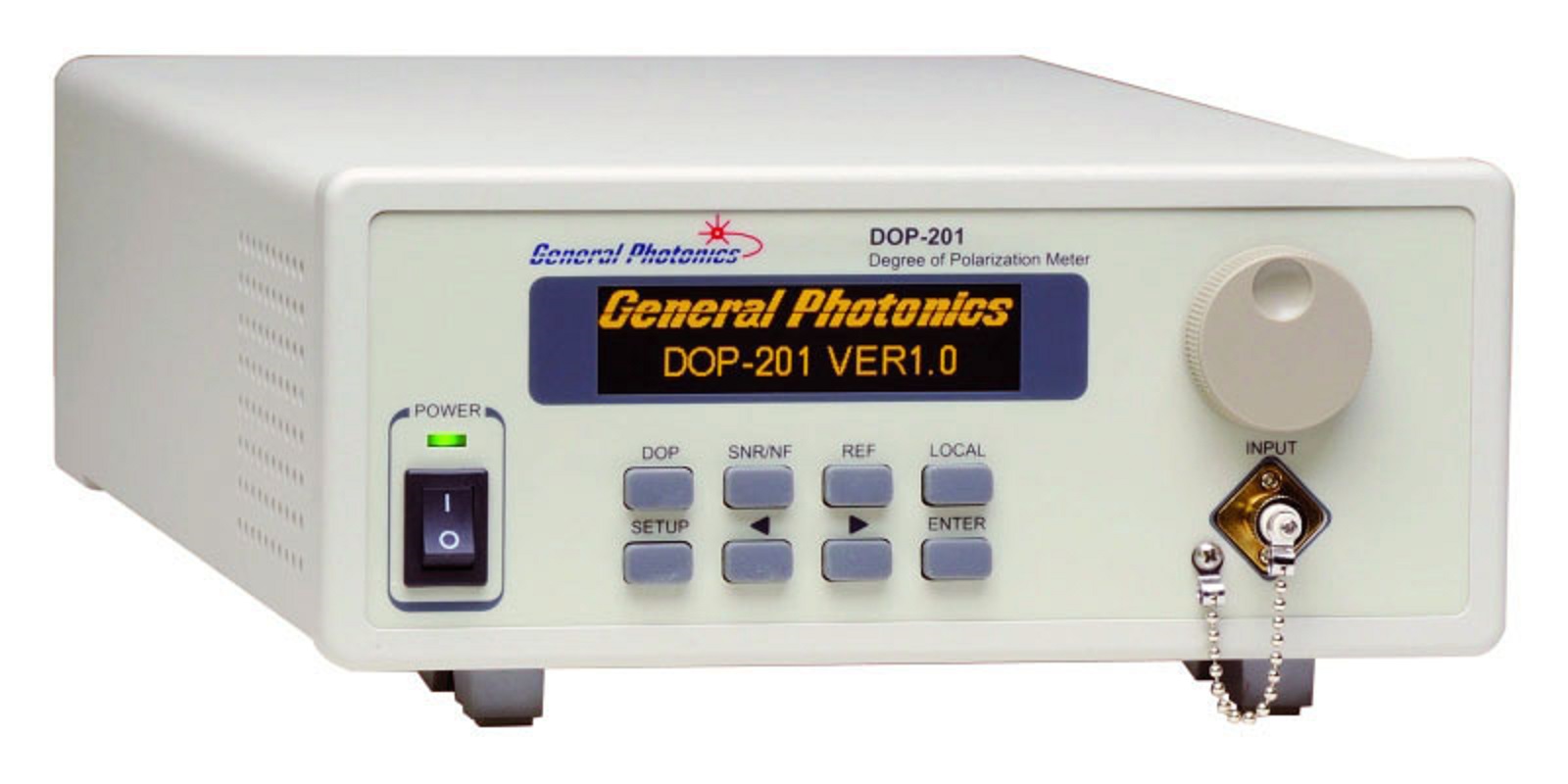
1260-1620 nm; DOP Accuracy 0.2%, 0.5%; DOP Range 0-100%; DOP Resolution 0.01%; Operating Power Range -40-6dBmThe DOP-201 system from Luna measures and displays the degree of polarization (DOP) of a light source in real time on the front panel display. The instrument incorporates a patented maximum & minimum search technique that accurately measures both low and high DOP with a wide dynamic range. This technique is superior to polarimeter-based methods that are inaccurate at low values of DOP as well as scrambler-based methods which are less accurate at high values of DOP.The instrument's wide wavelength range includes the S, C and L bands, without calibration. Simultaneous measurement of DOP and optical power level of the light source under test can be used to obtain DOP power dependence and to ensure low insertion loss during depolarizer manufacturing.The DOP-201 degree of polarization meter is ideal for characterizing the performance of depolarizers and depolarized light sources, such as ASE and SLED sources and the pumps for Raman amplifiers. It can also be used to monitor the OSNR (optical signal-to-noise ratio) and PMD (polarization mode dispersion) of optical signals, and to measure the noise figure of optical amplifiers.The DOP-201 features fast measurement, high accuracy and resolution, a wide operating power range, a bright OLED display and an analog output port for easy integration in automated depolarizer manufacturing stations.Key Features:Rapid Measurement Speed: 30 msDegree of Polarization (DOP) Wavelength IndependenceHigh DOP Accuracy: ±0.5% for Single Sample, ±0.2% for 10 Sample AverageWide Operating Wavelength Range: 1260 to 1620 nmDOP Range: 0 to 100%DOP Resolution: 0.01%Operating Power Range: -40 to 6 dBmFront Panel Real-time DisplayAnalog OutputDimensions: 356 x 216 x 89 mmApplications: Characterizing Depolarizers and Depolarized Light Sources, Such as ASE and SLED Sources and the Pumps for Raman Amplifiers; Monitoring OSNR and PMD of Optical Signals; Measuring the Noise Figure of Optical Amplifiers; Depolarizer Manufacturing and QC; Fiber Gyro Coil Characterization; ROADM Manufacturing
REQUEST PRICING AND AVAILABILITY
- Get your individual quote.
- Technical compatibility review included.
- Volume discounts available.
No obligation. Direct access to our engineering team.

600-1620 nm; No. of Channels 1, 2; PER Resolution 0.1 dB; PER Dynamic Range >40, >50 dB; Angular Resolution 0.06 dB; Input Optical Power Range -30-10 dBm; Power Resolution 0.02, 0.2 dB; Measurement Speed 0.1-10 sLuna’s ERM-202 is a single or dual channel polarization extinction ratio (PER) meter. When used with a broadband source, it directly measures PER. Single and dual channel models are available. The single channel instrument can be upgraded to a dual-channel version at a later date.The dual channel version is specifically designed to simultaneously measure the PER and power ratio of a device with two polarization maintaining (PM) outputs, such as a Y-branch fiber gyro IOC, PM coupler (PMC), or polarization beam splitter (PBS), as well as evaluate the performance (output DOP) of depolarizers.By combining low-noise circuitry with a high-resolution stepper, the ERM series achieves a PER dynamic range of 50 dB and an angular resolution of 0.06°, outperforming all competitors in its class. These instruments feature OLED displays with a high contrast bright readout that allows the data to be observed from several feet away. The instruments can be operated from the front panel or via remote control.The operator can choose from four measurement speeds ranging from 0.1 to 1 s/cycle to optimize speed or accuracy and can observe multiple parameters on the front panel screen including PER, axis angle, power ratios, and optical power. The measurement data can be stored and recalled for comparison purposes from the front panel as well. Full digital or remote control is included for unattended or system applications.Key Features:One or Two Measurement ChannelsFree-space InputFront Panel or Remote ControlSimultaneous Polarization Extinction Ratio (PER) and Power Ratio TestingPER Resolution: 0.1 dBPER Dynamic Range: >40, >50 dB High Angular Resolution: 0.06 dBOperating Wavelength Range: 1260 to 1620 nm, 960 to 1160 nm, 600 to 850 nmInput Optical Power Range -30 to 10 dBmPower Resolution: 0.02, 0.2 dBMeasurement Speed: 0.1 to 10 sBright OLED DisplayStore and Recall FunctionsDimensions: 356 x 216 x 89 mmApplications: Verification of PM Connectorization and Splices; Testing PM Fiber Coils; Simultaneous Measurement of PER and Power Ratio; Testing Y-branch Fiber Gyro IOCs; Testing PM Couplers (PMC) or Polarization Beam Splitters (PBS); Evaluating the Performance of Depolarizers; Laser Diode PM Fiber Pigtailing; PM Fiber Patchcord Production; PM Fiber Fusion Splicing QA; PM Fiber Coil and Fiber Gyro QA
REQUEST PRICING AND AVAILABILITY
- Get your individual quote.
- Technical compatibility review included.
- Volume discounts available.
No obligation. Direct access to our engineering team.
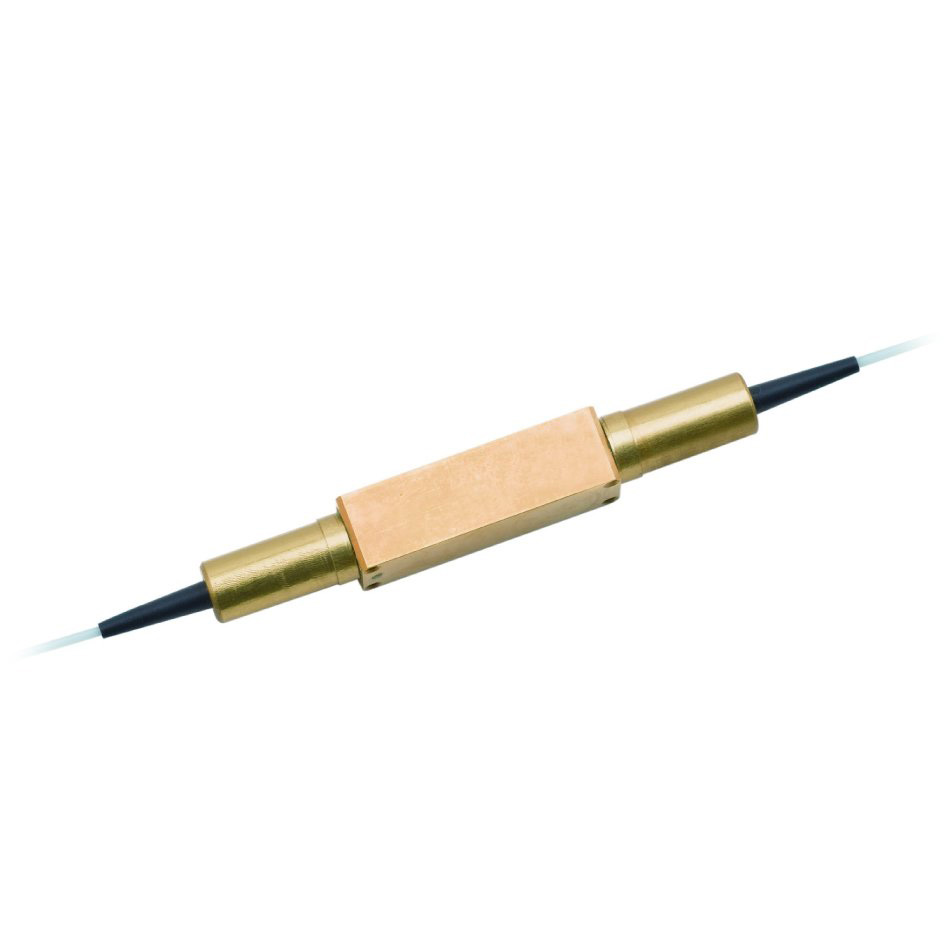
1550 nm; DGD 0-45 ps; RL 55 dB; IL 0.8 dB; Fiber Type SMF-28; PDL <0.2 dBLuna’s FDE-002 fixed differential group delay (DGD) artifacts eliminate the need for precise measurement of polarization maintaining (PM) fiber lengths to add defined amounts of first order PMD to a system.DGD values of up to 45 ps are available in the FDE-002 fixed differential group delay standard size package. Larger DGD values are also available by special request.Key Features:Large 1st Order PMD: up to 45 psLow Insertion Loss (IL): <1 dB (0.8 dB Typical)Operating Wavelength: 1550 ± 50nmDGD Value: 0 to 45 ps Standard, Larger Values on RequestDGD Calibration Accuracy: ±(1 fs + DGD x 0.5%)Insertion Loss (intrinsic): < 1 dB (0.8 dB typical)Polarization Dependent Loss (PDL): <0.2 dBReturn Loss (RL): 55 dBPower Handling: >300 mWFiber Type: SMF-28Dimensions: 108 × 7.9 x 7.9 mmApplications: PMD Emulation; PMD Compensation; TDM Bit Alignment
REQUEST PRICING AND AVAILABILITY
- Get your individual quote.
- Technical compatibility review included.
- Volume discounts available.
No obligation. Direct access to our engineering team.
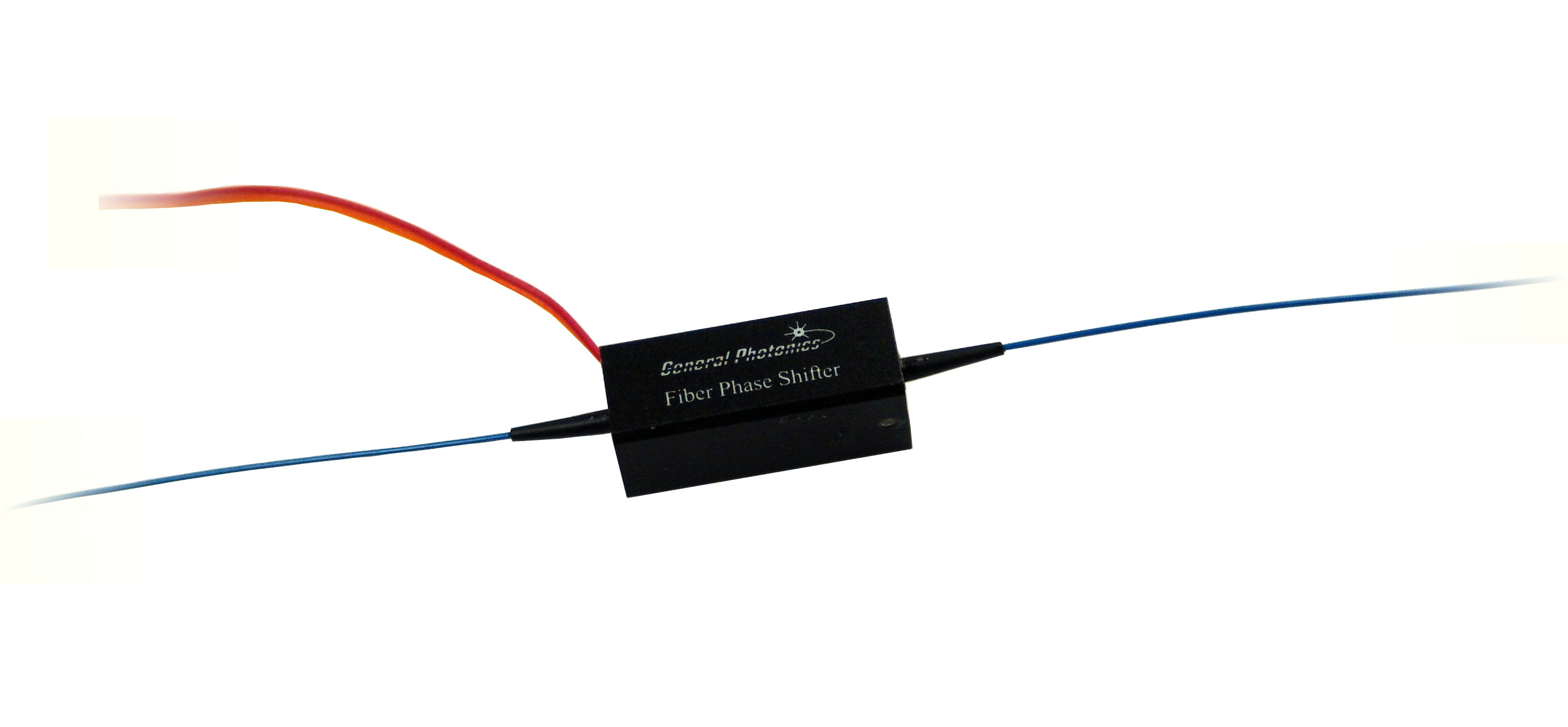
980-1650 nm; Total Phase Shift >8π; IL <0.1 dB; RL >65 dB; PDL <0.05 dB; Residual Amplitude Modulation ±0.01 dBLunas’ FPS-001 is an all-fiber device that shifts or modulates phase by up to 15π at frequencies from DC to 20 kHz. The advantage of the all-fiber construction is that insertion loss and back reflection are reduced to near zero.Key Features:Low Insertion Loss (IL): < 0.1 dBLow Residual Amplitude Modulation: ±0.01 dBNoTail™ Version AvailableOperating Wavelength: 1260 to 1650, 980 to 1310 nmReturn Loss (RL): >65 dBTotal Phase Shift (0 to 20 kHz): >8πHalf-wave Voltage (0 to 20 kHz): <20 VPolarization Dependent Loss (PDL): <0.05 dBMaximum Applied Voltage: 150 VDimensions: 35 x 14 x 14 mm (Pigtail), 74 x 14 x 14 mm (NoTail™)Applications: Precision Phase Tuning or Phase Modulation in Fiber Interferometers, Sensor Systems, Fiber Laser Systems or Fiber Resonators
REQUEST PRICING AND AVAILABILITY
- Get your individual quote.
- Technical compatibility review included.
- Volume discounts available.
No obligation. Direct access to our engineering team.
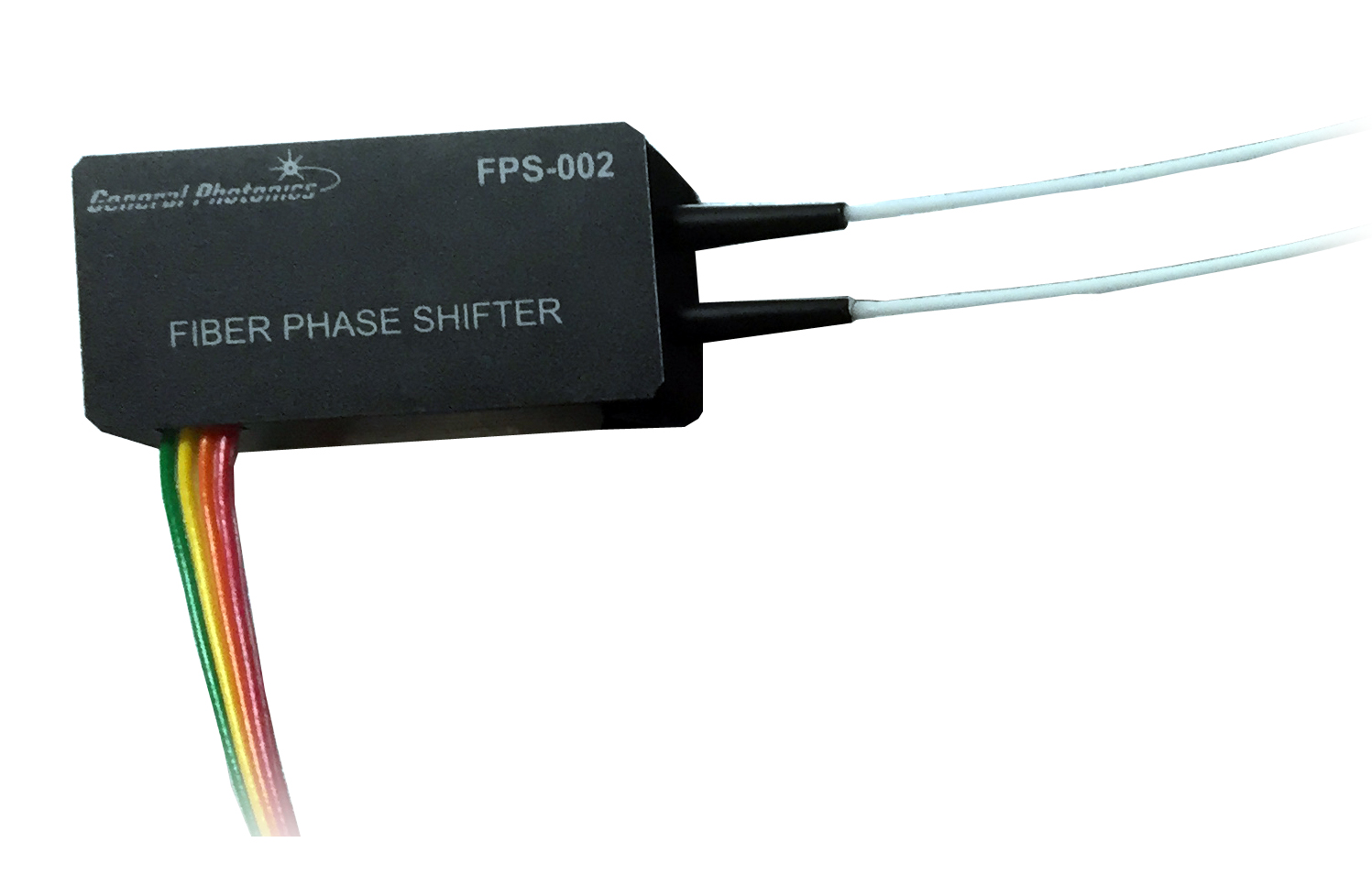
780-1550 nm; Total Phase Shift >65π; IL <0.5 dB; RL >50, >55, >58 dB; PDL <0.05, <0.1 dB; Residual Amplitude Modulation ±0.01 dBCoherent or interferometric sensor systems, such as distributed acoustic sensors (DAS), often require a low-loss, low-cost phase shifter or modulator to obtain the desired sensing signals. Lunas FPS-002 is an all-fiber device that shifts or modulates phase shifts up to 75π at frequencies from DC to 20 kHz.The FPS-002 phase shifter requires a lower half-wave voltage than the FPS-001 phase shifter module: only 2 V compared to up to 20 V. Like the FPS-001, it is an all-fiber design and offers the benefits of low loss and back reflection. Two different size packages (small frame or large frame) are available to accommodate the bend diameter requirements of different fibers.Key Features:Low Insertion Loss (IL): <0.5 dB (at λc, Excluding Connectors)Low Polarization Dependent Loss (PDL): <0.05 dB (SM), <0.1 dB (PM)Return Loss (RL): >58 dB (Without Connectors), >55 dB (With APC Connectors), >50 dB (With PC Connectors)Low Residual Amplitude Modulation: ±0.01 dB at 1550 nmTotal Phase Shift (@500 Hz, Vpp = 150 V): >65π (@ 1550 nm)Low Half-wave Voltage (@ 500 Hz): 2.5 to 4.5 V Typical (Small Frame), 0.7 to 1.5 V Typical (Large Frame)Operating Wavelength: 780, 1060, 1310, 1550 nmFiber Type: ClearCurve ZBL, HI1060, 780 HP, PM, PM980XPCapacitance of Piezo: 0.18 µFMaximum Applied Voltage: 150 VCompact Size: 35 x 17 x 10 mm (Small Frame), 45 x 27 x 11 mm (Large Frame)Applications: Fiber Interferometers; Fiber Laser Systems; Fiber Sensor Systems
REQUEST PRICING AND AVAILABILITY
- Get your individual quote.
- Technical compatibility review included.
- Volume discounts available.
No obligation. Direct access to our engineering team.
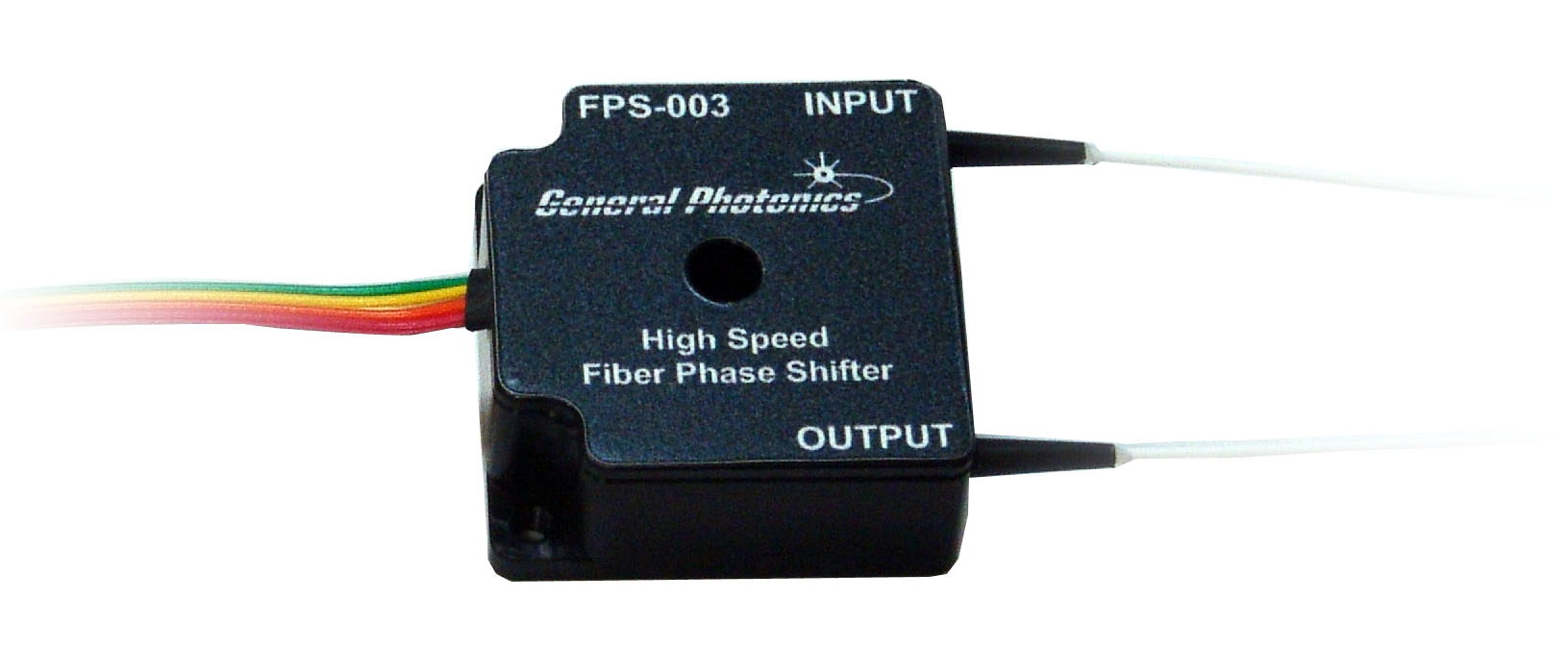
780-1550 nm; Total Phase Shift >55π; IL <0.5 dB; RL >55 dB; PDL <0.05 dB; Residual Amplitude Modulation ±0.01 dBLunas FPS-003 all-fiber phase shifter/modulator combines a wide modulation bandwidth (up to 60 kHz) with low half-wave voltages to create a long-range device that can be driven by standard function generators.Like Lunas other phase shifters, it employs all fiber construction and has low insertion loss and back reflection. In addition to fiber sensor systems, this compact device is ideal for fiber laser systems, fiber resonators, and fiber interferometers for precision phase tuning or phase modulation.Key Features:Wide Frequency Range - Operating Wavelength: 780, 1060, 1310 or 1550 nmLow Half-wave VoltageLarge Phase Shift RangeCompact Size: 31 x 31 x 14.5 mmLow Insertion Loss (IL): <0.5 dB (at 1550 nm, Excluding Connectors)Return Loss (RL): >55 dB (Excluding Connectors)Low Residual Amplitude Modulation: ±0.01 dB (@ 1550 nm)Total Phase Shift (@500 Hz, Vpp = 150 V): >55π (@ 1550 nm)Fiber Type: ClearCurve ZBL, 780 HP, PM, OtherHalf-wave Voltage (Vπ @ 500 Hz): 1 to 3 V TypicalResonance Frequency: 36 to -39 kHz TypicalVπ at Resonance Frequency: <150 mV TypicalPolarization Dependent Loss (PDL): <0.05 dB at 1550 nmCapacitance of Piezo: 5 to 12 nFMaximum Applied Voltage: 150 VApplications: Fiber Interferometers; Fiber Laser Systems; Fiber Sensor Systems
REQUEST PRICING AND AVAILABILITY
- Get your individual quote.
- Technical compatibility review included.
- Volume discounts available.
No obligation. Direct access to our engineering team.
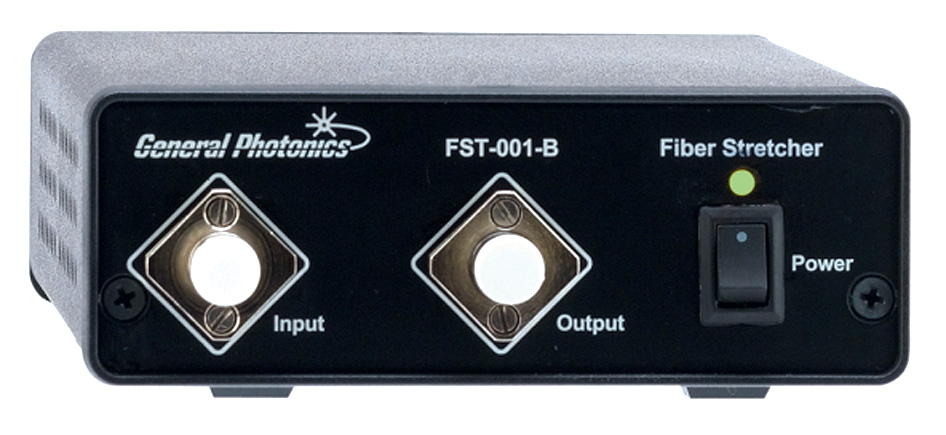
1260-1650 nm; Delay Range >3 mm; RL >65 dB; Fiber Type SMF-28, Other; IL <0.2 dB; PDL <0.05 dBLunas FST-001 is a piezo-driven fiber stretcher with an optical delay range of up to 3 mm. The device, including the piezo driver, is packaged in a metal enclosure.Each of the FST-001 fiber stretcher’s four piezos can be controlled independently, allowing high resolution or large stroke. Piezos can be controlled with an analog signal or a 12-bit TTL signal.Under analog control, the driving circuit acts as a 4-channel voltage amplifier with 30V/V amplification. Alternatively, the output voltage can be controlled by a computer equipped with a digital I/O card, or by a microprocessor.Key Features: Large Optical Path Delay Range: >3 mm (In Air)High SpeedLow Insertion Loss (IL): <0.2 dBAnalog and Digital ControlAnalog Input: 4 Channels, 4.7 V Maximum For Each ChannelDigital Input: 20-pin Connector, 12-bit TTL Control SignalOperating Wavelength: 1260 to 1620 nmMaximum Optical Power: 1,000 mWPhase Change Sensitivity: 810 π/VInternal Voltage Amplification: 30 V/VMaximum Voltage on Piezo: 140 VResonance Frequency: 2.2 ±0.3 kHzReturn Loss (RL): >65 dBPolarization Dependent Loss (PDL): <0.05 dBFiber Type: SMF-28, Other on Request Dimensions: 170 x 106 x 39 mmApplications: Sensors; Interferometers; Medical Imaging; Spectrum Analysis; OCT.
REQUEST PRICING AND AVAILABILITY
- Get your individual quote.
- Technical compatibility review included.
- Volume discounts available.
No obligation. Direct access to our engineering team.
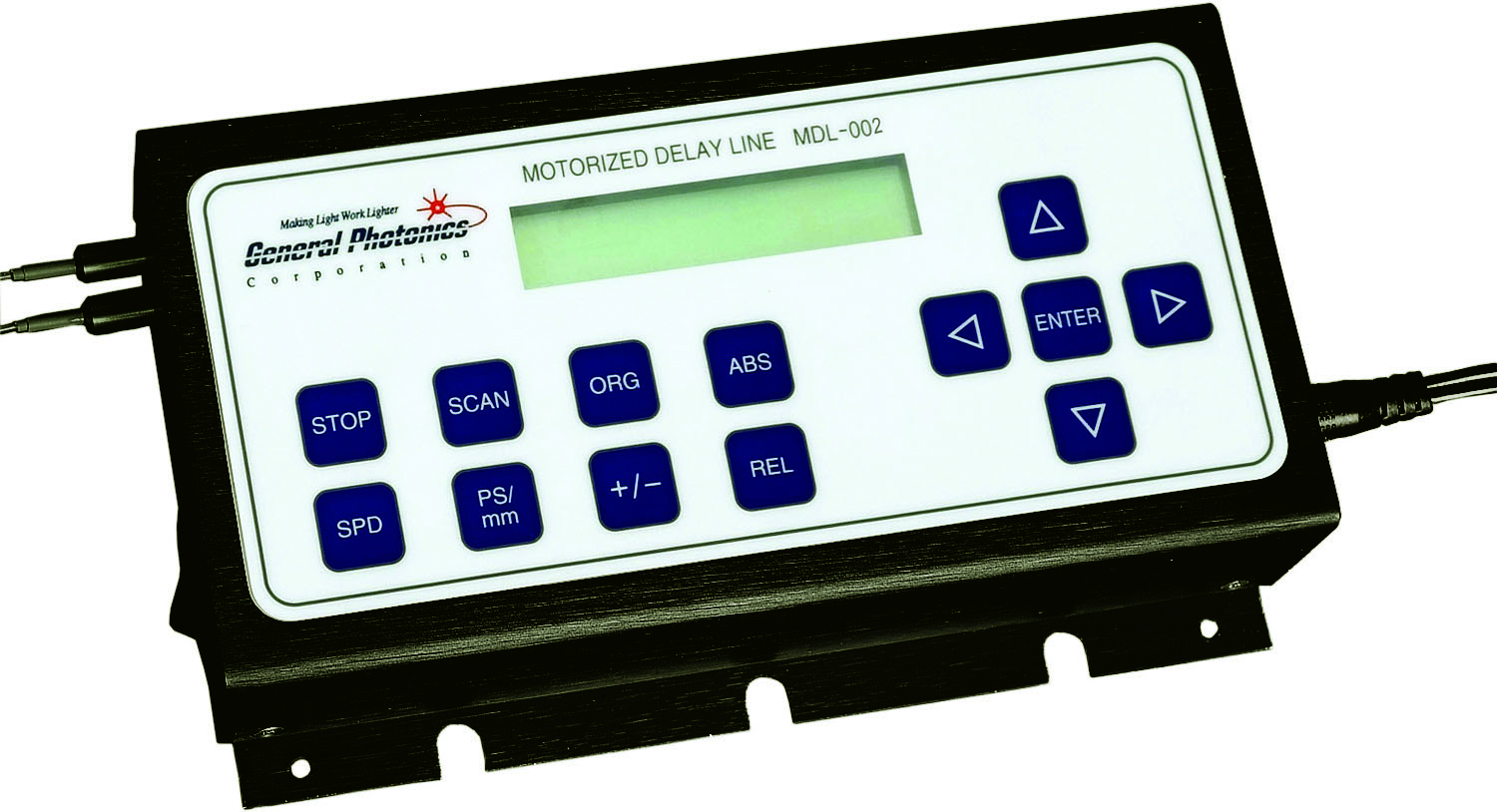
840-1650 nm; Delay Range 0-1,120 ps; RL 50 dB; Fiber Type SMF-28, HI1060, HI780, PM Panda, PM 980 Panda; IL 1.0, 1.5 dB; PDL 0.1, 0.2 dBLunas MDL-002 family of motorized variable fiber optic optical delay lines allow optical path length adjustment of up to 560 ps in a single pass. Driven by a DC motor with an integrated encoder, the MDL-002 has a delay resolution of less than 0.3µm (1 fs).In addition, its advanced motion design guarantees longevity for long-term continuous operation. Low insertion loss and high reliability make this device ideal for integration in optical coherence tomography (OCT) systems, network equipment and test instruments for precision optical path length control or timing alignment.Three configurations of the MDL-002 fiber optic delay line series are available:Integrated unit for use as a bench-top instrument for laboratory applicationsTwo-piece unit with the optical head and control unit separated for installation into customer equipmentOEM version with a miniature controller boardAll three versions can be remote controlled by a PC or a micro-processor through an RS-232 interface. The delay line is available with either single mode (SM) or polarization maintaining (PM) fiber pigtails.Key Features:High Optical Delay Resolution: 0.3 µm / 1 fs, 0.6 µm / 2 fs Per Encoder CountLow BacklashLow Insertion Loss (IL): 1.0, 1.5 dB TypicalInsertion Loss Variation: ±0.3, ±0.5, ±0.7 dB Over EntireHigh Delay-to-Length RatioOptical Delay Range: 0 to 330, 0 to 560, 0 to 1,120 psOperating Wavelength: 840 to 1650 nmPosition Accuracy: ±3, ±6 µmPosition Repeatability: ±3, ±6 µmPolarization Dependent Loss (PDL): 0.1, 0.2 dB MaximumReturn Loss (RL): 50 dBExtinction Ratio: >18 dB (For PM Model)Optical Power Damage Threshold: 300 mWControl Mode: Panel Keypad and RS-232 InterfaceFiber Type: SMF-28, HI1060, HI780, PM Panda, PM 980 PandaDimensions: 178 x 102 x 41, 229 x 112 x 41 mm (Integrated Unit), 65 x 65 x 21.5 mm (Mini Controller Board), 132/157 x 37 x 18 mm (Optical Head)Applications: Optical Coherence Tomography (OCT) Systems; Scientific Instrument Control; Network Optical Path Length Control or Timing Alignment; Optical Fourier Spectrum Analysis; Optical Interferometry; Delay Generation and Measurement; Optical Time Division Multiplexing (OTDM); Fiber Sensors
REQUEST PRICING AND AVAILABILITY
- Get your individual quote.
- Technical compatibility review included.
- Volume discounts available.
No obligation. Direct access to our engineering team.
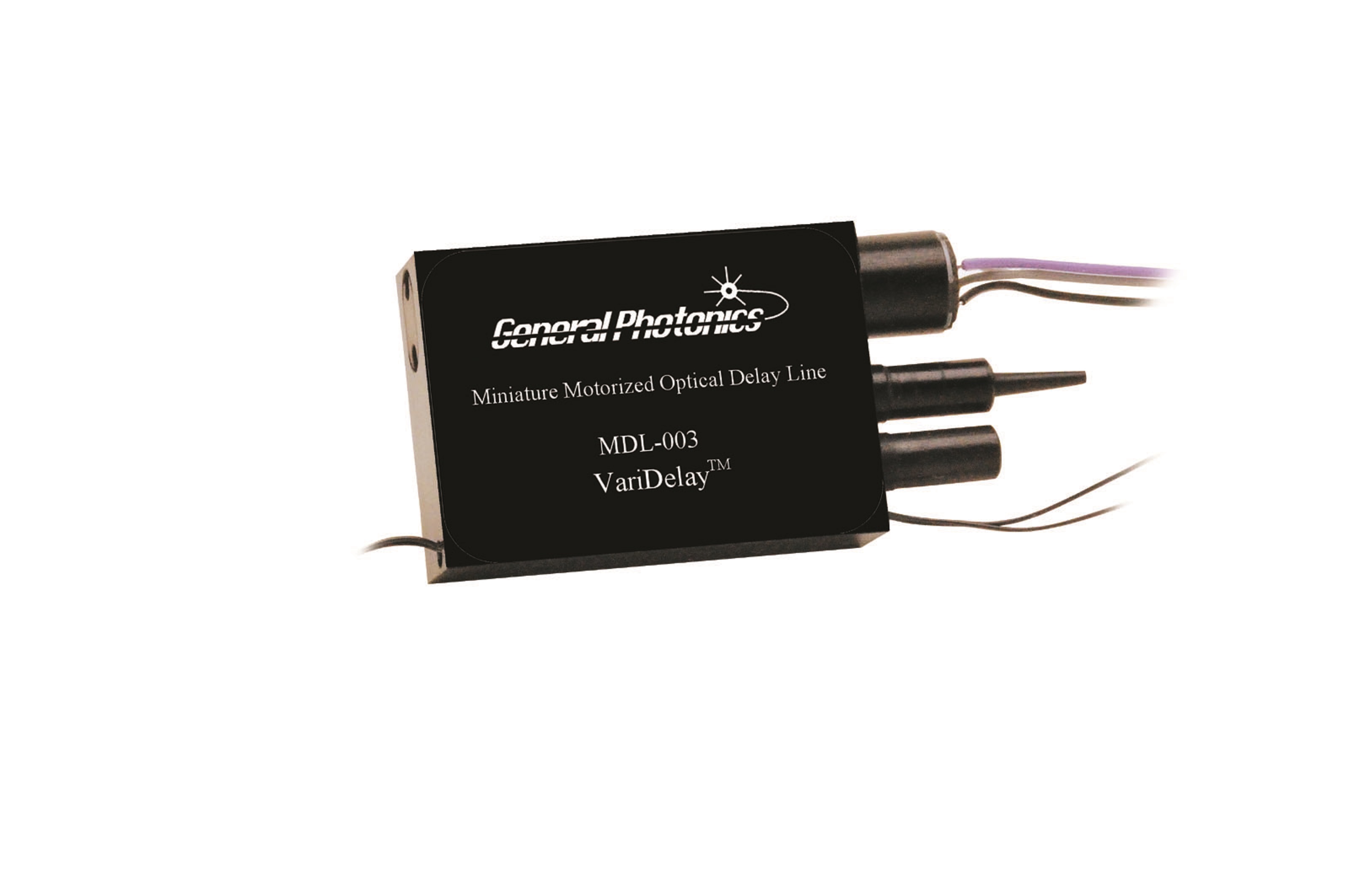
840-1650 nm; Delay Range 0-100, 0-200 ps; RL 55 dB; Fiber Type SMF-28, HI780, HI1060, PM Panda; IL 1 dB; PDL 0.15 dBLunas motorized variable optical delay line is the smallest delay line in the MDL series of products, with a total volume of less than 2 cubic inches. The MDL-003 provides low-cost, precision optical path length adjustment and delay scanning functionality. This addition to the MDL product line is specifically designed for OEM applications that require continuous scanning capability and a small footprint.The standard MDL-003 motorized variable optical delay line has a delay range of 100 ps; however an internal mirror can be installed to double pass the light, thereby doubling the delay range. The device uses a stepper motor and dual position sensors for precise control. A small controller board is available as an option.Key Features:High ResolutionLow BacklashLow Insertion Loss (IL): 1 dBInsertion Loss Variation: ±0.3 dB Over Entire RangeHigh Delay-to-Length RatioOperating Wavelengths: 840, 1060, 1310, 1550 or 1260 to 1650 nmOptical Delay Range: 0 to 100 ps, Single-passOptical Delay Resolution: 30 μm, Single-pass at Maximum SpeedOptical Delay Accuracy: ±40 μm, Single-pass at Maximum SpeedOptical Delay Repeatability: ±40 μm, Single-pass at Maximum SpeedPolarization Dependent Loss (PDL): 0.15 dB (SM Fiber)Return Loss (RL): 55 dBExtinction Ratio: >18 dB (PM Model)Actuation Speed: 50 ps/s (Single-pass) MaximumOptical Damage Power Threshold: 100 mWFiber Type: SMF-28, HI780, HI1060, PM PandaDimensions: 51 x 36 x 14 mmApplications: Optical Coherence Tomography (OCT) Systems; Scientific Instrument Control; Network Optical Path Length Control or Timing Alignment
REQUEST PRICING AND AVAILABILITY
- Get your individual quote.
- Technical compatibility review included.
- Volume discounts available.
No obligation. Direct access to our engineering team.
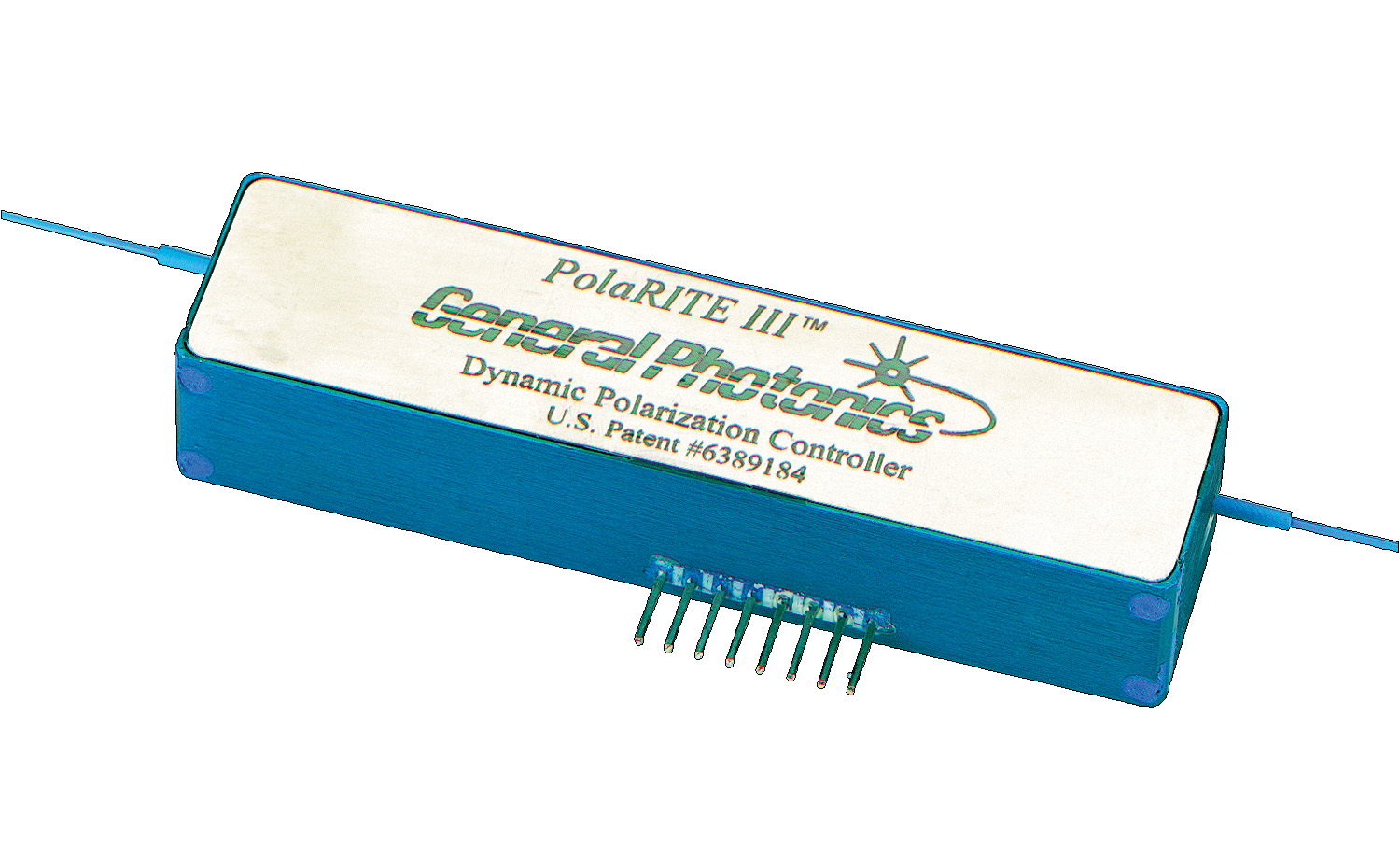
1260-1650 nm; IL 0.05 dB; PMD 0.05 ps; AL <0.01, <0.05 dB; RL >65 dB; Max. Rise & Fall Time 30 µsLunas MPC all fiber polarization controller module is packaged in a low-profile, 16 mm high enclosure, suitable for system integration and mounting on a PCB. The module’s low height is especially advantageous for integration in test equipment, fiber sensors, fiber lasers and optical network modules.Available with three (-3x) and four channels (-4x), the MPC polarization controller module features an all-fiber design with inherently low loss, minimal activation loss and minimal back reflection. A special athermal design leads to stable operation over a wide range of temperatures (-25 to +80 °C).Combined with Lunas miniature piezo driver card, it can be controlled either by a digital or analog signal to obtain any desired polarization output from an arbitrary input polarization state.Key Features:OEM PackagingAll-fiber DesignLow Intrinsic Insertion Loss: 0.05 dBLow Back Reflection – Return Loss: >65 dBFast Response – Maximum Rise and Fall Time: 30 µsOperating Wavelength Range: 1260 to 1650 nm Maximum Activation Loss (AL): 0.01, 0.05 dBPolarization Mode Dispersion (PMD): 0.05 psCompact Size – Dimensions: 65.5/83 x 20.3 x 16 mmApplications: Polarization Stabilization; Compensate PMD in Fiber Sensing Systems; Polarization Demultiplexing; Fiber Sensor; Fiber Laser; Testing Equipment
REQUEST PRICING AND AVAILABILITY
- Get your individual quote.
- Technical compatibility review included.
- Volume discounts available.
No obligation. Direct access to our engineering team.

980-1620 nm; Multiple Polarization Control Modes; IL <0.6 dB; PDL <0.1 dB; PMD <0.2 ps; AL <0.1 dB; RL >50 dBControlling the state of polarization (SOP) of an optical signal has never been easier – Lunas MPC-201 multifunction polarization controller has four operational modes for complete polarization control: variable rate polarization scrambling, manual polarization adjustment, polarization modulation, and externally triggered random SOP generation.Four different polarization scrambling methods enable the SOP to a) trace out a spiral pattern about a static or rotating axis with a nearly uniform SOP variation rate for system stress tests (Tornado scrambling); b) generate a continuous trace with a Rayleigh distribution of SOP variation rate, for emulation of the SOP variation in a fiber link (Rayleigh scrambling); c) generate a continuous trace with uniform sphere coverage for PDL measurement (Triangle scrambling); or d) evenly cover the Poincaré sphere with discrete, random points at a uniform rate (Discrete scrambling).In the SOP modulation mode, each polarization control axis can be selectively controlled with a sine, square, or triangle wave of user defined frequency and amplitude. Each polarization control axis can also be controlled manually, by setting the input voltage either from the front panel controls or through a remote control interface. In externally triggered scrambling mode, discrete, random SOPs are generated in response to a trigger input, a feature desirable for recirculating loop applications or other applications requiring synchronization with other devices.Finally, the MPC-201 can emulate the Agilent 11896A polarization scrambler function, allowing it to act as a plug-in replacement for this popular but discontinued device, while offering many more advanced features. The MPC-201 polarization controller puts the user in control.Key Features:Multiple Polarization Control ModesTornado Scrambling (Quasi-uniform Rate Distribution): 0.00 to 2,000 Revolutions/sReal Fiber SOP (State of Polarization) Variation Emulation (Rayleigh Rate Distribution): 0.00 to 2,000 rad/sDiscrete Random States SOP Scrambling: 0.00 to 20,000 Points/sTriangle Polarization Scrambling: 0.00 to 2,000 x 2π rad/sAgilent 11896A Scrambling Emulation: Speed Settings 1 to 8, Matched to 11896A SettingsSOP ModulationOperating Wavelength Range: 1260 to 1620 nm, 980 to 1310 nmManual Polarization Control: 4 Channels, 0 to 4π Each ChannelLow Insertion Loss (IL): <0.5 dB With ConnectorsLow Polarization Dependent Loss (PDL): <0.05 dB With ConnectorsLow Polarization Mode Dispersion (PMD): <0.1 ps With ConnectorsLow Activation Loss (AL): <0.05 dB With ConnectorsReturn Loss: >50 dB With ConnectorsOptical Power Handling: 1,000 mWBright OLED DisplayApplications: Recirculating Loop Studies; Automated Testing; Real Fiber Emulation; SOP Variation Emulation; PMD Emulation; Polarization Scrambling; System Polarization Studies; PDL/DOP Measurement
REQUEST PRICING AND AVAILABILITY
- Get your individual quote.
- Technical compatibility review included.
- Volume discounts available.
No obligation. Direct access to our engineering team.

980-1620 nm; SOP Change Rate >360 krad/s; IL <0.6 dB; PDL <0.1 dB; PMD <0.2 ps; AL <0.1 dB; RL >50 dBLunas MPC-202 advanced multifunction polarization controller is specially designed to meet the requirements of coherent receiver performance tests.MPC-202 combines Luna award winning PolaRite™ II/III polarization controller with proprietary polarization control algorithms to achieve a wide range of polarization control functionalities, including high-speed quasi-uniform rate polarization scrambling, random-rate polarization scrambling with Rayleigh rate distribution, discrete-state polarization scrambling with high slew rate, sine, square, and triangle-wave SOP (state of polarization) modulation, and manual polarization control functions.In particular, the “Tornado” quasi-uniform rate polarization scrambling function can achieve a high SOP scrambling rate of up to 60,000 revolutions/s (more than 360 krad/s) with a narrow rate distribution clustered around the highest rate.In short, the MPC-202 is an ideal tool for production or laboratory testing of polarization related functions and parameters, including passive/active component characterization, performance tests of fiber optic interferometers, sensor systems, RF photonics systems, etc. The quasi-uniform rate high-speed scrambling function is particularly useful for SOP tracking speed testing of coherent receivers, and the square wave SOP modulation function is ideal for SOP recovery time tests.Key Features:Quasi-uniform Rate SOP (State of Polarization) ScramblingSOP Change Rate: >360 krad/sScrambling With Rayleigh Rate DistributionDiscrete SOP ScramblingSOP ModulationOperating Wavelength Range: 1260 to 1620 nm, 980 to 1310 nmTornado Polarization Scrambling: 0.00 to 60,000 Revolutions/sMean Rayleigh Rate Distribution Polarization Scrambling: 0.00 to 2,000 rad/sTriangle Polarization Scrambling: 0.00 to 2,000 x 2π rad/sDiscrete Random States Polarization Scrambling: 0.00 to 20,000 points/sManual Polarization Control: 4 Channels, 0 to 4π Each ChannelLow Insertion Loss (IL): <0.6 dB With ConnectorsLow Polarization Dependent Loss (PDL): <0.1 dB With ConnectorsLow Polarization Mode Dispersion (PMD): <0.2 ps With ConnectorsLow Activation Loss (AL): <0.1 dB With ConnectorsReturn Loss: >50 dB With ConnectorsOptical Power Handling: 1,000 mWBright OLED DisplayApplications: Laboratory Testing of Polarization-related Parameters; Performance Tests of Fiber Optic Interferometers and Systems; SOP Tracking Speed Testing of Coherent Receivers
REQUEST PRICING AND AVAILABILITY
- Get your individual quote.
- Technical compatibility review included.
- Volume discounts available.
No obligation. Direct access to our engineering team.

980-1620 nm; SOP Change Rate ≤11 Mrad/s; IL <0.6 dB; PDL <0.1 dB; PMD <0.2 ps; AL <0.1 dB; RL >50 dBLunas MPC-203 high-speed multifunction polarization controller is specially designed to meet the high SOP (state of polarization) scrambling requirements needed for stress testing a coherent receiver’s polarization tracking performance.MPC-203 combines Lunas award winning PolaRite™ II/III polarization controller with proprietary polarization control algorithms to achieve a wide range of polarization control functionalities, including high-speed polarization scrambling with a maximum SOP change rate of up to 11 Mrad/s.Unlike other high-speed polarization scramblers found in the market, this all-fiber, pass-through design ensures low insertion loss (IL), polarization dependent loss (PDL), polarization mode dispersion (PMD) and activation loss (AL).Key Features:High-speed SOP (state of polarization) ScramblingSOP Change Rate up to 11 Mrad/sScrambling With Rayleigh Rate DistributionDiscrete SOP ScramblingSOP ModulationOperating Wavelength Range: 1260 to 1620 nm, 980 to 1310 nmTornado Polarization Scrambling: 0 to 11 Mrad/sMean Rayleigh Rate Distribution Polarization Scrambling: 0.00 to 2,000 rad/sTriangle Polarization Scrambling: 0.00 to 2,000 x 2π rad/sDiscrete Random States Polarization Scrambling: 0.00 to 20,000 points/sManual Polarization Control: 4 Channels, 0 to 4π Each ChannelLow Insertion Loss (IL): <0.6 dB With ConnectorsLow Polarization Dependent Loss (PDL): <0.1 dB With ConnectorsLow Polarization Mode Dispersion (PMD): <0.2 ps With ConnectorsLow Activation Loss (AL): <0.1 dB With ConnectorsReturn Loss: >50 dB With ConnectorsOptical Power Handling: 1,000 mWBright OLED DisplayApplications: SOP Response Test of Coherent Receivers; SOP Tracking Speed Test; PMD and PDL Related Tests; SOP Variation Emulation; Polarization Scrambling
REQUEST PRICING AND AVAILABILITY
- Get your individual quote.
- Technical compatibility review included.
- Volume discounts available.
No obligation. Direct access to our engineering team.
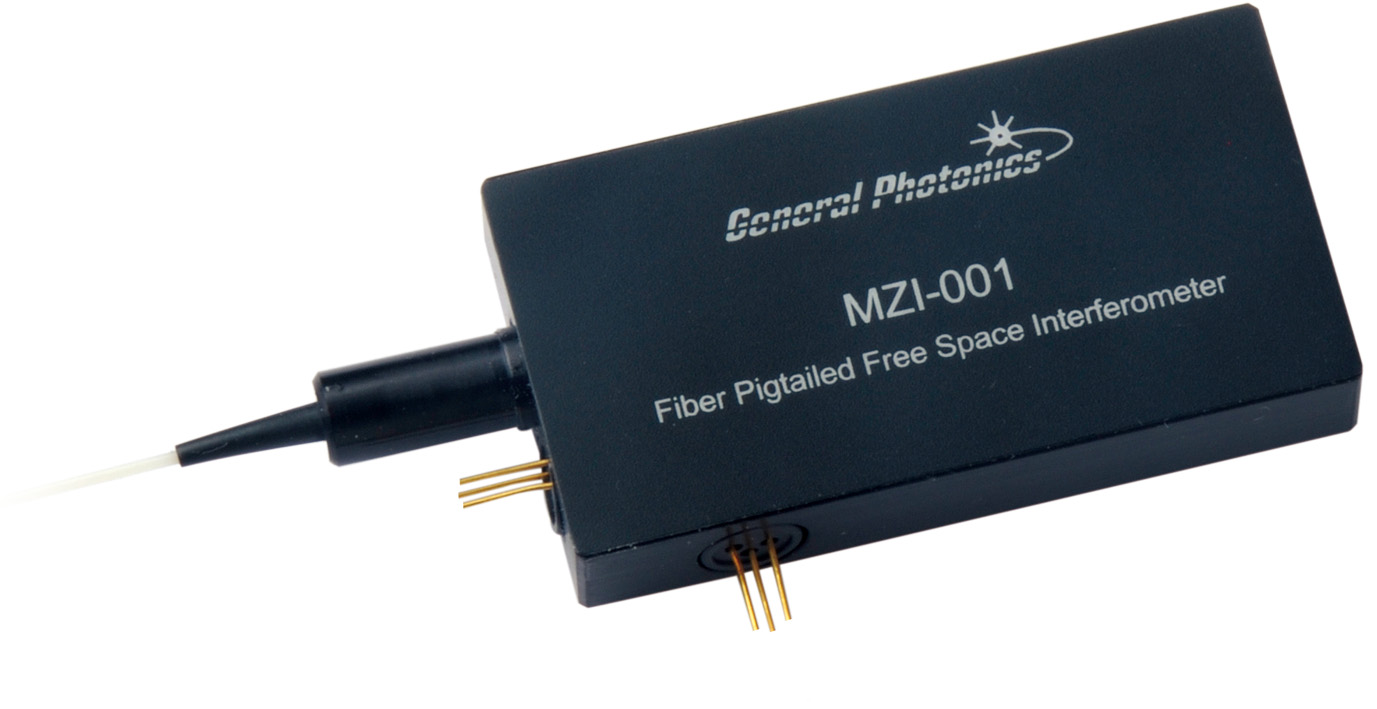
1060, 1310, 1550 nm; Wavelength Range ±70 nm; FSR 10-100 GHz; Detector Responsivity >0.8 A/W; Connector Type FC/APC, FC/PC, SpecifyLunas’ MZI-001 is a fiber pigtailed Mach-Zehnder free space interferometer that detects changes in optical frequency. The device comes with two high-speed photodetectors for the balanced detection of the two complementary outputs of the interferometer.The free spectral range (FSR) or zero-cross spacing of the device is defined to within 1. The FSR is user-defined between 10 GHz and 100 GHz. The MZI-001 interferometer’s free-space optical design eliminates polarization sensitivity.Key Features:Accurate Free Spectral Range (FSR): 10 to 100 GHz, User SelectableFSR Tolerance: 2%Center Wavelength: 1060, 1310, 1550 nmWavelength Range: ±70 nmDetector Responsivity: >0.8 A/WDetector Rise/Fall Time: 0.3 ns With 50 Ω LoadDetector Capacitance: 0.7 pFTemperature StablePolarization InsensitiveFine Optical Frequency SpacingBalanced PhotodetectorsReturn Loss (RL): 55 dBPolarization Dependent Loss (DPL): <0.5 dBInput Fiber: SMF-28 or HI1060 Fiber With 900 µm BufferOptical Connectors: FC/APC, FC/PC, SpecifyCompact Size: 53.6 x 28 x 9.4 mmApplications: Determining Instantaneous Wavelength of Swept Source; Clocking Optical Coherence Tomography (OCT) Platforms; Detecting Drift in Fiber Sensor Systems; Detecting Drift of Lasers in Coherent Detection Systems; Spectrum Analysis
REQUEST PRICING AND AVAILABILITY
- Get your individual quote.
- Technical compatibility review included.
- Volume discounts available.
No obligation. Direct access to our engineering team.

1260-1620 nm; 8-40 Channels; PDL Measurement Range 0-20 dB; PDL Resolution 0.01 dB; IL Measurement Range 0-60 dB; IL Resolution 0.002 dB; Optical Power Range -60-8 dBm; Optical Power Accuracy ±0.5 dB Lunas’ OCA-1000 is a multi-channel optical component analyzer that simultaneously measures insertion loss (IL), polarization dependent loss (PDL), and optical power (P) on multiple optical paths. The measurement is based on the Mueller Matrix method, which offers fast characterization of wavelength dependent optical parameters that are critical in today’s optical communication systems.The OCA-1000 base model can have up to eight channels. Custom 8- or 16-channel expansion units can be added to increase the system capacity to up to 40 channels. The instrument comes with a control program with built-in functions to display measured power, IL, and PDL vs. wavelength or to monitor the time variation of power/IL for all channels simultaneously to determine their stability. For AWG characterization, the data analysis software also calculates passband center wavelength, bandwidth, and flatness as well as inter-channel crosstalk (from adjacent and nonadjacent channels).The OCA-1000 optical component analyzer is an ideal solution for easy, accurate characterization of components and modules with multiple outputs, including DWDMs, ROADMs, AWGs and PLCs. It can be used with various tunable lasers , such as those from Keysight or Santec. This flexibility makes full use of existing laser resources and reduces the cost of making such measurements. Its rapid measurement reduces the time required to characterize devices with large numbers of ports, enabling higher production throughput.Key Features:Wide Wavelength Range: 1260 to 1360 nm (O-Band), 1480 to 1620 nm (C- & L-Bands)Number of Channels: 8 to 40PDL Measurement Range: 0 to 20 dBHigh Polarization Dependent Loss (PDL) Accuracy: ±(0.02 + 2% of PDL) dB @PDL<10dB, ±(0.02 + 5% of PDL) dB @10<PDL<20dBPDL Resolution: 0.01 dBInsertion Loss (IL) Measurement Range: 0 to 55 dB, 0 to 60 dBIL Resolution: 0.002 dBOptical Power Range: -60 to 8 dBmOptical Power Accuracy: ±0.5 dBHigh Channel-to-channel UniformityUser-friendly Control SoftwareIntegration Time of Power Meter: 0.5 to 1,000 msDimensions: 19”-Rack-Mountable Enclosure, 1 U, 305 mm DepthApplications: PDL or IL vs. Wavelength Measurement; IL or Power vs. Time Measurement; DWDM Component Passband Characterization: Center Frequency, BW, Ripple, Noise Floor; Fiber Optic Component Characterization; Network Component Characterization (e.g. DWDM, ROADM); Planar Lightwave Circuits (PLC); Photonic Integrated Circuits (PIC)
REQUEST PRICING AND AVAILABILITY
- Get your individual quote.
- Technical compatibility review included.
- Volume discounts available.
No obligation. Direct access to our engineering team.

1310, 1550 nm; Dynamic Range >80 dB; Scan Range 600 mm; Spatial Resolution 10-25 µm; RL Range 10-90 dB; Sweep Speed 20 mm/sLunas’ OCDR-1000 is an optical coherence domain reflectometer designed to obtain space-resolved reflection information inside a fiber optical component, such as a photonic integrated circuit (PIC), for diagnosing quality or design issues. It is based on a polarization optimized white light interferometer proprietary to General Photonics.The OCDR-1000 optical coherence domain reflectometer performs the functions of the discontinued Agilent 8504B Reflectometer – and more – but with better polarization management, spatial resolution and accuracy; larger scan range and dynamic range; and smaller size and weight.The OCR-1000 is a low-cost alternative to OFDR technology, with a much higher dynamic range that avoids the masking of small reflection peaks by the large reflections typical of the input surface of an optical device.The OCDR-1000 optical coherence domain reflectometer can measure devices with a length of up to 600 mm. A set of length-matching delay modules is available to match the pigtail lengths of the devices to be measured and place the measurement span in the region of interest. With a reflection dynamic range of over 80 dB and a spatial resolution down to 10 µm, this instrument helps engineers and researchers see the inside of an optical device to precisely identify defects and their locations.Key Features:Dynamic Range: >80 dBScan Range: 600 mm (400 mm in Fiber)Spatial Resolution: 10 to 25 μmOperating Wavelengths: 1310, 1550 nm, Others on RequestReturn Loss (RL) Range: 10 to 90 dBSweep Speed: 20 mm/sCompact & LightweightBuilt-in Light SourceAverage Light Source Power: >-3 dBmPerforms Functions of Discontinued Agilent 8504B Reflectometer - and MoreDimensions: 89 x 356 x 356 mmApplications: Optical Characterization of Photonic Integrated Circuits, Fiber Optic Components; Accurate Measurement of Return Loss, Distributed Reflectivity
REQUEST PRICING AND AVAILABILITY
- Get your individual quote.
- Technical compatibility review included.
- Volume discounts available.
No obligation. Direct access to our engineering team.

Polarization Diverse Photodetector; 1310, 1550 nm; Aluminium Enclosure; Signal Conversion Gain >30 V/mW; RF Bandwidth 0-210 MHz; Transimpedance Gain 3x10⁴ V/AOCT and sensor systems require high-performance balanced photodetectors to increase system signal-to-noise ratio (SNR). Polarization-sensitive OCT and similar applications require separate analysis of the two polarization components of a signal.Lunas’ PBPD-001 polarization diverse balanced photodetector module is specially designed for use in such systems and adds polarization sensitivity to the balanced photodetector circuitry of the BPD-002 or BPD-003 balanced photodetector modules.The PBPD-001 polarization diverse balanced photodetector is fully enclosed in a compact, sturdy aluminium box with two optical input ports, a balanced RF output port and two monitor ports for each polarization component and a 12 VDC power supply port.With a bandwidth up to 200 MHz, a transimpedance gain larger than 30K and a saturation power larger than 130 μW, the PBPD-001 polarization diverse balanced photodetector is ideal for integration into laboratory or commercial OCT, fiber sensor, and high performance optical measurement systems with polarization dependent detection requirements.Key Features:Low NoiseHigh Common Mode Rejection Ratio (CMRR): >25 dBHigh Signal Conversion Gain: >30 V/mW (Interference Signal)Wide RF Output Bandwidth (3dB): DC to 210 MHzWavelength Range: 1310 or 1550 nm ±50 nmCompact Size: 100 x 80 27 mmPolarization Crosstalk: <25 dBTransimpedance Gain: 3×10⁴ V/ACW Balanced Saturation Power (At Input): >150 μWCommon Mode Rejection Ratio: >25 dBRF Output Voltage Range (at 50 Ω): ±1.75 VApplications: Polarization Sensitive OCT Systems; Polarization Resolved Sensing; Fiber Optic Distributed Sensing; Instrumentation; Research and Development
REQUEST PRICING AND AVAILABILITY
- Get your individual quote.
- Technical compatibility review included.
- Volume discounts available.
No obligation. Direct access to our engineering team.

980-1660 nm; IL <0.05, <0.6 dB; PDL <0.05 dB; PMD <0.05 ps; Residual Amplitude Modulation <±0.01 dB; Residual Phase Modulation <0.1π; RL >65 dBLunas’ PCD-005 polarization scrambler is an all-fiber design module that randomizes polarization states. This module is designed to be easily plugged into sensor equipment or measurement instruments with minimal development effort.The digital control circuitry delivers uniform SOP distribution over a wide operation temperature range, making it a good choice for sensor field applications. The PCD-005 polarization scrambler module can be remote controlled via RS-232 to set the operation wavelength or enable/disable the scrambling operation.The PCD-005 delivers superior performance with extremely low insertion loss, back reflection, and residual phase and amplitude modulation.Key Features:Minimal Insertion Loss (IL): <0.05 dB Without Connectors, <0.6 dB With ConnectorsMinimal Back Reflection: Low Residual Phase Modulation: <0.1πLow Residual Amplitude Modulation: <±0.01 dBRS-232 Control OptionRemote Operation Wavelength ControlCenter Operating Wavelengths: 980 to 1660 nmOperating Wavelength Range: >100 nmOutput Degree of Polarization (DOP): <5%Average Polarization Mode Dispersion (PMD): <0.05 psIntrinsic Polarization Dependent Loss (PDL): <0.05 dB Return Loss: >65 dB Without ConnectorsOptical Power Handling: >1,000 mWBoard Dimensions: 220 x 100 x 30 mmApplications: Eliminate Polarization Sensitivity; Add Optional Capability to Sensor Systems
REQUEST PRICING AND AVAILABILITY
- Get your individual quote.
- Technical compatibility review included.
- Volume discounts available.
No obligation. Direct access to our engineering team.

980-1600 nm; Residual Phase Modulation <0.1 π; Residual Amplitude Modulation <±0.01 dB; PMD <0.05 ps; PDL <0.05 dB; IL <0.05, <0.6 dB; RL >65 dBLunas’ PCD-104 polarization scrambler uses a breakthrough patented all-fiber technology to effectively randomize polarization states. Specifications include low insertion loss and low back reflection as well as minimal phase and amplitude modulation. The instrument can be used in automatic test systems under remote control through digital interface options.Depolarizing by polarization scrambling has many important applications. Scrambling the input polarization can eliminate measurement uncertainties caused by the polarization sensitivity of the testing device. Performance degradation due to polarization dependent gain (PDG) induced in optical amplifiers can also be suppressed by polarization scrambling. In addition, polarization scrambling can be used in systems to facilitate and simplify PMD monitoring.The PCD-104 polarization scrambler delivers superior performance, including extremely low insertion loss, back reflection, and residual phase and amplitude modulation.Key Features:Minimal Insertion Loss (IL): <0.05 dB Without Connectors, <0.6 dB With ConnectorsMinimal Back ReflectionOptical Return Loss (RL): >65 dB Without ConnectorsLow Residual Phase Modulation: <0.1 πLow Residual Amplitude Modulation: <±0.01 dBRemote Operation Wavelength ControlBuilt-in RS-232, GPIB and Ethernet PortsCenter Operating Wavelength: λ Range 1 1310, 1480, 1550, 1600 nm, λ Range 2 980, 1060, 1310 nmOperating Wavelength Range: >100 nmOutput Degree of Polarization: <5%Average Polarization Mode Dispersion (PMD): <0.05 psIntrinsic Polarization Dependent Loss (PDL): <0.05 dBOptical Power Handling: >1,000 mWApplications: PDG Mitigation; Elimination of Polarization Sensitivity; Facilitating PMD Emulation; Facilitating PMD Compensation; Enables PDL Measurement
REQUEST PRICING AND AVAILABILITY
- Get your individual quote.
- Technical compatibility review included.
- Volume discounts available.
No obligation. Direct access to our engineering team.

980-1650 nm; 3, 4 Channels; Polarization Control Range 0-4π Each Channel; IL <0.05, <0.6 dB; PDL <0.05 dB; PMD <0.05 ps; AL <0.01, <0.05 dB; RL >65 dBLunas’ PCD-M02 polarization controller module integrates an all-fiber dynamic polarization controller with a miniature piezo driver card, so that the SOP of the signal can be directly controlled either by a 0 to 5 V analog control signal or a 12-bit TTL digital control signal.The 3- or 4-channel polarization controller module features an on-board high voltage DC/DC converter, so no external high voltage power supply is required. The card can be configured to accept either a ±12 VDC power supply or an optional external 160 V power supply.As a polarization controller, the PCD-M02 can convert any input polarization state to any desired output polarization state. As a scrambler, it can randomize the output polarization state. This module offers the low insertion loss, low back reflection, and low activation loss needed for test and measurement applications, combined with the compact size needed for system integration or handheld devices.Key Features:Minimal Insertion Loss (IL): <0.05 dB Without Connectors, <0.6 dB With ConnectorsMinimal Activation Loss (AL): 0.01 dB, 0.05 dB Fast ResponseDigital and Analog ControlCompact SizeOperating Wavelength Range: 1260 to 1650 nm, 980 to 1310 nmPolarization Control Range: 3 or 4 Channels, 0 to 4π Each ChannelLow Polarization Dependent Loss (PDL): <0.05 dB Low Polarization Mode Dispersion (PMD): <0.05 ps Return Loss: >65 dBOptical Power Handling: 1,000 mWBoard Dimensions: 100 x 100 x 17.5 mmApplications: Polarization Control; Polarization Scrambling; PDL Measurement; PMD Compensation/Emulation; Fiber Sensor
REQUEST PRICING AND AVAILABILITY
- Get your individual quote.
- Technical compatibility review included.
- Volume discounts available.
No obligation. Direct access to our engineering team.
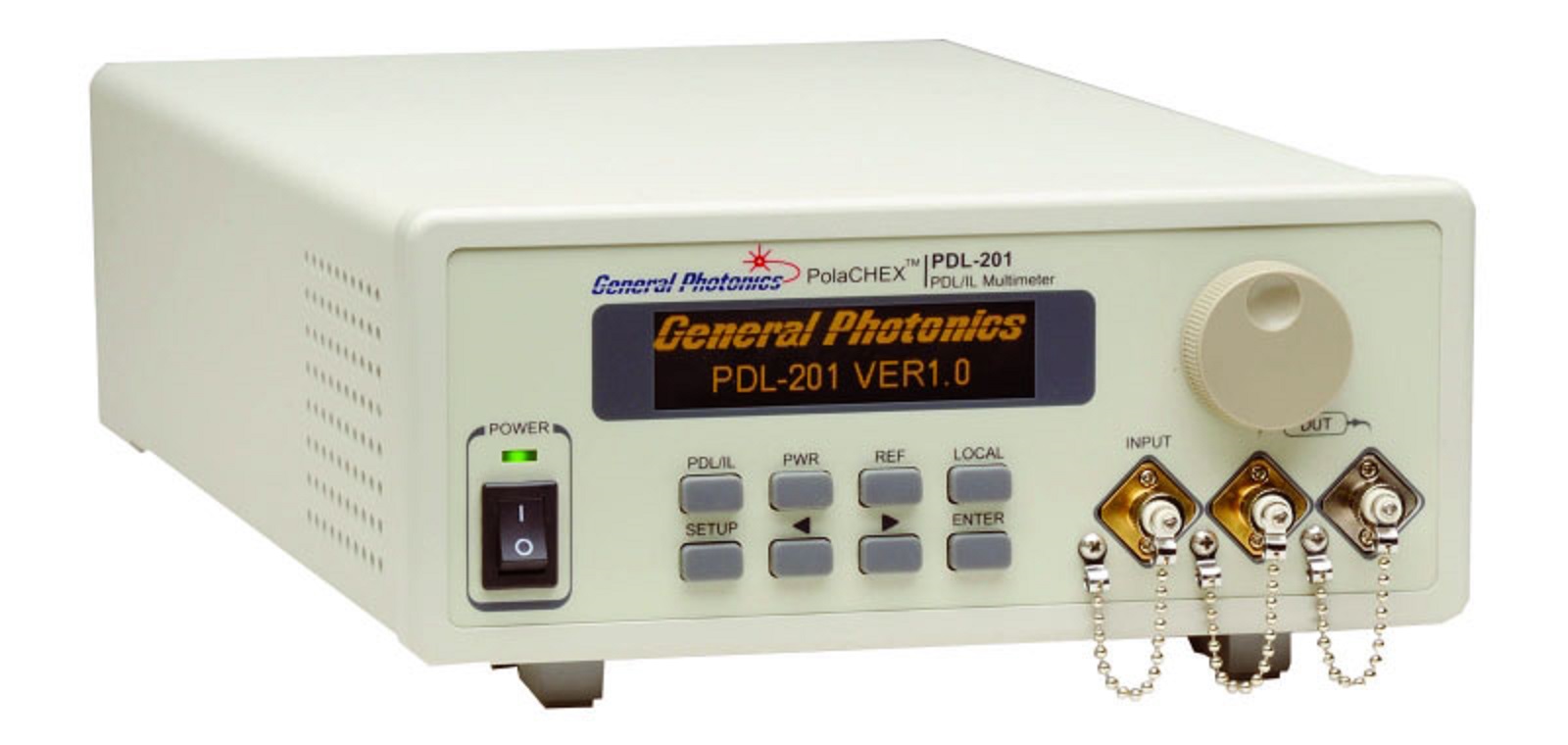
1260-1620 nm; Measurement Speed 30 ms; PDL Accuracy ±(0.01 + 5% of PDL) dB; PDL Dynamic Range 0-45 dB; IL Accuracy ±(0.01 + 5% of IL) dB; IL Dynamic Range 0-45 dB; Optical Power Range -40-+6 dBmUsing a patented maximum and minimum search method compliant with TIA/EIA-455-198, Lunas’ PDL/IL multimeter simultaneously measures the polarization dependent loss (PDL), insertion loss (IL) and optical power of devices in just 30 ms.Unlike PDL meters that use the polarization scrambling method with large measurement uncertainty, the PDL-201's max-min technique is useful for both low and high values of PDL. And unlike instruments that use a Mueller Matrix technique, the PDL-201 has a wide wavelength range from 1260 to 1620 nm without calibration.The PDL-201 PDL/IL multimeter comes with USB, Ethernet, GPIB and RS-232 interfaces for PC control and is ideal for fast, accurate characterization of the wavelength dependence of passive devices, especially DWDM and fiber sensor components, in manufacturing environments as well as in laboratories.The PDL-201 features fast measurement, large measurement dynamic range, a bright OLED display and an analog output port. The measurement speed of the instrument combined with the remote control interfaces allow it to work in conjunction with tunable lasers in automatic or semi-automatic test stations. Software to facilitate the integration is also available from AMS Technologies tech support.Key Features:Measurement Speed: 30 msWide Wavelength Range: 1260 to 1620 nmHigh Polarization Dependent Loss (PDL) Accuracy: ±(0.01 + 5% of PDL) dBPDL Dynamic Range: 0 to 45 dBInsertion Loss (IL) Accuracy: ±(0.01 + 5% of IL) dBIL Dynamic Range: 0 to 45 dBOptical Power Range: -40 to +6 dBmPower Meter FunctionOLED Display and Analog OutputDimensions: 356 x 216 x 89 mmApplications: PDL vs Wavelength Measurements; Characterization of DWDM Devices; Characterization of Fiber Sensor Component
REQUEST PRICING AND AVAILABILITY
- Get your individual quote.
- Technical compatibility review included.
- Volume discounts available.
No obligation. Direct access to our engineering team.

PDL Dynamic Range 0.1-20 dB; PDL Resolution 0.1 dB; C-, L-Band; Max. IL 2 dB; PDL Switching Time ≤5 ms; Residual PDM <0.1 ps; RL >50 dBHigh-speed fiber optic transceivers, including those deploying coherent detection technology for 40 Gbit/s and 100 Gbit/s data transmission, must meet stringent PDL (polarization dependent loss) tolerance specifications. In addition, the PDL tracking speed and response time of the PDL mitigation algorithm of a coherent detection receiver must be quantified.Lunas’ PDLE-101 PDL emulator is specially designed for such PDL-related tests. This PDL source/ emulator can generate individual PDL values between 0 and 20 dB, with a resolution of 0.1 dB for PDL tolerance testing. It can also generate variable PDL with user defined range, waveform, and speed for PDL tracking speed and recovery time tests.The PDLE-101 PDL emulator can be controlled via the front panel keypad or by remote control via USB, RS-232, GPIB, or Ethernet interfaces. The residual PMD of the unit is less than 0.1 ps.Key Features:High PDL (Polarization Dependent Loss) Resolution: 0.1 dBWide PDL Dynamic Range: 0.1 to 20 dBHigh Speed, PDL Switching Time: 5 ms max., 1 ms typ.PDL Waveforms: Sine, Square, TriangleRandom PDL GenerationWavelength Range: C-Band or L-BandMax. Insertion Loss (IL): 2 dB @ PDL = 0, Excluding ConnectorsLow Residual PMD: <0.1 ps @ PDL = 0Return Loss: >50 dBFiber Type: SMF-28Fiber Connector Type: FC/PC, FC/APC, SC/PC, SC/APCOptical Power Handling: 500 mWApplications: PDL Tolerance Test; PDL Tracking Speed and Recovery Time Tests; PDL Emulation; Code Development for PDL Compensation in Coherent Systems; System PDL Response Test
REQUEST PRICING AND AVAILABILITY
- Get your individual quote.
- Technical compatibility review included.
- Volume discounts available.
No obligation. Direct access to our engineering team.
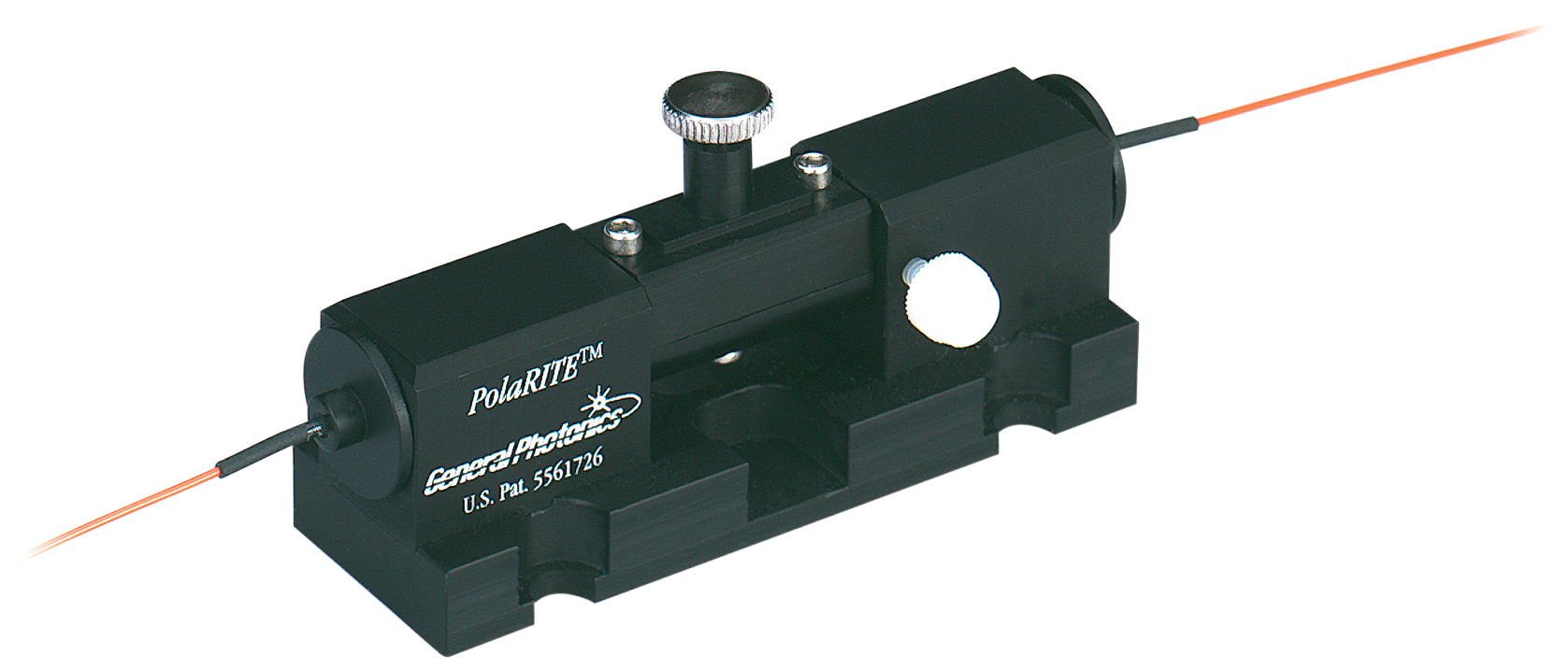
480-1650 nm; IL <0.05, <0.5 dB; RL >45, >55, >65 dB; Extinction Ratio >40 dB; Connection Options Bulkhead Connectors, Fiber Pigtails, Drop-inLunas’ PLC series of polarization controllers use patented fiber squeezing technology to control the polarization. The PLC polarization controller modules are available with bulkhead connectors, with fiber pigtails, or as drop-in versions that use fiber already in the system. For OEM applications where space is at a premium, a miniature PLC polarization controller module is available.The PLC-002/M02 version of the PLC polarization controller is conveniently pigtailed with or without connectors. It can be spliced to other components with minimal loss and is ideal for controlling the polarization state of light in any single mode fiber optic system. It is available in a regular (PLC-002) or miniature (PLC-M02) size for maximum flexibility.PLC-003/006 is the in-line version of the PLC polarization controller module. It can be inserted into a fiber optic system to control the polarization state of light without having to disconnect any part of the system. It can be used by simply inserting a length of fiber into the slot located on top of the device. The miniature version can be inserted in even tighter spaces in a fiber optic module.The PLC-004/005 fully connectorized polarization controller module comes with either male (PLC-005) or female (PLC-004) connectors, thus eliminating the headaches of fiber pigtails. Customers can use the bulkhead connectors of their choice. Although the unit comes with FC type connectors, it can interface with ST and SC type connectors with industry standard FC/ST or FC/SC adapters . The device is especially suitable for interconnecting polarization maintaining (PM) fibers using standard connectors without having to align the birefringent axes of the PM fibers. Optional scales allow easy replication of earlier settings, a feature highly desirable in laboratories for repeating polarization adjustments.Key Features:Low Intrinsic Insertion Loss: <0.05 dB, <0.5 dB With ConnectorsLow Back Reflection – Return Loss: >65 dB Without Connectors, >45, >55 dB With ConnectorsInsensitive to Wavelength VariationsCompact Size – Dimensions: PLC-002/M02: 102/76 x 25.4 x 27/27.7 mm PLC-003/006: 76 x 25.4/16 x 27.7/17 mm PLC-004/005: 102 x 25.4 x 27.7 mmMultiple Connection Options: Bulkhead Connectors, Fiber Pigtails, Drop-inWorks With Fibers of Any Size (PLC-003/006)Operating Wavelength: 480 to 1650 nmExtinction Ratio: >40 dBApplications: Sensor System Adjustment; OCT System Tuning; Antenna Remoting Systems; Laboratory Setups; Teaching Laboratories; High-speed Telecommunication Systems; WDM Systems; CATV Systems; Fiber Laser; Fiber Sensor Systems; PM Fiber Systems
REQUEST PRICING AND AVAILABILITY
- Get your individual quote.
- Technical compatibility review included.
- Volume discounts available.
No obligation. Direct access to our engineering team.
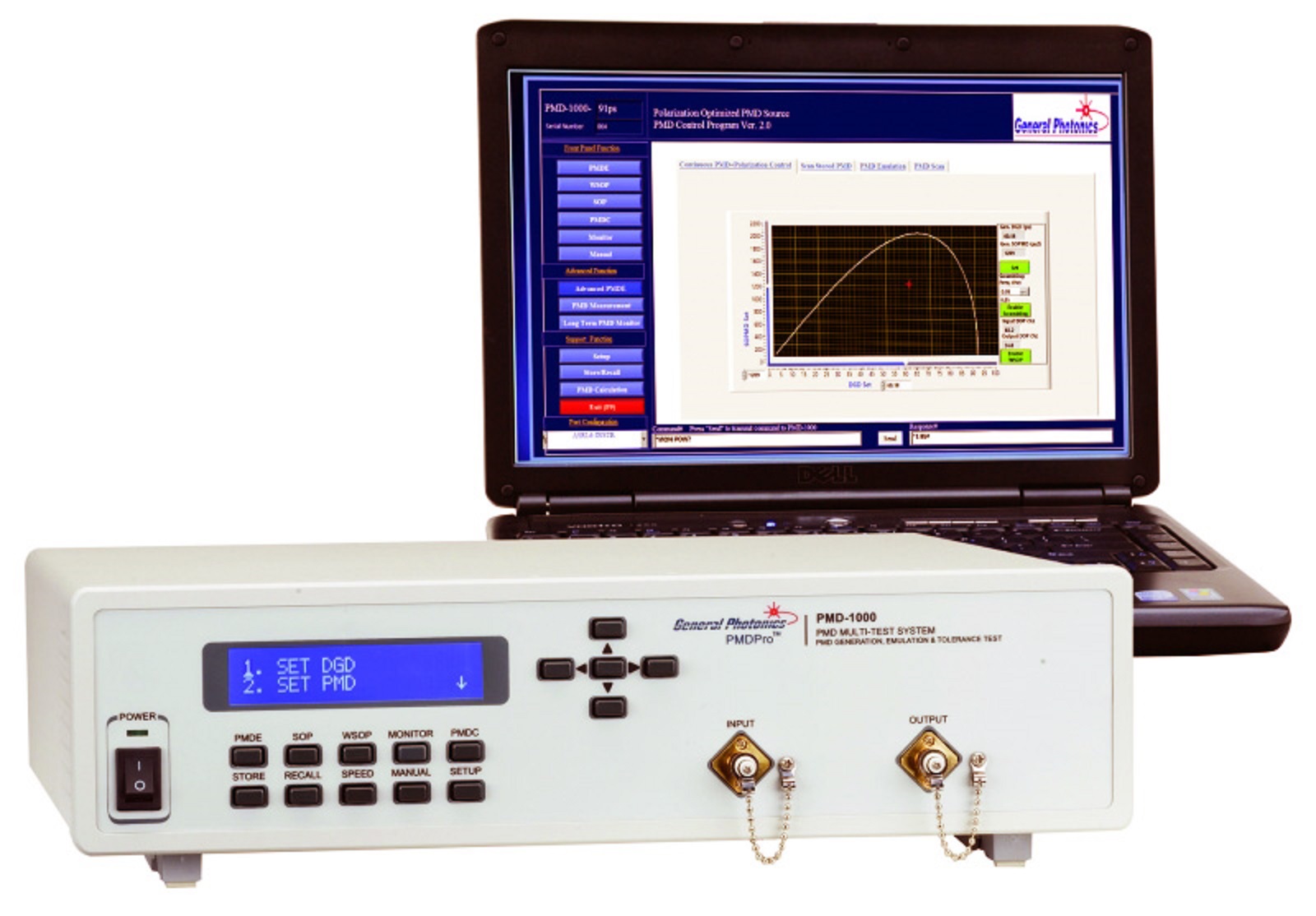
PMD Range 1st Order 0-91, 0.36-182.4 ps, 2nd Order 2,000, 8,100 ps²; PMD Switching Time 1 ms; C-, L-Band; IL 5.0, 5.5 dB; PDL 0.45, 0.5 dB; RL 50 dBLunas’ PMD-1000 is a flexible, digital PMD (polarization mode dispersion) source that deterministically generates precise 1st order PMD up to 180 ps and 2nd order PMD up to 8,100 ps2. Its quasi-continuous operation mode enables independent generation of first order and wavelength-independent second order PMD for uniform coverage of the PMD space.The PMD-1000 uses high-speed ternary magneto optic crystals to generate PMD. The PMD switching time is as short as one millisecond, making the PMD-1000 the fastest PMD generator on the market.Its automatic polarization controller combined with before and after polarimeters enhances the instrument’s flexibility. For example, if the polarization controller is used to align and maintain the input SOP (state of polarization) at 45° from the principal axis of the DGD (differential group delay) element, the instrument creates the worst-case first order PMD effect.Alternatively, the controller can adjust and maintain the input SOP using the feedback from the rear polarimeter to either minimize or maximize the output DOP (degree of polarization) for each PMD setting. Minimizing the output DOP enables testing of the worst-case total PMD effect, while maximizing the DOP turns the PMD-1000 into a PMD compensator, allowing the user to obtain optimized PMD values for PMD compensation.The PMD-1000 can also perform PMD emulation by generating statistical PMD distributions. Finally, the system’s polarization controller and polarimeters enable variable rate scrambling and deterministic polarization control functions, including trace generation and polarization stabilization at any SOP. Lunas’ PMD-1000 makes your PMD-related systems testing simple, fast and professional.Key Features:All Digital Design – No MotorsHigh-speed PMD Switching: 1 ms1st and 2nd Order PMD Source/Emulator1st Order PMD Range: 0 to 91 ps, 0.36 to 182.4 ps2nd Order PMD Range: 2,000, 8,100 ps²Polarization ScramblingAutomatic Polarization AlignmentPMD CompensationOperating Wavelength Range: C-Band or L-BandInsertion Loss (IL): 5.0, 5.5 dBInput Power Range: -10 to 10 dBmReturn Loss ((RL): 50 dBPolarization Dependent Loss (PDL): 0.45, 0.5 dB typ.SOP Tracking Speed: 10 π/sDOP Accuracy: ±2%Optical Power Handling: 300 mW min.Applications: Verifying System PMD Tolerance; Stress Test of PMD Compensation Circuits; PMDC Optimization; Calibration Source for PMD Instruments; System PMD Emulation
REQUEST PRICING AND AVAILABILITY
- Get your individual quote.
- Technical compatibility review included.
- Volume discounts available.
No obligation. Direct access to our engineering team.