
PSY-201 Polarization Synthesizer/Analyzer


REQUEST PRICING AND AVAILABILITY
- Get your individual quote.
- Technical compatibility review included.
- Volume discounts available.
No obligation. Direct access to our engineering team.
Product information "PSY-201 Polarization Synthesizer/Analyzer"
1280-1620 nm; SOP Sampling Rate ≤4 MHz; Analog Bandwidth 1 MHz; Input Power Dynamic Range 45 dB; IL ≤1.6 dB; PDL <0.25 dB; PMD <0.1 ps; RL 45, 55 dB
Lunas’ PSY-201 deterministic polarization synthesizer/analyzer generates and maintains any state of polarization (SOP), regardless of the input SOP. It combines General Photonics’ patented controller, polarimeter, and control algorithms into an instrument that functions as both an SOP generator and a polarization analyzer.
The generated SOP and the corresponding Poincaré representation are displayed on a PC via USB interface. Output SOP can be defined by Stokes parameters, by manually tuning the SOP to any point on the Poincaré sphere or by optimizing a polarization-dependent metric. Once a desired output SOP is found, the instrument maintains the SOP against input SOP fluctuations.
The user can generate 6 distinct SOPs (0°, 90°, ±45°, RHC and LHC) for Mueller matrix calculations, or select any of the 6 states at the touch of a button.
The PSY-201 polarization synthesizer/analyzer contains programmed SOP traces of common polarization variations. It can also function as a polarization scrambler, generating SOP scans with user-defined parameters and, with the internal polarization controller disabled, it can function as an in-line polarimeter, displaying the instantaneous SOP and DOP of the input light beam.
Features include a data logging function for long-term measurement of polarization changes of up to 1 billion points, long-term SOP monitoring, SOP markers for angle measurement and a "SOP replay" function in sphere display mode, as well as extended triggering capability in oscilloscope mode. PSY-201 puts all of the tools necessary for polarization management at your fingertips.
Key Features:
- Sampling Rate: Up to 4M SOP (State of Polarization) Samples/s
- Analog Bandwidth: 1 MHz
- Input Power Dynamic Range: 45 dB
- Operating Wavelength Range: 1480 to 1620 nm, 1280 to 1314 nm
- Real-time Poincaré Sphere Display
- High-speed SOP Generation and Tracking
- High-speed Analog Output of SOP & DOP (Degree of Polarization)
- Data Logging of SOP Changes up to 1 Billion Points
- Maximum Insertion Loss (IL): 1.6 dB
- Return Loss: 45, 55 dB
- Polarization Dependent Loss (PDL): <0.25 dB
- Polarization Mode Dispersion (PMD): <0.1 ps
- Operating Power Range: -35 to +10 dBm
Applications: Polarization Sensitivity Analysis of Receivers; Monitoring of System SOP/DOP; PER Measurement; Polarization Generation and Stabilization; Sensor System Characterization; 100G System Characterization
Customers also viewed

FC/PC – 2 mm Type R (Narrow Key); Bore 125 µm; Ferrule Outer Diameter 2.5 mm; Bore Tolerance 0/+1 µm; Crimp 3 mm

400-1700 nm; Power 1.5-30 mW; Bandwidth 3-160 nm; Current 60-600 mA; Beam Shape Gaussian, Flat Top; Package TO-9, TO-56, 5-BTF, 14-BTF, TOSA; Cooled or Uncooled; With or Without Monitor Photodiode With the EXS series, EXALOS offers a wide variety of standard superluminescent light emitting diode (SLED or SLD) modules covering near-infrared and RGB (red, green, blue) ranges. EXS series SLED modules are available at different wavelengths ranging from 400 to 1700 nm, with different output power and bandwidth values.EXALOS’ high-performance SLEDs come in various packages including cooled 14-pin dual-in-line (DIL) and butterfly package, cooled and uncooled 5-pin butterfly packages or low-cost uncooled TOSA and TO-56 packages.In addition to the standard product range, EXALOS can also offer SLED devices with custom optical performance and custom housing or fibers. Please contact the AMS Technologies SLED experts to discuss your custom SLED module solution tailored to your project’s requirements.Key Features: Wavelength Range: 400 to 1700 nm Power: 1.5 to 30 mW Bandwidth: 3 to 160 nm Current: 60 to 600 mA Beam Shape: Gaussian, Flat Top Package: TO-9, TO-56, 5-BTF, 14-BTF, TOSA Cooled or Uncooled Versions With or Without Monitor Photodiode Wavelength Power Bandwidth Current Spectral Shape Cooled Package Type MPD (y/n) Fiber Type Part Number 405 nm 10 mW 4 nm 110 mA Gaussian no TO-56 no none EXS210015-02 405 nm 2 mW 3 nm 100 mA Gaussian yes 14-BTF no SMF EXS210084-01 450 nm 10 mW 5 nm 180 mA Gaussian no TO-56 no none EXS210014-01 450 nm 5 mW 6 nm 160 mA Gaussian yes 14-BTF no SMF EXS210099-03 510 nm 6 mW 10 nm 600 mA Gaussian no TO-9 no none EXS210115-00 510 nm 1,5 mW 10 nm 500 mA Gaussian yes 14-BTF no SMF EXS210118-01 635 nm 10 mW 6 nm 60 mA Gaussian no TO-56 no none EXS210105-02 635 nm 10 mW 5 nm 60 mA Gaussian no TO-56 no none EXS210131-01 635 nm 3 mW 6 nm 60 mA Gaussian yes 14-BTF no SMF EXS210098-01 650 nm 4 mW 10 nm 100 mA Gaussian no TO-56 yes none EXS210035-02 650 nm 3 mW 6 nm 100 mA Gaussian yes 14-BTF yes SMF EXS210033-03 650 nm 10 mW 6 nm 60 mA Gaussian no TO-56 yes none EXS210030-03 650 nm 3 mW 6 nm 100 mA Gaussian yes 14-BTF yes PMF EXS210144-01 750 nm 5 mW 20 nm 150 mA Gaussian yes 14-BTF yes SMF EXS210025-01 750 nm 2 mW 20 nm 140 mA Gaussian no TOSA yes SMF EXS210065-01 750 nm 15 mW 20 nm 140 mA Gaussian no TO-56 yes none EXS210017-01 790 nm 5 mW 20 nm 120 mA Gaussian yes 14-BTF yes SMF EXS210060-01 790 nm 15 mW 20 nm 120 mA Gaussian no TO-56 yes none EXS210067-03 800 nm 10 mW 40 nm 160 mA Flat top yes 14-BTF yes SMF EXS210111-01 820 nm 2 mW 25 nm 120 mA Gaussian no TOSA yes SMF EXS210036-01 820 nm 3 mW 25 nm 120 mA Gaussian no 5-BTF no SMF EXS210119-01 820 nm 15 mW 25 nm 120 mA Gaussian no TO-56 yes none EXS210086-01 830 nm 12 mW 20 nm 200 mA Gaussian yes 14-BTF yes SMF EXS210005-02 840 nm 15 mW 48 nm 180 mA Flat top yes 14-BTF yes SMF EXS210090-01 840 nm 2 mW 50 nm 150 mA Flat top no TOSA yes SMF EXS210037-01 840 nm 10 mW 50 nm 150 mA Flat top no TO-56 yes none EXS210040-01 840 nm 10 mW 46 nm 160 mA Flat top yes 14-BTF yes SMF EXS210006-03 840 nm 6 mW 40 nm 120 mA Flat top yes 14-BTF yes SMF EXS210106-01 840 nm 6 mW 50 nm 120 mA Flat top yes 14-BTF yes SMF EXS210022-03 850 nm 5 mW 35 nm 250 mA Gaussian yes 14-BTF no SMF EXS210031-02 850 nm 5 mW 55 nm 150 mA Flat top yes 14-BTF yes SMF EXS210068-02 880 nm 5 mW 65 nm 200 mA Flat top yes 14-BTF yes SMF EXS210018-01 880 nm 12 mW 70 nm 200 mA Flat top yes 14-BTF yes SMF EXS210088-02 910 nm 15 mW 40 nm 200 mA Gaussian yes 14-BTF yes SMF EXS210120-01 1050 nm 10 mW 70 nm 200 mA Flat top yes 14-BTF yes SMF EXS210009-01 1050 nm 20 mW 60 nm 500 mA Gaussian yes 14-BTF yes SMF EXS210063-02 1060 nm 20 mW 70 nm 350 mA Flat top yes 14-BTF yes SMF EXS210010-01 1070 nm 10 mW 90 nm 300 mA Flat top yes 14-BTF yes SMF EXS210007-01 1230 nm 10 mW 45 nm 400 mA Gaussian yes 14-BTF yes SMF EXS210079-01 1270 nm 25 mW 30 nm 450 mA Gaussian yes 14-BTF yes SMF ESL2720-2113 1280 nm 8 mW 80 nm 500 mA Gaussian yes 14-BTF yes SMF EXS210049-02 1290 nm 2 mW 60 nm 200 mA Gaussian yes 14-BTF yes SMF EXS210034-02 1300 nm 6 mW 120 nm 450 mA Flat top yes 14-BTF yes SMF EXS210057-01 1300 nm 20 mW 50 nm 500 mA Gaussian yes 14-BTF yes SMF EXS210076-02 1300 nm 15 mW 70 nm 500 mA Gaussian yes 14-BTF yes SMF EXS210046-02 1300 nm 10 mW 110 nm 500 mA Flat top yes 14-BTF yes SMF EXS210045-02 1300 nm 10 mW 40 nm 250 mA Gaussian yes 14-BTF yes PMF EXS210072-01 1300 nm 10 mW 40 nm 250 mA Gaussian yes 14-BTF yes SMF EXS210032-02 1300 nm 12 mW 40 nm 200 mA Gaussian no TO-56 yes none EXS210041-02 1300 nm 3 mW 40 nm 200 mA Gaussian no TOSA no SMF EXS210028-02 1310 nm 30 mW 60 nm 600 mA Gaussian yes 14-BTF yes SMF EXS210047-02 1310 nm 30 mW 60 nm 600 mA Gaussian yes 14-BTF yes PMF EXS210087-01 1310 nm 20 mW 90 nm 600 mA Flat top yes 14-BTF yes SMF EXS210074-02 1350 nm 25 mW 50 nm 400 mA Gaussian yes 14-BTF yes SMF EXS210020-01 1380 nm 10 mW 40 nm 250 mA Gaussian yes 14-BTF yes SMF ESL1410-2113 1450 nm 5 mW 80 nm 500 mA Gaussian yes 14-BTF yes SMF EXS210103-01 1480 nm 15 mW 40 nm 450 mA Gaussian yes 14-BTF yes SMF ESL4820-2113 1520 nm 8 mW 60 nm 250 mA Gaussian yes 14-BTF yes SMF EXS210038-01 1520 nm 2 mW 60 nm 200 mA Gaussian no TOSA no SMF EXS210029-01 1520 nm 6 mW 60 nm 200 mA Gaussian no TO-56 no none EXS210042-01 1530 nm 2 mW 100 nm 550 mA Gaussian yes 14-BTF yes SMF EXS210095-01 1550 nm 30 mW 40 nm 500 mA Gaussian yes 14-BTF yes SMF EXS210073-01 1550 nm 12 mW 40 nm 250 mA Gaussian yes 14-BTF yes PMF EXS210094-01 1550 nm 12 mW 40 nm 300 mA Gaussian yes 14-BTF yes PMF EXS210070-01 1550 nm 15 mW 45 nm 300 mA Gaussian yes 14-BTF yes SMF EXS210069-01 1550 nm 20 mW 60 nm 500 mA Flat top yes 14-BTF yes SMF EXS210059-01 1550 nm 6 mW 60 nm 200 mA Gaussian no TO-56 no none EXS210085-01 1550 nm 5 mW 60 nm 250 mA Gaussian yes 14-BTF yes SMF EXS210019-03 1550 nm 2 mW 60 nm 200 mA Gaussian no TOSA yes SMF EXS210071-02 1550 nm 15 mW 90 nm 600 mA Gaussian yes 14-BTF yes SMF EXS210108-01 1550 nm 10 mW 90 nm 600 mA Gaussian yes 14-BTF yes SMF EXS210048-03 1550 nm 10 mW 60 nm 300 mA Flat top yes 14-BTF yes SMF EXS210054-01 1550 nm 4 mW 150 nm 350 mA Flat top yes 14-BTF yes SMF EXS210066-02 1570 nm 10 mW 65 nm 250 mA Flat top yes 14-BTF yes SMF EXS210055-01 1580 nm 20 mW 60 nm 500 mA Flat top yes 14-BTF yes SMF EXS210062-01
REQUEST PRICING AND AVAILABILITY
- Get your individual quote.
- Technical compatibility review included.
- Volume discounts available.
No obligation. Direct access to our engineering team.
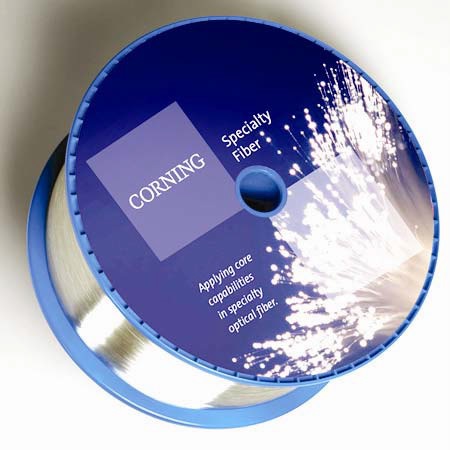
850, 1060, 1300 nm; Core Dia. 50 µm; Cladding Dia. 125 µm; Acrylate Coating; Optional Hermetic Layer; -60 to +180 °C Equipped with mid-temperature acrylate-based coatings, the Corning® ClearCurve® series of multi mode (MM) bend insensitive optical fibers now includes higher temperature and higher bandwidth capability. For use at temperatures up to +180 °C and beyond, these acrylate-based fibers deliver incredible macro bend performance with ease of use and handling – benefiting sensing systems operating in harsh environments.. The ClearCurve multi mode fiber series includes the MM50BI-XMT fiber with mid-temperature acrylate coating as well as the MM50BIH-XMT fiber with mid-temperature acrylate coating and an additional hermetic layer. For mid-temperature single mode fibers please refer to Corning’s ClearCurve single mode fiber series. Key Features: Acrylate-base for Ease of Handling Rated for up to +180 °C Test data available at +200 °C Higher Bandwidths available Hermetic Coating (Optional) for Protection Against Hydrogren-induced Attenuation Increase and Improved Fatigue Resistance Consistent Strength Over Time at Elevated Temperatures Designed to Meet Your Specific Needs: Recommended Min. Bending Radius of 7.5 mm Fully Compliant With ITU-Recommendations G651.1 Compatible with Current Optical Fibers and Practices Applications: Fiber Sensing and Data Transmission with Tight Bend Requirements and/or High Bandwidth Requirements for: Aerospace & Defense, Structural Health Monitoring, Down-Hole Drilling
REQUEST PRICING AND AVAILABILITY
- Get your individual quote.
- Technical compatibility review included.
- Volume discounts available.
No obligation. Direct access to our engineering team.
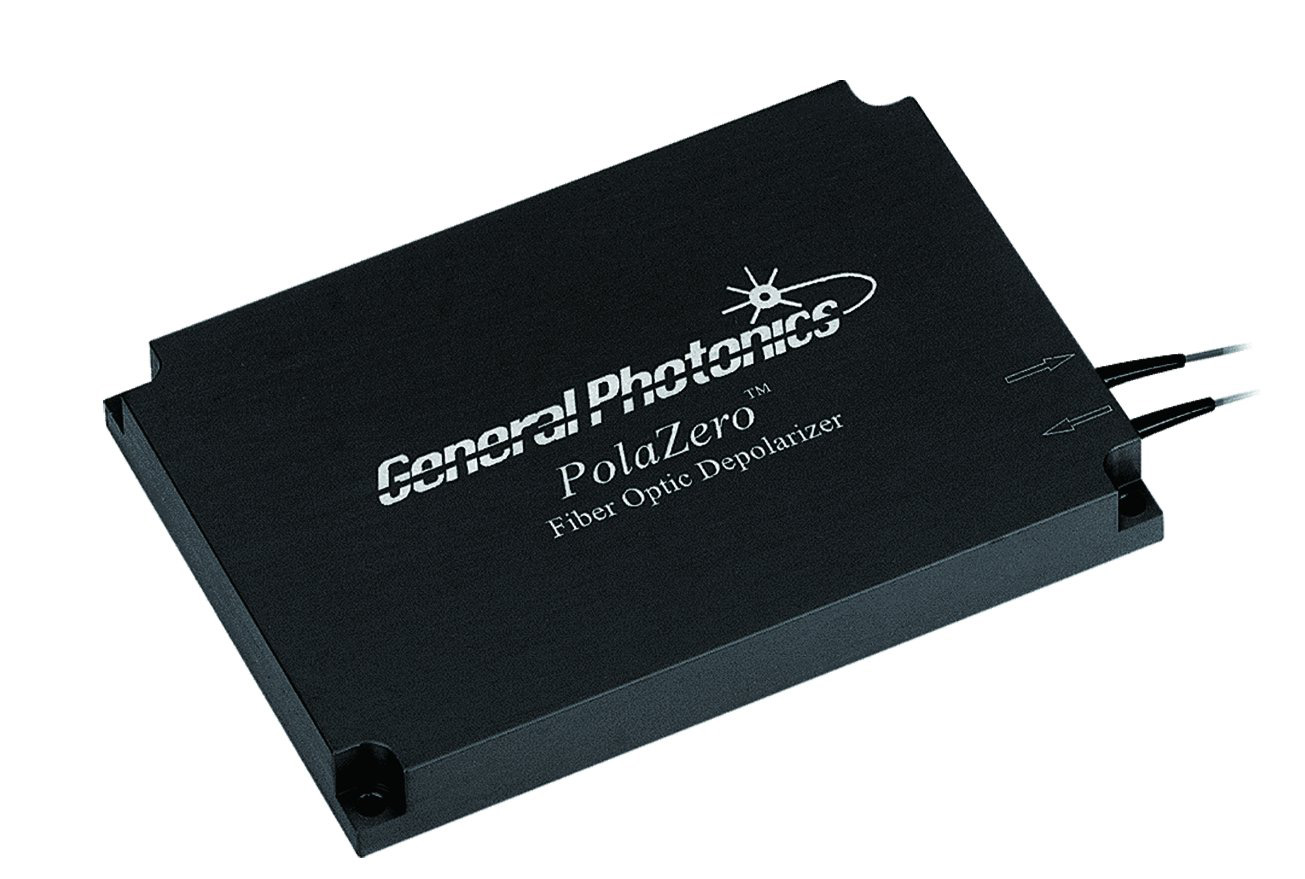
1310, 1550 nm; IL 1.0 dB; DOP <5%; ER <0.5 dB; RL 55 dB General Photonics’ DEP depolarizer module is a passive device (requiring no external power) that depolarizes laser output. The standard configuration can be used for coherence lengths less than 10 m. Custom units can be specified for coherence lengths of multiple kilometers. The DEP polarizer is ideal for minimizing the polarization sensitivity of fiber optic sensor systems such as systems for quasi-distributed temperature and strain sensing based on fiber Bragg gratings (FBG), systems for distributed temperature and strain sensing based on Brillouin or Raman scattering and systems for distributed acoustic sensing based on Rayleigh scattering. It can also help to eliminate the effects of PDL or polarization sensitivity of optical components and instruments. Equally important, it can be used for depolarizing pump lasers to eliminate the polarization sensitivity of Raman amplifiers. The DEP polarizer is packaged in a small (85 × 60 × 10 mm), rugged aluminium box, providing high performance and superb environmental stability. The internal structure and package size may be different depending on the coherence length or spectral width of the light signal to be depolarized. Contact AMS Technologies for an optimized configuration for your intended applications. Key Features: Customizable for Light Sources With Different Coherence Lengths Low Output Degree of Polarization (DOP): <5% Center Operating Wavelength: 1310, 1550 nm Wide Operating Wavelength Range: ±50 nm Low Insertion Loss: 1.0 dB Typical, 1.4 dB Maximum Compact Size: 85 × 60 × 10, 85 x 85 x 15 mm, Larger Package for Coherence Length >200 m No Power Source Required Coherence Length of Light Source: 10 m Standard, Others Specify Residual Extinction Ratio (ER): <0.5 dB Return Loss: 55 dB Optical Power Handling: ≥300 mW Fiber Type Input: PM Panda Fiber Fiber Type Output: SMF-28 Applications: Minimize Polarization Sensitivity of Fiber Sensors; Depolarize Pump Lasers; Remove Polarization Sensitivity of Raman Amplifiers; Eliminate Polarization Sensitivity of Optical Instruments; Eliminate the Effects of PDL; Can Be Integrated Into Remote Monitors
REQUEST PRICING AND AVAILABILITY
- Get your individual quote.
- Technical compatibility review included.
- Volume discounts available.
No obligation. Direct access to our engineering team.

Aluminium Coated, Single Mode, Multi Mode; 190 to 2400 nm; Core Diameter 50 to 400 µm; Mode Field Diameter 4.3, 9.0 µm; Cladding Diameter 125 to 440 µm; Numerical Aperture 0.12 to 0.275Fiberguide’s AFS-A/SFS-A/AGI-A/ASI-A/UVS-H2A series of aluminium coated fibers are designed for a wide temperature range (-269 to +400 °C) and superior strength (>100 kpsi). This allows for long life at extended stress levels in applications that require tight bends. Also, the strong chemical bond between the silica cladding and the aluminum enables direct termination without pistoning. This bond also makes aluminium coating the ideal choice to preserve deep UV performance in Fiberguide’s Solarguide UVS-H2A series of solarization resistant UV multi mode fiber. Within this series of aluminium coated high temperature fibers, users find step index (AFS/SFS, UVS-H2) and graded index (AGI) multi mode fibers as well as anhydrous silica (ASI) single mode fibers. As an option, some types of aluminium coated high temperature fibers can be provided with a broad selection of shaped tips – standard configurations as well as custom designed shapes. Shaped tip fibers provide optimum control over beam delivery and/or increased efficiency of light collection. Some of the fibers can also be end capped to achieve higher coupled power into a fiber core by reducing the power density at the air / silica interface, commonly the point of laser damage. End cap diameters and lengths are offered for select numerical apertures and fiber cores size, but can be easily customized for a variety of fiber types and specialized applications. Additionally, all fiber types can be equipped on demand with Fiberguide’s patented RARe Motheye anti-reflective technology that enhances fiber transmission performance and significantly increases the damage threshold for your application over a large wavelength range. Key Features: Multi Mode (Step/Graded Index) or Single Mode Fibers Pure Fused Silica Core, Fluorine Doped/Pure Silica Cladding Coating: Aluminium Core / Cladding Sizes: 50/125 to 400/440 µm (MM) Mode Field Diameter / Cladding Sizes: 4.3/125, 9.0/125 µm (SM) Numerical Aperture (NA): 0.12 to 0.275 Recommended Bend Radius: Short Term 100 x Clad Diameter, Long Term 200 x Clad Diameter 100% Proof Test Using 4-Axis Bend Method Applications: High Temperature and Cryogenic Temperature Sensing; Semiconductor Manufacturing; Corrosive and Caustic Environments; Ultra-high Vacuum Devices; Radiation Resistant Sensors; Rocket, Turbine and Jet Engine Monitoring
REQUEST PRICING AND AVAILABILITY
- Get your individual quote.
- Technical compatibility review included.
- Volume discounts available.
No obligation. Direct access to our engineering team.