
MCS Modular Liquid Cooling Systems


REQUEST PRICING AND AVAILABILITY
- Get your individual quote.
- Technical compatibility review included.
- Volume discounts available.
No obligation. Direct access to our engineering team.
Product information "MCS Modular Liquid Cooling Systems"
Liquid to Ambient Air Cooling System; 1,300 to 3,500 W @ 25 K initial temperature difference; Modular; 230, 115 V; 4.9 to 8.7 l/min @2.1 bar
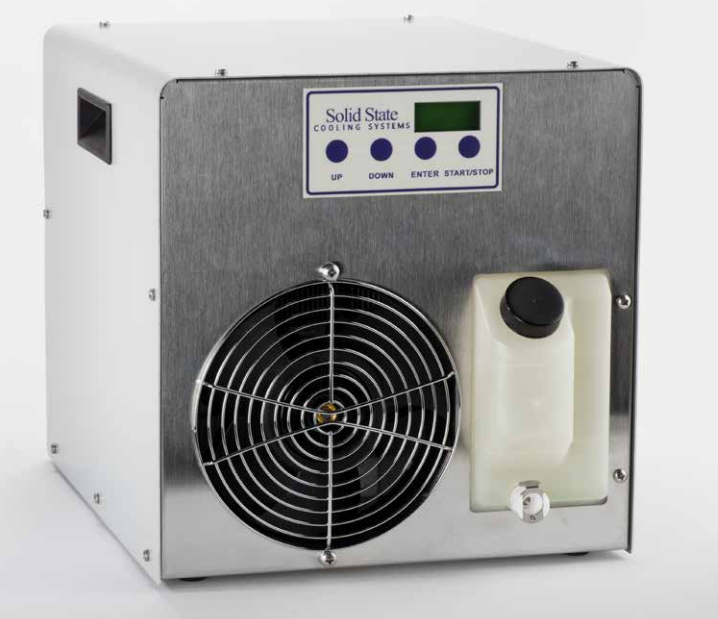
Lytron’s MCS series of modular liquid cooling systems are a cost-effective and reliable option where precise temperature control and cooling below ambient temperature are not required. These systems consist of a high-performance heat exchanger integrated with a fan, pump and tank in a durable metal chassis. MCS modular liquid cooling systems feature cooling capacities of up to 3.5 kW.
Components of MCS modular liquid cooling systems are performance-matched for maximum cooling capacity. The most critical component, the heat exchanger, is designed for optimum performance. All components have been designed for long life and high reliability. Lytron offers systems that are compatible with a range of coolants, ensuring there is an option available for nearly every fluid.
MCS modular liquid cooling systems are easy to use with installation instructions as simple as completing the liquid loop, filling the liquid reservoir tank and flipping the switch. These systems offer a fast option for upgrading to liquid cooling in a cost effective and reliable package.
Key Features:
- Cooling Capacity: 1,300 to 3,500 W @ 25 K initial temperature difference (hot coolant temperature – cold ambient air temperature)
- Fluid Connections: ½” FNPT
- Reservoir Capacity: 2.8 l
- Maximum Liquid Temperature: +55 °C
- Recommended Coolant: Water (MCS30: Oil, EGW)
- Pump Performance: 4.9 to 8.7 l/min @ 2.1 bar
- Dimensions: 439 x 384 x 338 mm (MCS20/MCS30), 381 x 381 x 610 mm (MCS40/MCS50)
Applications: Power Supply Cooling; Power Conversion Cooling; Process Automation Systems; Security Screening; Sample Test Equipment Cooling Systems; Diagnostic Systems; Medical Lasers; MRI; Edge Computing Center Cooling Systems
Customers also viewed
460 W @ 20°C; >2 lpm @ 14 psig; 1/4 Valved CPC Fittings; Centrifugal Pump; Aluminum This thermoelectric recirculating chiller is a low-cost, high-performance device optimized for lasers, optics and life sciences. It features precise temperature control (±0.05°C repeatability), long-life reliability, quiet operation and environmental friendliness in a compact size. Using universal power, the TEC chiller is very energy efficient only drawing power when required.

Compact Sealed Vapor Compression Circuits; Cooling Capacity 450, 1200 W @+25°C; Power Supply 24 VDC, 6-30 A; Temperature Range -10-+45°C, +15-+45°C; Pressure Drop 40-300 mbar @9-4 lpm AMS Technologies’ mLC-KITs are liquid cooling development platforms featuring sealed vapor compression circuits with speed-controlled miniature rotary BLDC compressors. Brazed plate heat exchangers serve as evaporators and provide the interface to the customer liquid coolant circuit. Our mLC-KITs are available with two cooling capacity levels: the ultra-compact mLC-C-450-24-KIT is designed for cooling tasks up to 450 W, while the larger mLC-C-1200-24-KIT provides up to 1200 W cooling capacity. Both mLC-KITs come with inverter boards that require a 24 VDC power supply. The compressors’ speed can be set from the upper control system by frequency or analog signal. The condenser is an aluminum finned copper tube heat exchanger coil. The mLC-KITs must be cooled by forced convection, i. e. 120 × 120 mm fan. The mLC-C-1200-24-KIT 1200 is already equipped with a fan. The heat exchanger stainless steel plates are nickel brazed and suitable for a variety of coolant fluids, such as water, DI water and glycol-water mixtures. The plate heat exchanger has male R ¼"/ R " connectors to connect the water circuit on the customer’s side. Your customized mLC-KIT: For customer requirements that cannot be covered by the mLC-C-450-24-KIT or the mLC-C-1200-24-KIT, our thermal management specialists at AMS Technologies are happy to develop a completely tailor-made liquid cooling solution and offer all services from development and proof-of concept all the way to series production. Get in touch with us now to discuss your customized mLC-KIT. Key Features: Kits to Interface With OEM Water Circuit and Electronics Control Up to 1200 W Cooling Capacity Cooling Capacity mLC-C-450-24-KIT (Approx.): 450 W (@100 rps, Twater = +25°C, Tambient = +25°C) Cooling Capacity mLC-C-1200-24-KIT (Approx.): 930 W (@59 rps, Twater = +20°C, Tambient = +40°C, 2 lpm) to 1760 W (@90 rps, Twater = +20°C, Tambient = +20°C, 4 lpm) Speed Control for Ease of Temperature Control Lightweight, Compact Easy to Integrate Low-vibration, Low-noise Rotary Compressor Components Carefully Designed to Match Each Other Power Supply: 24 VDC, <6A (mLC-C-450-24-KIT, 80 rps), <30 A (mLC-C-1200-24-KIT) Temperature Range (Ambient): -10°C to +45°C (mLC-C-450-24-KIT); +15°C to +45°C (mLC-C-1200-24-KIT) Hydraulic Parameters mLC-C-450-24-IT: Pressure Drop 300 mbar @4 lpm Hydraulic Parameters mLC-C-1200-24-IT: Pressure Drop 40 mbar @6 lpm, 100 mbar @9 lpm Dimensions: 200 x 172 x 180 mm (mLC-C-450-24-KIT), 250 x 386 x 248 mm (mLC-C-1200-24-KIT) Weight: 3.4 kg (mLC-C-450-24-KIT), 10 kg (mLC-C-1200-24-KIT) Applications: Evaluation Kits for Building Water Cooling Solutions With OEM Water Circuit and Electronics Control; Compact Laser Cooling up to 450 or 1200 W; Bio Reagents Cooling; Mobile Applications (mLC-C-450-24-KIT)
REQUEST PRICING AND AVAILABILITY
- Get your individual quote.
- Technical compatibility review included.
- Volume discounts available.
No obligation. Direct access to our engineering team.

mini Liquid Cooling Evaluation Kit; Cooling Capacity 450 W @+25°C; Power Supply 24 VDC Key Features: Up to 450 W Cooling Capacity Ideal for Compact Cooling of Lasers or Bio Reagents Ideal for Mobile Cooling Applications Compressor Speed Control for Ease of Temperature Control Low Vibration, Low Noise Lightweight, Compact Easy to Integrate Kit to Interface With OEM Water Circuit and Electronics Control Components Carefully Designed to Match Each Other The mLC-C-450-24-KIT is a sealed vapor compression circuit with a speed controlled miniature rotary BLDC compressor. The evaporator is a brazed plate heat exchanger, the interface to the customer liquid coolant circuit. The mLC-C-450-24-KIT comes with the separate 24 VDC inverter board. The compressor speed can be set from the upper control system by frequency or analog signal. The condenser is an aluminum finned copper tube heat exchanger coil and must be cooled by forced convection, i.e. a 120x120 mm fan or equivalent. The heat exchanger stainless steel plates are nickel brazed suitable for a variety of coolant fluids, such as water, DI water and glycol-water mixtures. The plate heat exchanger has male R ¼” connectors for the customer to connect its water circuit. The mLC-C-450-24-KIT’s condenser is an aluminum finned copper tube heat exchanger coil and must be cooled by forced convection, i.e. a 120x120 mm fan or equivalent. The heat exchanger stainless steel plates are nickel brazed suitable for a variety of coolant fluids, such as water, DI water and glycol-water mixtures. The plate heat exchanger has male R ¼” connectors for the customer to connect its water circuit. If you are looking for a ready-to-use recirculating chiller based on this mLC-Kit that includes the coolant loop, have a look at our mRC-C-450-100/240 mini Recirculating Chiller as well as our other liquid cooling solutions offerings – or browse our large portfolio of liquid to air temperature management assemblies. For lower cooling capacities, we also carry a Peltier-based mini Direct Cooling KIT providing up to 130 W with no liquids or moving parts (except fans). Your customized liquid cooler: AMS Technologies’ thermal management specialists are happy to develop a liquid cooling solution tailored to your needs – based on Peltier or compressor technology – and offer all services from development and proof-of concept to series production. Get in touch with us now to discuss your customized liquid cooler. Specifications: Cooling Capacity: Approximately 450 W (at 100 rps, Twater = +25°C, Tambient = +25°C) Power Supply Consumption: < 150 W (6 A @24 VDC, 80 rps) Temperature Range (Ambient, Operating): -10°C to +45°C Hydraulic Parameters: Pressure Drop 30 kPa @4 lpm Controller/Inverter Board: Operating Range 20 to 100 rps, Speed Command Square Wave Pulse Frequency 40 to 200 Hz, Variable Resistor Input 2 kΩ to 10 kΩ Dimensions: 200 x 172 x 180 mm (WxHxD) Weight: 3.4 kg Applications: Compact Cooling of Lasers or Bio Reagents With up to 450 W Cooling Capacity; Mobile Cooling Application; Evaluation Kit to Interface With OEM Water Circuit and Electronics Control