
HN-PCF Photonic Crystal Fibers


REQUEST PRICING AND AVAILABILITY
- Get your individual quote.
- Technical compatibility review included.
- Volume discounts available.
No obligation. Direct access to our engineering team.
Product information "HN-PCF Photonic Crystal Fibers"
Cut off Wavelength 650, 1000 nm; Mode Field Dia. 2.0, 4.3 µm; Zero-dispersion Wavelength 800 to 1000 nm; Optical Loss <30, <100 dB/km
Greitlex Photonics’ HN-PCF series is a new type of fibers, so-called micro-structured or photonic crystal fibers. This type of fibers features holes or inclusions of a material with different refractive index in the core and/or in the cladding.
New dispersion and nonlinear properties can be observed in photonic crystal fibers. Most of the specific applications for micro-structured fibers require their own specific structure of the fiber. Greitlex Photonics has the capabilities to design and fabricate a broad variety of fiber structures according to customer orders.
Other parameters are available on the request.
The HN-PCF-800 fiber is specially designed for supercontinuum generation using Ti-sapphire ultra-fast femtosecond lasers, while the HN-PCF-1040 fiber is specially designed for supercontinuum generation using Yb-doped picosecond or femtosecond ultra-fast fiber lasers. They replace similar products from the former FORC Photonics.
Key Features:
- Mode Field Diameter: 2.0, 4.3 µm
- Zero-dispersion Wavelength: 800 to 1000 nm
- Nonlinear Coefficient: 10, 90 1/W*km
- Optical Loss: <30, <100 dB/km
- Cut off Wavelength: 650, 1000 nm
Applications: Supercontinuum Generating Using Ti-sapphire or Yb-doped Ultra-fast Lasers
Customers also viewed

Wavelength 1000-2300 nm; Bandwidth 0.05-1 nm; Reflectivity 0.01-95%; SLSR ~8 dB; Fiber Type SM, PM, Double Clad, LMA, Radiation Resistant, Custom; Fiber Pigtail Length ≥0.5, CustomGreitlex Photonics’ GTL-FBG-FS-880 type femtosecond fiber Bragg gratings (FBGs) can be written into all optical transparent fiber materials with a broad variety of fiber coatings – without the need to strip the coating from the fiber and recoating it after the FBG writing procedure.Optical sensors based on femtosecond FBGs allow to monitor temperature, pressure, and deformation of such objects that previously hadn`t been eligible for sensing. FBGs written into radiation resistant pure silica core fibers are ideal for applications in the nuclear industry. Femtosecond FBG inscription through the fiber’s protective coating yields excellent mechanical strength – very important in strain sensing applications. These FBGs replace similar products from the former FORC Photonics. The following configurations can be changed at the customer's request, please contact AMS Technologies to discuss a customized femtosecond fiber Bragg grating solution tailored to your project’s requirements.Key Features:Wavelength Range: 1000 nm to 2300 nmFiber Type: Single Mode (SM), Polarization Maintaining (PM), Double Clad, LMA, Radiation Resistant, CustomReflectivity: 0.01% to 95%Bandwidth (WFHM): 0.05 nm to 1 nmSLSR: ~8 dBFBG Pigtail Length: ≥0.5 mFBG Inscription Through the Fiber’s Protective Coating: Acrylate, Polyimide, CustomAdditional FBG Coating (on Request): Aluminium, Copper, CustomTensile Strength: >100 kpsiOptical Connector: Bare Fiber, FC/APC, LC/APC, CustomApplications: Monitoring Temperature, Pressure & Deformation; Nuclear Industry
REQUEST PRICING AND AVAILABILITY
- Get your individual quote.
- Technical compatibility review included.
- Volume discounts available.
No obligation. Direct access to our engineering team.
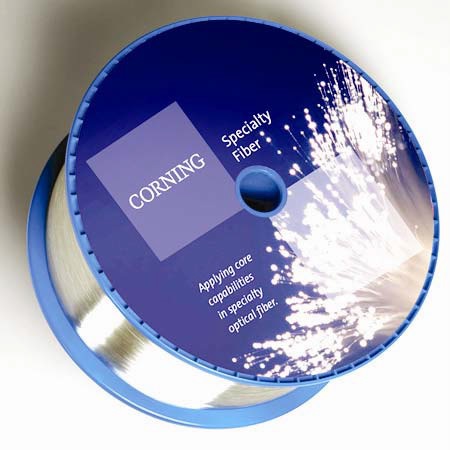
850, 1060, 1300 nm; Core Dia. 50 µm; Cladding Dia. 125 µm; Acrylate Coating; Optional Hermetic Layer; -60 to +180 °C Equipped with mid-temperature acrylate-based coatings, the Corning® ClearCurve® series of multi mode (MM) bend insensitive optical fibers now includes higher temperature and higher bandwidth capability. For use at temperatures up to +180 °C and beyond, these acrylate-based fibers deliver incredible macro bend performance with ease of use and handling – benefiting sensing systems operating in harsh environments.. The ClearCurve multi mode fiber series includes the MM50BI-XMT fiber with mid-temperature acrylate coating as well as the MM50BIH-XMT fiber with mid-temperature acrylate coating and an additional hermetic layer. For mid-temperature single mode fibers please refer to Corning’s ClearCurve single mode fiber series. Key Features: Acrylate-base for Ease of Handling Rated for up to +180 °C Test data available at +200 °C Higher Bandwidths available Hermetic Coating (Optional) for Protection Against Hydrogren-induced Attenuation Increase and Improved Fatigue Resistance Consistent Strength Over Time at Elevated Temperatures Designed to Meet Your Specific Needs: Recommended Min. Bending Radius of 7.5 mm Fully Compliant With ITU-Recommendations G651.1 Compatible with Current Optical Fibers and Practices Applications: Fiber Sensing and Data Transmission with Tight Bend Requirements and/or High Bandwidth Requirements for: Aerospace & Defense, Structural Health Monitoring, Down-Hole Drilling
REQUEST PRICING AND AVAILABILITY
- Get your individual quote.
- Technical compatibility review included.
- Volume discounts available.
No obligation. Direct access to our engineering team.

Wavelength 600-2300 nm; Bandwidth 0.05-1.2 nm; Reflectivity 5-99%; SLSR >8 dB; Fiber Type SM, PM, Double Clad, LMA, Custom; Fiber Pigtail Length ≥0.5, CustomFiber Bragg gratings (FBGs) are sensitive to changes in temperature, their thermal sensitivity is about 6.7 ppm/K (+0.11 pm/K @1550 nm). Greitlex Photonics’ GTL-FBG-AP-850 athermal packaged fiber Bragg gratings are intended for passive compensation of the FBG’s thermal sensitivity by matching the case elements’ expansion with the FBG’s wavelength shift under the influence of temperature. This technology allows customers to achieve all advantages of fiber Bragg gratings, while preserving a high wavelength stability within a wide temperature range.The following configurations can be changed at the customer's request, please contact AMS Technologies to discuss a customized athermal packaged fiber Bragg grating solution tailored to your project’s requirements.These FBGs replace similar products from the former FORC Photonics. Key Features:Wavelength Range: 600 nm to 2300 nmWavelengths to Quick Order [nm]: 633, 780, 794, 797, 799, 801, 809, 830, 852, 895, 940, 976, 1030, 1057, 1060, 1064, 1080, 1125, 1150, 1178, 1240, 1270, 1310, 1484,1510 ÷ 1580, 1650, 1900, 1908, 1952, 2300Fiber Type: Single Mode (SM), Polarization Maintaining (PM), Double Clad, LMA, CustomThermal Wavelength Stability (0°C to +70°C): <0.16 nmReflectivity: 5% to 99%Bandwidth (WFHM): 0.05 nm to 1.2 nmFBG Length: 1 mm to 20 mmSLSR: ~8 dBFBG Pigtail Length: ≥0.5 mTensile Strength: >100 kpsiOptical Connector: Bare Fiber, FC/APC, LC/APC, CustomPackage Dimensions: 66 x 18 x 12 mmApplications: Passive Compensation of FBG Thermal Sensitivity; Applications Requiring High Wavelength Stability in a Wide Temperature Range
REQUEST PRICING AND AVAILABILITY
- Get your individual quote.
- Technical compatibility review included.
- Volume discounts available.
No obligation. Direct access to our engineering team.

35 to 450 A RMS; Single Terminal; 28 to 45 kV; Mechanical Life 0.5 to 2 Mio. OperationsJennings Technology’s series of vacuum interrupters handle a wide range of voltage and current interrupt levels, and high-quality and highly reliable interrupters are available for the utility and industrial markets.Current interruption in a vacuum is recognized as the ideal switching technology in the medium voltage range, and it is also applied in high-voltage and low-voltage applications. Excellent switching capabilities and compact design make vacuum interrupters the most economical switching device solutions possible.Jennings vacuum interrupters feature an evacuated ceramic insulating envelope surrounding two contacts, one fixed and one movable. The movable contact is operated from the outside through a metallic bellows. Contacts are typically a copper alloy that is developed for use in AC voltage applications. The end plates are made of stainless steel or copper.With these features, vacuum interrupters can be expected to last the life of the equipment in which they are installed. Their interruption mechanism is independent of the current magnitude, so interruption can normally be anticipated at the first current zero with no restriking, as the dielectric strength of the contact gap recovers more rapidly than the recovery voltage can rise.Vacuum dielectric enables the interrupters’ contacts to be arranged close together, so circuit interruptions can be designed in a smaller envelope. With current interruption occurring in a vacuum, all arcing is confined within the vacuum interrupter body, so Jennings interrupters are noise-free and flash-free, avoid contact contamination as oxides and corrosion layers cannot form in vacuum, and they do not emit any greenhouse or toxic gases.Key Features: Long Life, High Reliability Controlled Contact Erosion Results in Virtually Maintenance-free Operation Fast Interrupting Speed Rapid Dielectric Recovery High Cycle Withstand Voltages Robust, Compact Design Environmentally Friendly Atmospheric Contact Contamination is Eliminated Noise-free and Flash-free Applications: Load Break Switches; Contactors for Industrial and Motor Control; Capacitor Bank Switching; Circuit Breakers; Specialty RF and DC Applications
REQUEST PRICING AND AVAILABILITY
- Get your individual quote.
- Technical compatibility review included.
- Volume discounts available.
No obligation. Direct access to our engineering team.
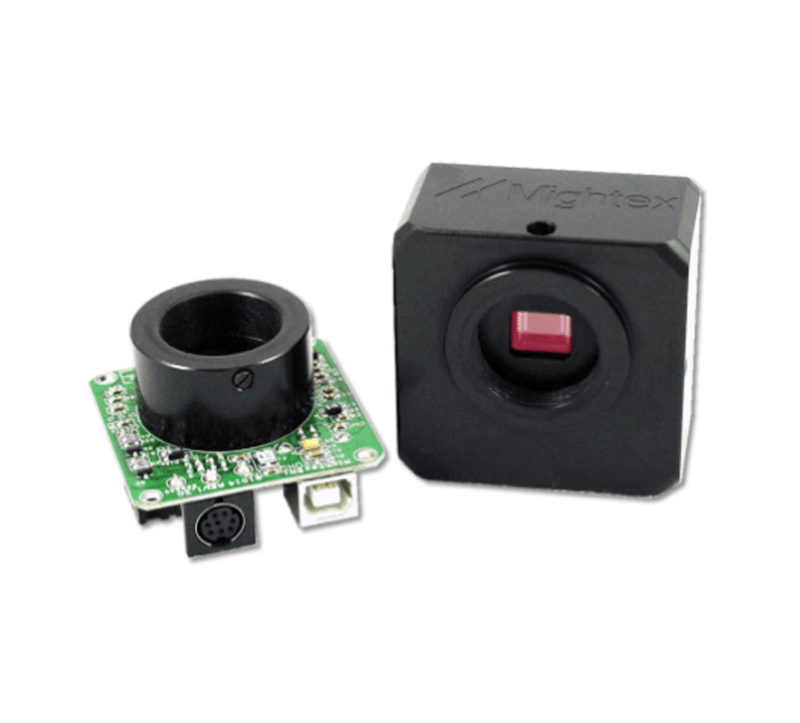
0.36-5 MP; Pixel Size 2.2x2.2-6.0x6.0 µm; Sensor Size 1/3”-1/2” Diagonal; Colour or B/W; 3-310 fps; Resolution 8-12 bit; USB 2.0; Buffered; Progressive Scan; Dynamic Range >55-70 dB; Board-level or Enclosed Mightex’s B-Series USB 2.0 CMOS cameras with frame buffers are optimized for machine-vision applications, and they can also be used for a wide variety of other applications such as digital microscopy and medical imaging, where quality, ease of use, and cost-effectiveness are crucial. B-Series cameras are available as colour or B/W versions, with resolutions from Wide VGA (WVGA, 752x480) up to 5 MP (2592x1944) and 8, 10 or 12 bit, and they can be ordered as “naked” board-level device or pre-mounted in an enclosure. Monochrome cameras often exhibit a 20% higher spatial resolution than their colour counterparts because no pixel interpolation is necessary. Without a Bayer colour filter on the sensor, monochrome cameras are also more sensitive than colour sensors, especially in near IR and UV regions. Mightex’s B-Series cameras feature built-in frame buffers, global shutter (Wide VGA versions), external trigger-in, strobe-out, and a powerful camera engine that supports multiple cameras. The frame rate can be as high as 60 fps in full resolution and up to 600 fps using ROI mode (depending on colour or B/W and sensor resolution). In addition, a user-friendly GUI based application software and an SDK are provided for custom software development. A DirectShow driver and a TWAIN driver are included (except for 5 MP B/W versions), and a USB command set protocol is provided for non-Windows based applications. A Linux driver is also either included (5 MP and Wide VGA B/W versions) or available upon request. Available models are: BCN-C050-U/BCN-C050-US: 5 MP, colour, lens mount C/CS, board-level BCE-C050-U/BCE-C050-US: 5 MP, colour, lens mount C/CS, enclosed BCN-B050-U/BTN-B050-U: 5 MP, B/W, 8/12 bit, lens mount C or CS, board-level BCE-B050-U/BTE-B050-U: 5 MP, B/W, 8/12 bit, lens mount C or CS, enclosed BCN-C030-U/BCN-C030-US: 3 MP, colour, lens mount C/CS, board-level BCE-C030-U/BCE-C030-US: 3 MP, colour, lens mount C/CS, enclosed BCN-B013-U/BCN-B013-US: 1.3 MP, B/W, 8 bit, lens mount C/CS, board-level BCE-B013-U/BCE-B013-US: 1.3 MP, B/W, 8 bit, lens mount C/CS, enclosed BTN-B013-U/BTN-B013-US: 1.3 MP, B/W, 10 bit, lens mount C/CS, board-level BTE-B013-U/BTE-B013-US: 1.3 MP, B/W, 10 bit, lens mount C/CS, enclosed BCN-CG04-U/BCN-CG04-US: WVGA, colour, lens mount C/CS, board-level BCE-CG04-U/BCE-CG04-US: WVGA, colour, lens mount C/CS, enclosed BCN-BG04-U/BCN-BG04-US: WVGA, B/W, 8 bit, lens mount C/CS, board-level BCE-BG04-U/BCE-BG04-US: WVGA, B/W, 8 bit, lens mount C/CS, enclosed BTN-BG04-U/BTN-BG04-US: WVGA, B/W, 10 bit, lens mount C/CS, board-level BTE-BG04-U/BTE-BG04-US: WVGA, B/W, 10 bit, lens mount C/CS, enclosed Note: Board-level cameras are designed for OEM applications, when a system-level enclosure is usually provided. In order to avoid electro-static discharge (ESD) related damages, workforce handling a board-level camera should be properly grounded. ESD related damages are considered as mishandling and are not covered by product warranty. For lab use, it is strongly recommended to choose an enclosed camera instead of a board-level one. Key Features: Colour or Black&White (B/W, Monochrome) Board-level or Enclosed Versions Available Ultra-compact Active Imaging Pixels: 0.36 to 5 MP, 752x480 to 2592x1944 Pixel Size: 2.2 x 2.2 to 6.0 x 6.0 µm Sensor Size (Diagonal): 1/3” to 1/2” Dynamic Range: >55 to 70 dB Buffered, 32 MByte On-board Memory (3 to 23 Frames at Full Resolution, Depending on Sensor) 8, 10 or 12 bit Gray Level Progressive Scanning System Frame Rate: 3 to 310 fps True Global Shutter (Wide VGA Versions) Supports Simultaneous Image Capturing From Multiple Cameras 4-pin GPIOs Arbitrary ROI Supported (Wide VGA Versions) Interface: High-speed USB 2.0 (480 Mbit/s), No Need for External Power Supply Digital Output, No Need for Frame Grabber Custom Programmable With SDK Provided DirectShow & TWAIN Drivers Linux Driver (5 MP and Wide VGA B/W Versions) USB Command Set Protocol for Non-Windows-based Applications External and Software Trigger Strobe Output for External Flash Precise Frame Rate Setting (Wide VGA Versions) ROI (Not Wide VGA Versions) and Pixel Skipping/Binning OEM Versions Available Applications: Machine Vision and Stereo Vision; Medical Imaging; Semiconductor Equipment; Test Instruments; High-quality ID Photo Capture; Document Scanners; Digital Microscopy; Web Camera and Security Video
REQUEST PRICING AND AVAILABILITY
- Get your individual quote.
- Technical compatibility review included.
- Volume discounts available.
No obligation. Direct access to our engineering team.

Numerical Aperture 0.09; Core Dia. 20 µm; Cladding Dia. 127 µm; Gray Loss <20 dB/km; Polarization Extinction Ratio >20 dBGreitlex Photonics’ SBS-DC series of SBS-suppressed optical fibers feature a suppressed stimulated Brillouin scattering gain. Stimulated Brillouin scattering (SBS) is the major factor limiting maximal power of narrow-band fiber lasers (less than 100 MHz linewidth). It is especially crucial in applications which require small mode field diameter (MFD), i.e. Raman amplifiers. Suppression of SBS gain, while maintaining MFD (and Raman gain) becomes a very important task in such fibers. Another promising application of single-frequency lasers is LIDAR (Light Detection And Ranging). In the case of all-fiber systems, it is the passive fibers at the amplifier output (pigtails of isolators, circulators, collimators) that limit the maximum achievable peak power. Thus, development of large mode area (LMA) passive fibers with increased SBS threshold (as compared to standard LMA fibers) is more and more critical for those applications. To suppress SBS gain for a fixed MFD, Greitlex Photonics uses a specially designed multi-layer, multi-components doped core. It allows to suppress SBS gain by 3 to 5 dB relative to standard, uniformly doped Ge-doped passive fibers with the same MFD. The developed method allows Greitlex Photonics to design custom dopants distribution over the core to suppress SBS by 3 to 5 dB for most of the actual optical refractive index profiles (any core numerical aperture and diameter). The SBS-DC-20/125-1550PM polarization maintaining (PM) fiber has been specially designed to be used in pigtails of output components (isolators, collimators, pump-and-signal combiners etc.) of high peak-power single-frequency lasers operated near 1550 nm. The fiber is intended for utilization in systems with the ability to maintain polarization. Fibers with suppressed SBS-gain for a custom designed operating wavelength, core numerical aperture (NA) and diameter are available on request. Please contact AMS Technologies to discuss your customized SBS-suppressed optical fiber solution. Key Features: Suppressed Stimulated Brillouin Scattering (SBS) Gain Core Diameter: 20 µm Cladding Diameter: 127 µm Core Numerical Aperture: 0.09 Gray Loss: <20 dB/km Polarization Extinction Ratio (After 2 m): >20 dB Applications: Narrow-band Fiber Lasers; Raman Amplifiers; Pigtails of Output Components (Isolators, Collimators, Pump-and-signal Combiners etc.) of High Peak-power Single-frequency Lasers
REQUEST PRICING AND AVAILABILITY
- Get your individual quote.
- Technical compatibility review included.
- Volume discounts available.
No obligation. Direct access to our engineering team.

Cut off Wavelength 700, 1400 nm; Core Dia. 2.2, 8x7 µm; Cladding Dia. 125 µm; GeO2 Concentration 75, 98%Greitlex Photonics’ GDF series of Germanate glass core optical fibers is available for single mode (SM) or multi mode (MM) applications. GDF series fibers feature core diameters of 2.2 µm (round, GDF-SM-2.2/125-75) and 8x7 µm (elliptical, GDF-MM-8/125-98). The GDF-SM-2.2/125-75 single mode version is a higly Ge-doped silica Germanate glass core fiber used for a variety of nonlinear applications. The GDF-MM-8/125-98 multi mode version is a Germanate glass core fiber, also used for a variety of nonlinear applications. It replaces similar products from former FORC Photonics.Key Features: Germanium-doped Fibers Germanate Glass Core, GeO2 Concentration: 75, 98% Core Diameter: 2.2 µm, 8x7 µm (elliptical) Cladding Diameter: 125 µm Coating Diameter (GDF-MM-8/125-98): 250 µm Cut off Wavelength: 700, 1400 nm Minimum Loss (GDF-SM-2.2/125-75): 20 dB/km Attenuation (GDF-MM-8/125-98): 110, 200 dB/km Typ. Peak Gain: >0.2 dB/m
REQUEST PRICING AND AVAILABILITY
- Get your individual quote.
- Technical compatibility review included.
- Volume discounts available.
No obligation. Direct access to our engineering team.