
Spectralon® Diffuse Reflectance Standards

REQUEST PRICING AND AVAILABILITY
- Get your individual quote.
- Technical compatibility review included.
- Volume discounts available.
No obligation. Direct access to our engineering team.
Product information "Spectralon® Diffuse Reflectance Standards"
Highly Lambertian; 250-2500 nm; Reflectance Factor 2-99%; Reflective Area Ø 31.75, 50.80 mm; Dimensions Ø38.1x14.0, Ø60.45x15.2 mm
Labsphere’s Spectralon® diffuse reflectance standards can offer the highest diffuse reflectance values of any known substance. These durable, chemically inert standards can have typical reflectance values ranging from 2% to 99% and are spectrally flat over the UV-VIS-NIR spectrum.
All Spectralon materials are optically flat to ±4% over the range of 250 to 2500 nm and ±1% over the photopic region of the spectrum.
Spectralon diffuse reflectance standards are highly Lambertian, with Spectralon SRM-99 reflectance material being the most Lambertian reflector available for use over the wavelength range from 250 to 2500 nm.
All reflectance calibration tests are performed in the Reflectance Spectroscopy Laboratory at Labsphere. The standards used in these tests are directly traceable to the National Institute of Standards and Technology (NIST).
Spectralon diffuse reflectance standards are available individually and in sets, consisting of a diffuse white standard and a selection of diffuse gray standards. Each standard is supplied with complete diffuse reflectance data from 250 to 2500 nm, every 50 nm. All standards are housed in a durable delrin holder with a protective cover.
Diffuse reflectance standards are available in sets of four or eight standards in either 31.75 or 50.80 mm diameters. A set of four standards includes one each of the following reflectance values: 99%, 75%, 50% and 2%. A set of eight standards includes one each of the following reflectance values: 99%, 80%, 60%, 40%, 20%, 10%, 5% and 2%.
Diffuse reflectance standards are also available individually (31.75 or 50.80 mm diameter, reflectance values 99%, 80%, 75%, 60%, 50%, 40%, 25%, 20%, 10%, 5% and 2%) or even on custom order with reflectance properties to meet your specific needs. Please contact the AMS Technologies reflectance standard experts to discuss your customized diffuse reflectance standard solution.
Key Features:
- Calibrated Spectralon Standards, Accredited Under NVLAP ISO 17025 Lab Code 200951-0
- Highly Lambertian
- Durable
- Chemically Inert
- Wavelength Range: 250 to 2500 nm
- Spectrally Flat Over the UV-VIS-NIR Spectrum
- Optically Flat to ±4% Over Wavelength Range, ±1% Over the Photopic Region of the Spectrum
- Reflectance Factor: 2% to 99%
- Reflective Area: 31.75, 50.80 mm Diameter
- Dimensions: 38.1 mm Dia. x 14.0 mm Height, 60.45 mm Dia. x 15.2 mm Height
Applications: Densitometers; Integrating Sphere Systems; Optical Equipment; Photographic Equipment; Reflectometers; Remote Sensing Instruments
Please note that Labsphere products are available from us only in Denmark, Finland, Iceland, Italy, Norway, and Sweden.
Labsphere is an internationally recognized photonics company located in central New Hampshire. Founded in 1979, it is now part of the Halma Group of companies. Labsphere's extensive product offering ranges from image sensor characterization systems, remote sensing systems and light metrology systems to reflectance reference targets and standards as well as reflectance materials and coatings.
Labsphere provides innovative solutions for a wide range of applications including LED/SSL lighting, remote sensing, imager/consumer camera, automotive, defense and security, health and biomedical optics to both production and research environments.
Please note that Labsphere products are available from us only in Denmark, Finland, Iceland, Italy, Norway, and Sweden.
Customers also viewed

LDD Laser Diode Drivers;SMT DIP PCB;500 mA;2 W
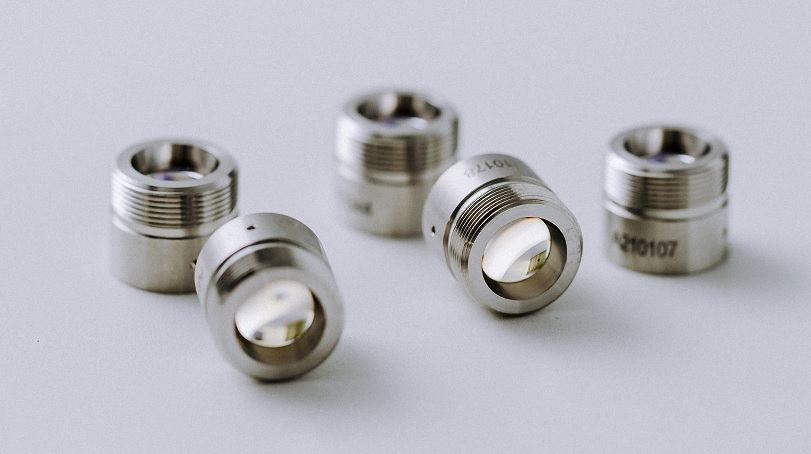
Focal Length 1.50-22.00 mm; Numerical Aperture 0.13-0.71; Design Wavelength 405-7800 nm; Outer Diameter 6.24-14.25 mm; Thread MT6, MT8, MT9, MT12, MT14 With 27 of GH Optics’ standard precision molded aspheric lenses mounted into five different stainless steel lens holders, this series of components allow for very easy assembly. Our mounted precision molded aspheric lenses feature MT6, MT8, MT9, MT12 or MT14 threads for screwing the components into your systems, but they can also be soldered or welded to suitable structures in the required position. GH Optics’ series of mounted precision molded glass aspheric lenses can be used for applications in the visible (VIS) and infrared (IR) wavebands, such as small beam collimation, focusing, and fiber coupling. In these applications, aspheric lenses avoid spherical aberrations known from spherical lenses and can therefore reduce the complexity of both the design process and the resulting optical system. While the cost and effort involved in the traditional production of aspheric lenses has often prevented the use of this type of lens in cost-sensitive applications, GH Optics manufactures affordable aspheric lenses with high, reproducible quality by molding glass preforms in molds of high precision. On request, most aspheric lenses in our portfolio can be mounted into a custom assembly specified by the customer. For large-volume applications we recommend to contact your regional AMS Technologies office, so that we can tailor a solution based on your technical needs. Three types of glass are available for our series of mounted precision molded aspheric lenses for visible and NIR wavelenghts, all RoHS compliant: Lens Series Glass Type Refractive Index Abbe Number CTE dn/dT RoHS Compliance MD D-ZK3 1.586 60.71 7.6×10⁻⁶/°C 3.2×10⁻⁶/°C yes ME D-ZLaF52La 1.806 40.79 6.9×10⁻⁶/°C 6.5×10⁻⁶/°C yes MG D-LaK6 1.690 52.65 6.9×10⁻⁶/°C 6.5×10⁻⁶/°C yes For our mounted precision molded infrared aspheric lenses, two types of chalcogenide glass are available, comparable to infrared glass of other leading brands in the market and featuring high transmission as well as RoHS compliance: Lens Series Glass Type Glass Material Refractive Index @10 µm Abbe Number @10 µm CTE dn/dT RoHS Compliance M2 GH2 Ge28Sb12Se60 2.6044 93.63 142×10-7/°C 70.4×10⁻⁶/°C yes M6 GH6 As40Se60 2.7775 137.71 209×10-7/°C 31.3×10⁻⁶/°C yes Mounted precision molded aspheric lenses for visible and NIR wavelengths can be coated with a range of visible and NIR coatings, including four standard AR coatings (VA, VB, VC, VQ) featuring average reflectance values of ≤0.6%, ≤0.5%, or even ≤0.25%, for wavelength ranges of 380 nm to 700 nm, 600 nm to 1100 nm, 1050 nm to 1650 nm, or 1300 nm to 1700 nm respectively. Other customized coatings like HD (High Density) or SWB (Short Wave Blocking) are available on request. Lens Code Thread Outer Diameter (OD) Effective Focal Length (EFL) Lens Numerical Aperture (NA) Clear Aperture (CA) Design Wavelength (DW) MD1560 MT6 6.24 mm 1.50 mm 0.58 1.60 mm 780 nm MF2570 MT8 8.24 mm 2.50 mm 0.66 3.30 mm 405 nm ME2860 MT8 8.24 mm 2.80 mm 0.64 3.60 mm 830 nm MD3170 MT9 9.24 mm 3.10 mm 0.68 5.00 mm 830 nm MD4060 MT9 9.24 mm 4.00 mm 0.64 5.10 mm 685 nm MG4060 MT9 9.24 mm 4.00 mm 0.60 4.80 mm 408 nm MD4530 MT6 6.24 mm 4.50 mm 0.30 2.70 mm 635 nm MD4540 MT8 8.24 mm 4.50 mm 0.40 3.70 mm 980 nm ME4560 MT9 9.24 mm 4.50 mm 0.55 5.07 mm 780 nm MD4650 MT9 9.24 mm 4.60 mm 0.54 4.80 mm 655 nm MD5020 MT6 6.24 mm 5.00 mm 0.15 1.60 mm 1550 nm MD5560 MT9 9.24 mm 5.50 mm 0.58 6.00 mm 635 nm MD6020 MT8 8.24 mm 6.00 mm 0.21 2.50 mm 1550 nm MD6230 MT8 8.24 mm 6.20 mm 0.30 3.70 mm 635 nm ME6240 MT9 9.24 mm 6.20 mm 0.40 5.00 mm 780 nm ME7530 MT9 9.24 mm 7.50 mm 0.30 4.54 mm 780 nm MD8050 MT12 12.22 mm 8.00 mm 0.50 8.00 mm 780 nm MD9630 MT9 9.24 mm 9.60 mm 0.27 5.20 mm 635 nm MD9930 MT9 9.24 mm 9.90 mm 0.27 5.20 mm 650 nm MDA050 MT14 14.25 mm 10.00 mm 0.51 10.00 mm 635 nm MDA130 MT9 9.24 mm 11.00 mm 0.25 5.50 mm 635 nm MDA320 MT9 9.24 mm 13.00 mm 0.20 5.20 mm 633 nm MDA520 MT9 9.24 mm 15.30 mm 0.16 5.00 mm 785 nm MDA820 MT9 9.24 mm 18.40 mm 0.15 5.50 mm 785 nm MDB210 MT9 9.24 mm 22.00 mm 0.13 5.50 mm 670 nm M23070 MT9 9.24 mm 3.00 mm 0.71 5.00 mm 7.8 µm M24060 MT9 9.24 mm 4.00 mm 0.56 5.00 mm 4.0 µm Key Features: Stainless Steel Holder Assembly With Glue Threaded Interface for Easy Assembly Rapid Prototype Focal Length: 1.50 mm to 22.00 mm Lens Numerical Aperture: 0.13 to 0.71 Design Wavelength: 405 nm to 7.8 µm Assembly Outer Diameter: 6.24 mm, 8.24 mm, 9.24 mm, 12.22 mm, 14.25 mm Thread: MT6, MT8, MT9, MT12, MT14 Applications: Laser; Telecom; Medical; Imaging; And Many More
REQUEST PRICING AND AVAILABILITY
- Get your individual quote.
- Technical compatibility review included.
- Volume discounts available.
No obligation. Direct access to our engineering team.

Near Lambertian; 350-1000 nm; Grey Scale Level 5-94%; Uniformity ±1%, ±1.5%, ±2%; Target Size 0.5x0.5-1.2x2.4 mLabsphere’s Permaflect® large-area, grey and white, reference diffuse reflectance targets are ideal for accurately assessing short-range and long-range sensitivity over the dynamic range of LiDAR systems.For imaging applications your grey target solution must work for a wide variety of lighting environments and still maintain its appearance. Most importantly it has to have uniform spectral response. It also must be thermally and physically durable, UV light stable, thermally color stable, no gloss, no polarization and no fluorescence.If your grey target solutions do not meet these requirements, you need Permaflect diffuse reflectance targets. Permaflect targets are available for individual purchase in three sizes: 0.5 x 0.5, 1.0 x 1.0, 1.5 x 1.5 or 1.2 x 2.4 m, unframed and with or without mounting. Available reflectance factors are 5%, 10%, 18%, 50%, 80% and 94%.Permaflect diffuse reflectance targets are also available in Labsphere's LiDAR Test Target Kits, including three reflectance levels; 10%, 50% and 80%, a robust case that holds all three Permaflect targets for storage and transport, and spectral reflectance and uniformity test reports. The kits come in a choice of three target sizes; 0.5 x 0.5, 1.0 x 1.0 and 1.5 x 1.5 m.Key Features:Lightweight: 1.5 kg (0.5 x 0.5 m) to 18 kg (1.2 x 2.4 m)TailorableTargets Sizes: 0.5 x 0.5, 1.0 x 1.0, 1.5 x 1.5, 1.2 x 2.4 mTarget Sizes Are Ideal for the Operating DistanceReflectance Levels in NIR Laser Wavelength 905 to 940 and 1550 nmGrey Scale Levels: 5%, 10%, 18%, 50%, 80%, 94%Variance From Average: ±1%, ±1.5%, +3%/-0%Uniform Reflectance Over the Entire Reflecting Surface – Uniformity: ±1%, ±1.5%, ±2%Typical Flatness: 0% to 8% Peak-to-Peak From 350 to 950 nmNear Lambertian Diffuse Reflectance Factor for Incident Angle IndependenceDurable and Robust for Production and Field UseEasy to CleanLiDAR Test Kit Accommodates Mounting of the Frameless TargetsApplications: LiDAR; Time of Flight; Ground Truth; Imager Calibration; Sensor/Source Compensation; Remote Sensing; Coatings & Materials; Airborne Calibration; Automotive Sensor Calibration; Spectral Radiance; Spectroradiometer Calibration; Reflectance FactorPlease note that Labsphere products are available from us only in Denmark, Finland, Iceland, Italy, Norway, and Sweden.
REQUEST PRICING AND AVAILABILITY
- Get your individual quote.
- Technical compatibility review included.
- Volume discounts available.
No obligation. Direct access to our engineering team.