
RAYTELA™ Plastic Optical Fibers


REQUEST PRICING AND AVAILABILITY
- Get your individual quote.
- Technical compatibility review included.
- Volume discounts available.
No obligation. Direct access to our engineering team.
Product information "RAYTELA™ Plastic Optical Fibers"
Multi Mode, Step Index; 650 nm; Core Diameter 240-2,980 µm; Cladding Diameter 250-3,000 µm; Coating PE, PVC, Polyamide, PP, None; Numerical Aperture 0.46-0.58
Toray Industries' plastic optical fiber products, RAYTELA™, boast highly reliable transmission with low attenuation and excellent noise-resistant characteristics. RAYTELA is a multi mode, step index optical fiber with low loss and high reliability.
Compared to optical fibers with cores made of silica or composite glass, plastic optical fibers (POF) are entirely made of polymer materials. Not only coatings and jackets, but also fiber core and cladding consist of polymers. While showing higher attenuation and lower transmission capacity, plastic optical fibers are less brittle, lightweight, more flexible, easier to handle and very cost-effective.
The polymethyl methacrylate (PMMA) that makes up the core portion of the RAYTELA fiber uses a clean polymer made with integrated manufacturing from monomer through to fiber production. A special fluorine containing polymer is used for the cladding.
Plastic optical fiber cords, curl cords or cables with PE, PVC, or PP jacket are also available. The cable diameter ranges between 5 and 6 mm. These lines have good resistance to heat, physical determination and chemicals.
Furthermore, light guides with up to 64 fibers, bundled and jacketed for a temperature range up to +105°C are available. They are suitable for light sources of medical devices and display lighting for art objects among others. The portfolio comprises also plastic optical fiber cords for broadband communications and high NA fibers.
Key Features:
- Multi Mode, Step Index
- Core Material: Polymethyl Methacrylate (PMMA)
- Core Diameter: 240 to 2,980 µm
- Cladding: Polymer
- Cladding Diameter: 250 to 3,000 µm
- Coating: PE, PVC, Polyamide, PP, None
- Coating Outside Diameter: 1.0 to 4.4 mm
- Cable Outside Diameter: 5.0, 6.0 mm
- Numerical Aperture (NA): 0.46 to 0.58
- Attenuation at 650 nm: ≤0.15 to ≤0.30 dB/m
- Temperature Range: -55 to +70/+105 °C
- Flexible
- Lightweight
Applications: Lighting; Decoration; Telecommunications; Short-range Data Communications; Industrial; Automotive; Medical Illumination; Endoscopes
Downloads
Customers also viewed
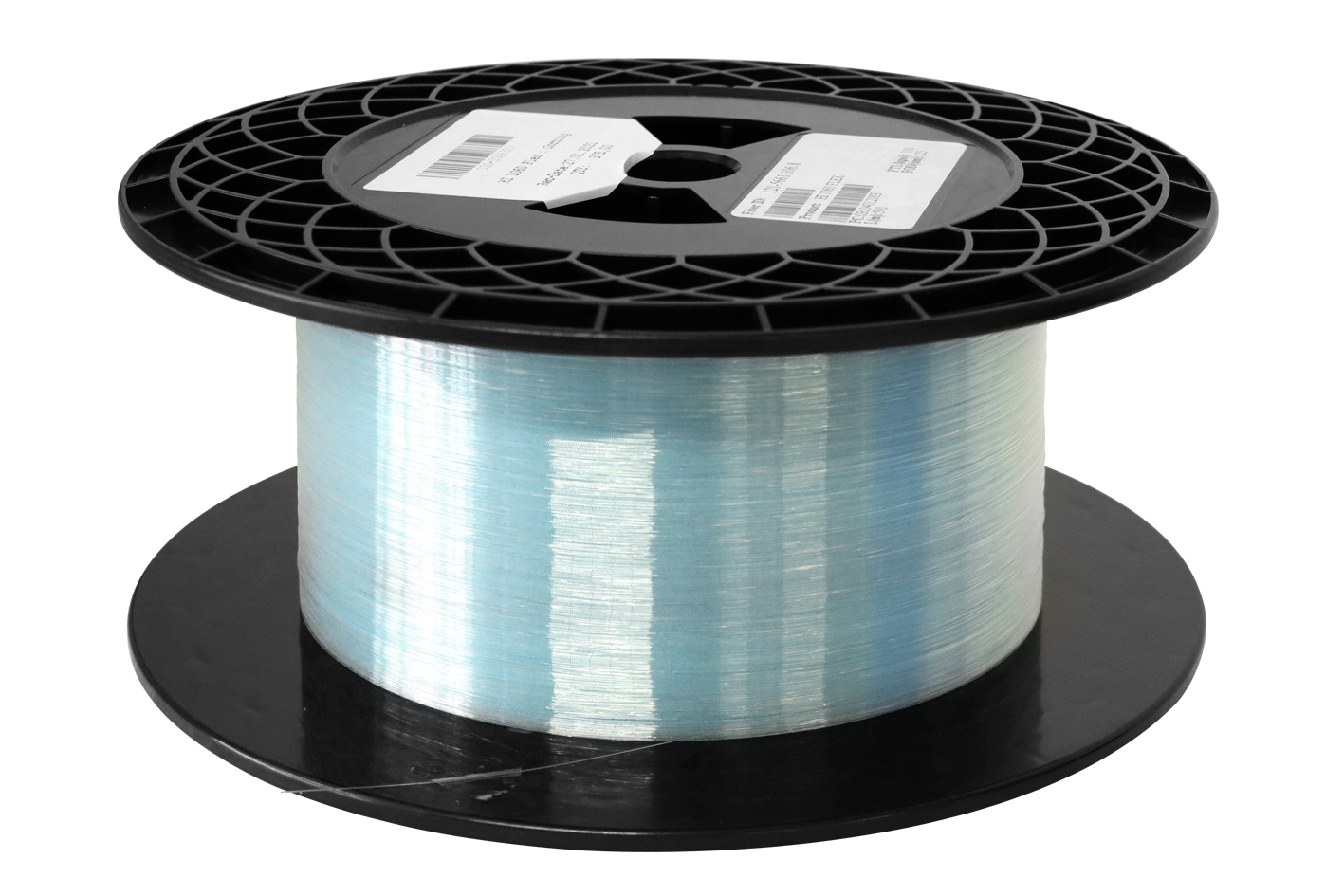
Non hermetic, mid-temperature acrylate coating type: 150°C.Single mode mid-temperature specialty optical fibers. Key optical specifications Operating Wavelength (nm) 1310, 1550 Cutoff Wavelength (nm) ≤ 1290 Maximum Attenuation (dB/km) 0.38 @ 1310 nm 0.24 @ 1550 nm Mode-field Diameter (µm) 9.2 ± 0.4 @ 1310 nm 10.4 ± 0.5 @ 1550 nm Bandwidth @ 850 nm and 1300 nm (MHz-km) n/a Numerical Aperture 0.12 (nominal) Key geometric, mechanical and environmental specifications Core Diameter (µm) 8.2 (nominal) Cladding Outside Diameter (µm) 125 ± 1.0 Coating Outside Diameter (µm) 245 ± 10* Core-to-Cladding Offset (µm) ≤ 0.5 Standard Lengths** 500 m, 1 km, 2 km, 5 km Proof Test (kpsi) 100 Operating Temperature (°C) -60 to 150 Coating Mid-Temperature Acrylate Optional Hermetic Layer * 200 ± 10 μm also available** Contact us for longer lengths

Max. Temperature +1,600 °C; Voltage 15 to 19 VAC; Current 5,8 to 7 A; Length 19, 22 mm; Width x Height 20 x 25 mm; Internal Diameter of Heat Core 2 mmNTT Advanced Technology Corporation’s CMH series of ceramic micro heaters provides temperatures of up to +1,600 °C in a very small, cylindrical volume. Powered by AC current with a power of approximately 100 W, a tubular ceramic micro-heating element with an internal diameter of 2 mm generates these high temperatures over a length of 19 (CMH-7019) or 22 mm (CMH-7022).In order to focus the heating energy in this small volume and to minimize the losses to the environment, the actual heating element is enclosed in a very high heat resistant ceramic material. An approx. 1 mm wide gap in this material on one side makes the laterally open, tubular heating element accessible from the outside.The main application of ceramic micro heaters is the processing of optical fibers, which can be inserted into the ceramic micro heater through the lateral gap. Tapering of optical fibers, for example, involves heating a small area of the fiber to a high temperature while the fiber is gently stretched as evenly as possible. This procedure reduces the diameter of fiber and core in the heated area, resulting in a tapered fiber. Another application of ceramic micro heaters is the production of fiber couplers.Key Features:Ideal for Heating-up Optical FibersIdeal for Manufacturing of Tapered Optical Fibers or Optical Fiber CouplersOperated by Electric CurrentTemperatures of up to +1,600 °C Can Be GeneratedPrecise Temperature ControlHeating Element Inner Diameter: 2 mmTwo Lengths Available: 19 mm (CMH-7019) and 22 mm (CMH-7022)Width: 25 mm, Height: 20 mmApplications: Heating-up Optical Fibers; Manufacturing of Tapered Optical Fibers; Manufacturing of Optical Fiber Couplers
REQUEST PRICING AND AVAILABILITY
- Get your individual quote.
- Technical compatibility review included.
- Volume discounts available.
No obligation. Direct access to our engineering team.
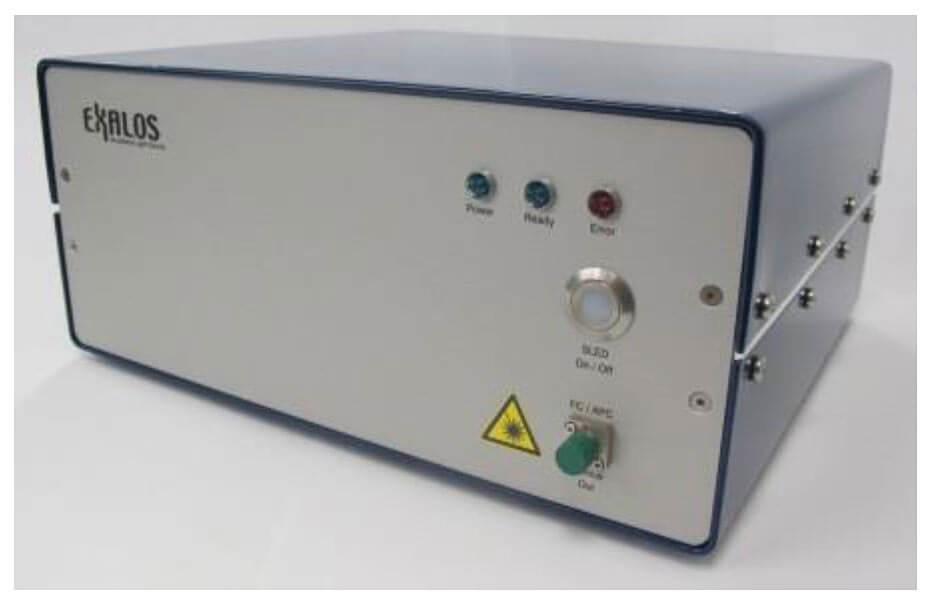
SLED; 402-1680 nm; Optical Bandwidth 3-350 nm; Coherence Length 2.5-30 µm; Optical Power 0.5-40 mW With the EBS series, EXALOS provides high-performance fiber-coupled light sources based on superluminescent light emitting diodes (SLEDs). These highly customizable benchtop instruments are available in various form factors for research, development, production and testing environments. EBS SLED systems can be configured with up to eight SLEDs for ultra-broadband light sources. They can either have individual optical outputs for each SLED or can be configured to have one common output where the spectra of the individual SLEDs are combined. EBS light sources are available over a wide spectral range from near-UV (390 nm) to near-IR (1700 nm). In the long-wavelength range, EXALOS can offer the EBS300058-02, an ultra-broadband 350-nm light source from 1270 to 1620 nm with more than 40 mW of optical output power. In the short-wavelength range EXALOS can offer the EBS300080-02, an ultra-broadband 160-nm light source from 750 to 920 nm, featuring a coherence length in air of less than 2.5 µm. The EBS series’ optical output can be realized either with a single mode (SM) fiber or with a polarization maintaining (PM) fiber, depending on the type of SLED module that is chosen. The EBS30 and EBS40 series offer remote control through electrical analog and digital control signals and modulation capabilities up to 50 Hz. Optionally, a low degree of polarization (DOP) can be achieved using fiber depolarizers. Furthermore, spectral shaping through custom optical bandpass filters can be realized. Please contact the AMS Technologies light source experts to discuss your customized SLED broadband light source solution. Key Features: Turn-key System Multiple Spectral Ranges, Center Wavelength: 405 to 1570 nm Ultra-large Optical Bandwidth: 3 to 350 nm (3 dB), 6 to 400 nm (10 dB) Very Short Coherence Length: 2.5 to 30 µm (HWHM) Remote Power Control Through an Analog Input Voltage Ultra-low Noise (RIN) Ultra-stable High Optical Output Power: 0.5 to 40 mW Modulation up to 50 Hz Spectral Shaping Options Low Degree of Polarization – Optional Applications: Ultra-High Resolution Optical Coherence Tomography; Bio-medical Imaging; Multi-Channel Fiber Bragg Grating Interrogation; Passive Component Testing; Spectroscopy; Fiber Sensor Interrogation
REQUEST PRICING AND AVAILABILITY
- Get your individual quote.
- Technical compatibility review included.
- Volume discounts available.
No obligation. Direct access to our engineering team.
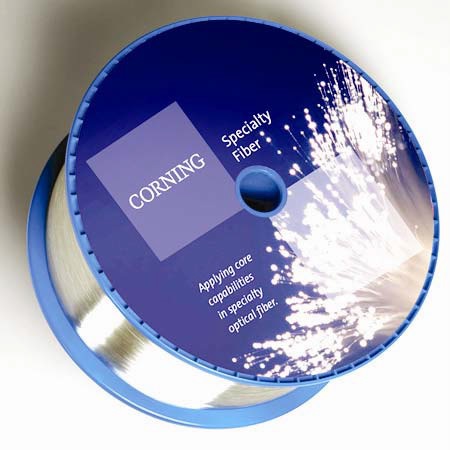
>1300 nm; Mode Field Dia. 9.2, 10.4 µm; Cladding Dia. 80 µm; Dual Acrylate Coating; Cutoff Wavelength ≤1290 nm Manufactured with Corning’s patented Outside Vapor Deposition (OVD) process and based on decades of experience in specialty fiber development, Corning® RC SMF specialty single mode (SM) fiber sets the industry standard for consistent geometric properties, high mechanical reliability and efficient splicing. This low-loss fused fiber with a cladding diameter of 80 µm is well suited for EDFA and small bend radius applications. AMS Technologies and Corning provide technical support for splicing the RC SMF special single mode fiber to fiber products with 125 µm cladding diameter. Key Features: Outstanding Consistency and Uniformity Using Patented Outside Vapor Deposition (OVD) Process Dual Acrylate Coating System Provides Excellent Protection and Superior Mechanical Robustness Ultra-tight Specifications World-class Reliability Support for Handling and Deployment Technical Support for Splicing to 125 µm Fiber Products Ultra-low Splice Loss to SMF-28e+® 80 μm Diameter for Miniature Packaging Low Bending Loss Excellent Geometry Control Applications: Low-loss Miniature Fused Devices for C-band and L-band; Ultra-compact Components Requiring Small Bend Radii; Pigtails in Bend Insensitive Applications; Sensors
REQUEST PRICING AND AVAILABILITY
- Get your individual quote.
- Technical compatibility review included.
- Volume discounts available.
No obligation. Direct access to our engineering team.

0
REQUEST PRICING AND AVAILABILITY
- Get your individual quote.
- Technical compatibility review included.
- Volume discounts available.
No obligation. Direct access to our engineering team.

The blades are made of a proprietary styrene-based plastic. The combination of this plastic and our innovative design optimizes performance while safeguarding the glass fiber.
1310, 1550 nm; Mode Field Dia. 8.6, 9.65 µm; Cladding Dia. 125 µm; Acrylate Coating; Optional Hermetic Layer; -60 to +180 °C Equipped with mid-temperature acrylate-based coatings, the Corning® ClearCurve® series of single mode (SM) bend insensitive optical fibers now includes higher temperature capability. For use at temperatures up to +180 °C and beyond, these fibers deliver the best macro bend performance in the industry with ease of use and handling – benefiting sensing systems operating in harsh environments. The ClearCurve single mode fiber series includes the SMBI-5-XMT fiber with mid-temperature acrylate coating as well as the SMBIH-5-XMT fiber with mid-temperature acrylate coating and an additional hermetic layer. For mid-temperature multi mode fibers please refer to Corning’s ClearCurve multi mode fiber series. Key Features: Acrylate-base for Ease of Handling Rated for up to +180 °C Test data available at +200 °C Hermetic Coating (Optional) for Protection Against Hydrogren-induced Attenuation Increase and Improved Fatigue Resistance Consistent Strength Over Time at Elevated Temperatures Designed to Meet Your Small Bend Needs: Recommended Min. Bending Radii of 5 mm Fully Compliant With ITU-Recommendations G.657 and G652.D Compatible with Corning® SMF-28e® and SMF-28e+® Fibers Applications: Fiber Sensing and Data Transmission with Tight Bend Requirements for: Aerospace & Defense, Medical, Structural Health Monitoring, Down-Hole Drilling
REQUEST PRICING AND AVAILABILITY
- Get your individual quote.
- Technical compatibility review included.
- Volume discounts available.
No obligation. Direct access to our engineering team.