
FOBS-12N PM Splitters

REQUEST PRICING AND AVAILABILITY
- Get your individual quote.
- Technical compatibility review included.
- Volume discounts available.
No obligation. Direct access to our engineering team.
Product information "FOBS-12N PM Splitters"
Polarization Maintaining Splitters, Miniature Size; 980 to 1550 nm; Splitting Ratio 50/50 to 98/2; Polarization Dependent Loss 0.1 dB; Directivity >50 dB
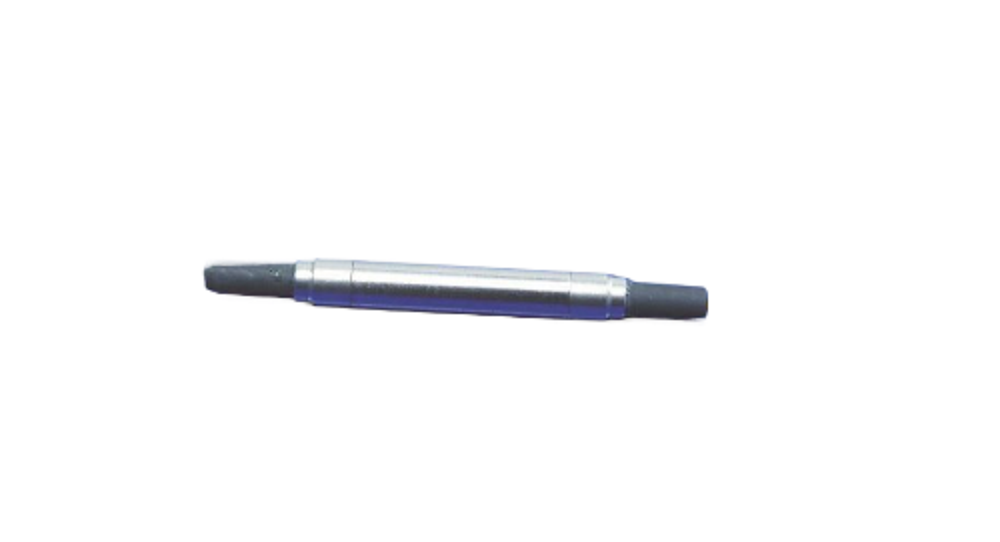
OZ Optics’ FOBS-12N series of miniature polarization maintaining fiber optic beam splitters are used to split the light traveling through a fiber into two fibers, or to split or combine orthogonally polarized light into separate fibers. These splitters feature a rugged miniature housing to fit into compact spaces in equipment and systems.
Light from a fiber is first collimated, then sent through a beam-splitting optic to divide it into two beams by either a fixed ratio or into two orthogonal polarizations. The resultant output beams are then coupled back into the output fibers. This flexible design allows splitters with different fiber types on the input and output ports. For example, light from a single mode fiber could be split into its two orthogonal states and then launched into two polarization maintaining fibers. Standard products for 1550 nm applications are readily available, while custom items can be made with rapid turnaround at low cost. Products for other wavelengths, such as 980 nm, 1300 nm, or 1480 nm are offered. Contact AMS Technologies for details and a quotation.
Also known as optical taps, the FOBS-12N series of miniature polarization maintaining splitters use a partially reflecting mirror to transmit a portion of the light from the input fiber to the main output fiber and reflect the remainder of the light to the second output fiber. All ports using polarization maintaining fiber are aligned so that polarized light aligned parallel to the stress rods on the input fiber emerge from the output fibers in the same manner, maintaining the polarization state to a high degree. Splitters that only split off a small portion of the input light are commonly known as taps. These splitters are often used for power monitoring applications. The small signal, typically between 1% and 10%, is sent to a monitoring photodiode, while most of the signal goes on to the main destination.
Key Features:
- Rugged Compact Design
- Broad Wavelength Range
- Low Insertion, Return & Polarization Dependent Losses
- High Extinction Ratio- Low Wavelength Dependent Loss (WDL)
Applications: EDFA Amplifiers; Raman Amplifier Combiners; Polarization Mode Dispersion Compensation; Polarization Extinction Ratio Measurements; Fiber Optic Sensors; Coherent Communication Systems; OCT Systems
Customers also viewed
Single Mode Splitters, Miniature Size; 980 to 1550 nm; Splitting Ratio 50/50 to 98/2; Polarization Dependent Loss 0.1 dB; Directivity >50 dB OZ Optics’ FOBS-12N series of miniature polarizing (single mode) fiber optic beam splitters are used to split the light traveling through a fiber into two fibers, or to split or combine orthogonally polarized light into separate fibers. These splitters feature a rugged miniature housing to fit into compact spaces in equipment and systems. Light from a fiber is first collimated, then sent through a beam-splitting optic to divide it into two beams by either a fixed ratio or into two orthogonal polarizations. The resultant output beams are then coupled back into the output fibers. This flexible design allows splitters with different fiber types on the input and output ports. For example, light from a single mode fiber could be split into its two orthogonal states and then launched into two polarization maintaining fibers. Standard products for 1550 nm applications are readily available, while custom items can be made with rapid turnaround at low cost. Products for other wavelengths, such as 980 nm, 1300 nm, or 1480 nm are offered. Contact AMS Technologies for details and a quotation. The FOBS-N12 series of polarizing beam splitters split incoming light into two orthogonal states. They can also be used to combine the light from two fibers into a single output fiber. When used as a beam combiner, each input signal will transmit along a different output polarization axis. By default, the output fibers on a polarizing splitter are aligned so that the output polarization from each fiber is in line with the stress rods of the fibers. If the input fiber is a polarization maintaining (PM) fiber, the input fiber is aligned such that light polarized parallel to the fiber’s stress rods is transmitted to port 1 of the splitter, while light polarized perpendicular to the stress rods is transmitted to port 2 of the splitter. Key Features: Rugged Compact Design Broad Wavelength Range Low Insertion, Return & Polarization Dependent Losses High Extinction Ratio- Low Wavelength Dependent Loss (WDL) Applications: EDFA Amplifiers; Raman Amplifier Combiners; Polarization Mode Dispersion Compensation; Polarization Extinction Ratio Measurements; Fiber Optic Sensors; Coherent Communication Systems; OCT Systems
REQUEST PRICING AND AVAILABILITY
- Get your individual quote.
- Technical compatibility review included.
- Volume discounts available.
No obligation. Direct access to our engineering team.